
Biohacking Sleep: 6 Science-Backed Methods for Elite Rest
Table of Contents
- Key Takeaways: The Biohacker’s Approach
- The Biohacker’s Checklist: Six Pillars of Elite Rest
- The Six Pillars of Restorative Sleep Biohacking
- The Performance Matrix: Physiological Targets of Sleep Biohacking
- Conclusion: Synergistic High-ROI Recovery
- Expert Sleep Biohacking: Frequently Asked Questions
High performance is often measured by output: work hours, training intensity, or processed data. But the world’s elite understand that true, sustainable gains are forged during the recovery phase.
Sleep is not merely downtime; it is the single highest-leverage biological process available for optimization. It dictates cognitive function, physical repair, and emotional resilience.
This understanding forms the foundation of sleep biohacking: the intentional pursuit of elite rest quality, not just quantity. It involves strategic, evidence-based adjustments to your environment and physiology.
The goal is to dramatically enhance the restorative cycles of REM and Deep Sleep by optimizing your biological clock and mastering Circadian Rhythm Regulation.
You are not simply trying to “fall asleep faster” or “stay asleep longer.” You are engineering the precise environmental and behavioral signals required to maximize Melatonin release and minimize wakefulness.
By focusing on inputs like light exposure and ideal sleep temperature, you can ensure your body triggers the necessary processes to wake up energized and cognitively sharp.
Below are six highly actionable, science-backed sleep biohacks (protocols used by performance experts dedicated to mastering their biology and achieving better sleep).
Key Takeaways: The Biohacker’s Approach
- Sleep biohacks target measurable physiological shifts, focusing on enhancing REM and Deep Sleep quality, not just duration.
- Optimization relies heavily on resetting the circadian rhythm by managing light exposure and Core Body Temperature Drop for Sleep Onset.
- A successful protocol requires optimizing the entire sleep environment to maximize restorative processes.
- The methods outlined below are specific, high-ROI strategies for resolving chronic sleep deficiencies and enhancing overall performance.
Related Video
Not Sleeping Good? The Science of Circadian Biology and …
Biohacking expert Dave Asprey shares the science of circadian biology and how to optimize your daily habits for better sleep.
Watch Video on YouTube →


The Biohacker’s Checklist: Six Pillars of Elite Rest
If you are ready to optimize your recovery, the journey begins by manipulating key physiological levers. These six natural biohacks offer a high-return-on-investment strategy designed to help you fall asleep faster, stay asleep longer, and wake up energized.
Here is the roadmap for achieving truly elite sleep quality:
- Circadian Regulation: Reset your circadian rhythm instantly using targeted morning sunlight exposure to send a powerful signal to the Suprachiasmatic Nucleus (SCN) and calibrate your biological clock.
- Thermal Management: Strategically implement a core body temperature drop to facilitate swift sleep onset and maximize restorative Deep Sleep.
- Vagal Optimization: Utilize targeted cold exposure before bed to shift your nervous system into a parasympathetic, recovery state, improving Heart Rate Variability (HRV).
- Respiratory Efficiency: Master nasal breathing optimization to boost Nitric Oxide production, enhancing nocturnal circulation and oxygen delivery.
- Light Hygiene: Enforce strict evening light protocols to prevent melatonin suppression and maximize natural melatonin release.
- Environmental Mitigation: Ensure your sleep environment is optimized by reducing electromagnetic field (EMF) exposure that can interfere with cellular repair mechanisms.
Related Innovation
Apparatus and method for modulating sleep
Apparatuses and methods to enhance sleep, reduce sleep onset latency, extend sleep duration and/or increasing the duration of deeper sleep stages relative to stage 1 sleep. In general, these apparatuses and methods apply and maintain one or more target “warm” temperatures to a subject’s forehead …
The Six Pillars of Restorative Sleep Biohacking
1. Master Your Light Exposure to Reset Your Biological Clock
The single most powerful lever you have over your sleep quality is light. Your internal timekeeper, the biological clock, is regulated by the Suprachiasmatic Nucleus (SCN) in the brain, which is incredibly sensitive to light signals.
To achieve better sleep, you must rigorously manage your light exposure at both ends of the day. This simple manipulation is the cornerstone of effective sleep biohacks.
Evidence and Mechanism: SCN Signaling and Melatonin Suppression
Exposure to intense, bright light, especially blue wavelengths, within minutes of waking sends a powerful signal to the SCN. This robustly sets your circadian rhythm for the next 12 to 16 hours. Conversely, exposure to blue light after sunset critically suppresses melatonin release, delaying sleep onset and degrading overall sleep quality.
Experts like Dr. Nathalie Beauchamp emphasize that this morning ritual is crucial for building robust sleep pressure later that night. If you fail to get adequate morning sunlight, your body struggles to maintain its natural rhythm and you cannot effectively reset circadian rhythm.
Gear and Implementation: Precision Light Hygiene
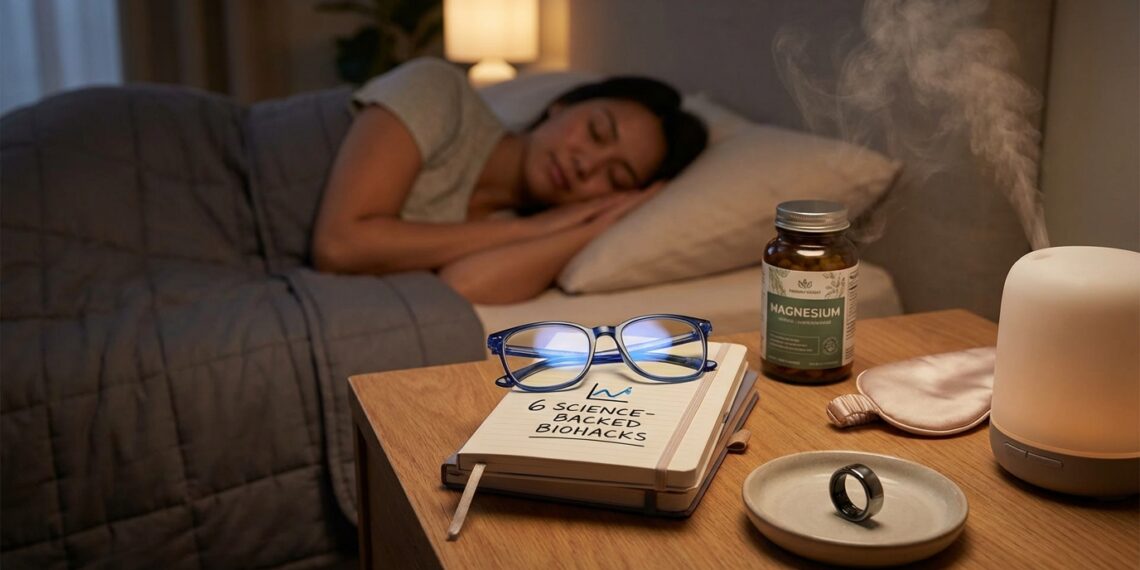
Implement 10, 15 minutes of outdoor, unfiltered light exposure within one hour of waking. In the evening, use certified blue light blocking glasses that filter 99 percent of blue and green light wavelengths starting two hours before your target bedtime.
2. Optimize Core Body Temperature for Sleep Onset
If you struggle to fall asleep faster, your body may be failing to execute the necessary pre-sleep cooling phase. Sleep onset requires a significant drop in core body temperature, typically 1 to 2 degrees Fahrenheit.
While the ideal sleep temperature for the sleep environment is often cited between 60 and 68 degrees Fahrenheit, the key physiological action is cooling the skin surface to facilitate heat transfer away from the core.
Evidence and Mechanism: Distal Vasodilation and Heat Loss
Your body actively sheds heat through vasodilation in your hands and feet (distal vasodilation). This process is essential for signaling to the brain that it is time to transition into sleep stages. If your environment is too warm, or your bedding traps heat, this vital cooling process is inhibited, leading to frequent waking and reduced Deep Sleep.
The metabolic slowdown during sleep requires a cooler core. By strategically controlling the temperature of the sleep surface, you can expedite the Core Body Temperature Drop for Sleep Onset, reducing your sleep onset latency.
Gear and Implementation: Precision Temperature Control
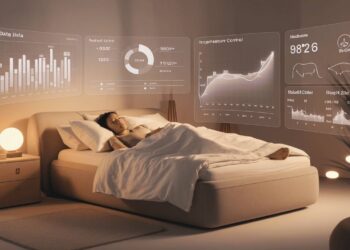
The most precise way to achieve this physiological cooling is through a Precision Temperature Control Mattress Pad or smart cooling mattress system. These devices allow you to set the surface temperature exactly, ensuring the necessary temperature drop is achieved and maintained throughout the night for optimal sleep quality.
3. Enhance Vagal Tone via Targeted Cold Exposure
Stress and anxiety are leading causes of poor sleep quality. By intentionally stimulating the vagus nerve, you can shift your nervous system dominance from sympathetic (fight or flight) to parasympathetic (rest and digest).
This is one of the most effective natural biohacks for improving Heart Rate Variability (HRV), a key metric of stress resilience and recovery necessary to help you stay asleep longer.
Evidence and Mechanism: Parasympathetic Activation
The vagus nerve is the main component of the parasympathetic nervous system. Short, acute exposure to cold, such as a 30-second cold shower or dunking your face in cold water, activates the vagus nerve. Doing this in the late afternoon or early evening signals to the body that it is safe to relax, thus preparing the ground for restorative sleep.
Gear and Implementation: HRV Tracking and Cold Plunge
To measure the effectiveness of this hack, you need a specific Wearable for HRV Tracking. Consistent data showing an increase in your nightly HRV scores confirms improved vagal tone. Implementation involves a brief, targeted cold exposure session 2, 3 hours before bed to optimize your nervous system for recovery.
4. Optimize Nasal Breathing for Deeper REM Sleep
Many high-performance individuals are unaware that they breathe primarily through their mouths during sleep. Mouth breathing leads to poorer oxygen uptake, snoring, and fragmentation of rest, significantly reducing time spent in vital REM and Deep Sleep stages.
The goal of Nasal Breathing Optimization is to ensure continuous, exclusive nasal breathing to improve physiological function and boost sleep quality.
Evidence and Mechanism: Nitric Oxide Production
Nasal breathing forces air through the sinuses, which naturally facilitates Nitric Oxide Production for Circulation. Nitric oxide is a potent vasodilator, meaning it widens blood vessels, improving blood flow and oxygen delivery throughout the body, including the brain. This enhanced oxygenation reduces micro-arousals and allows you to stay asleep longer.
Optimizing nasal breathing is scientifically linked to better carbon dioxide tolerance and improved symptoms related to sleep-disordered breathing.
Gear and Implementation: Nasal Breathing Tools
Use specialized products like Myotape, which gently keeps the lips closed, or internal nasal dilators/strips to maximize airflow. This simple intervention is a low-cost, high-impact method to significantly boost oxygen saturation and achieve better sleep.
5. Mitigate Electromagnetic Field (EMF) Exposure
Your sleep environment is constantly bombarded by invisible stressors, notably Electromagnetic Fields (EMFs) emitted by Wi-Fi routers, smart devices, and electrical wiring.
While definitive long-term research is ongoing, many performance sleep biohacks prioritize minimizing this exposure based on preliminary findings regarding cellular stress and recovery.
Evidence and Mechanism: Melatonin Disruption Precaution
Studies suggest that high levels of EMF exposure can disrupt cellular signaling and potentially interfere with the nocturnal production of melatonin. The goal here is precautionary: to remove any potential environmental stressors that might compromise the body’s ability to enter and maintain deep restorative cycles, thus protecting melatonin release.
This is a core component of EMF Exposure Mitigation for those seeking elite recovery and better sleep.
Gear and Implementation: Environmental Audit
Start by eliminating all wireless devices from the bedroom. Turn off Wi-Fi at night, place your phone in airplane mode, and use battery-powered alarm clocks. For advanced mitigation, use an EMF meter to identify hotspots and consider using grounding sheets to neutralize surface charges.
6. Strategically Manage Adenosine Accumulation (Sleep Pressure)
Sleep pressure, driven by the accumulation of the neuromodulator adenosine, is what makes you feel tired. Caffeine blocks adenosine receptors. If you consume caffeine too late in the day, you prevent sufficient Adenosine Accumulation (Sleep Pressure), making it difficult to fall asleep faster.
This critical natural biohack focuses on consistency and timing to maximize the natural rhythm of sleep pressure.
Evidence and Mechanism: Caffeine Half-Life and Circadian Consistency
Caffeine has a half-life of approximately five to seven hours. A 3 PM coffee means half the caffeine is still actively blocking adenosine receptors around 8 PM, reducing your ability to build adequate sleep pressure before bed.
Furthermore, maintaining a consistent wake-up time, even on weekends, helps to reinforce the biological clock and ensures a predictable accumulation of adenosine, helping you reset circadian rhythm effectively and wake up energized.
Consistency is the ultimate biohack. By honoring your biological clock, you reinforce the hormonal and chemical signals necessary for deep, continuous rest.
Gear and Implementation: Strict Cutoff and Consistency
Implement a strict caffeine cutoff time, ideally no later than 12 PM (noon). Use a reliable sleep tracker or wearable to monitor your wake time consistency and confirm improvements in your sleep onset latency. This simple behavioral shift requires discipline but offers profound, measurable improvements in sleep quality.
Related Video
The Science Of Wakefulness: Caffeine Vs. Adenosine For Sleep
… sleep regulation. We’ll explore the roles of natural chemicals like adenosine and how they influence your body’s sleep pressure. You’ll learn how adenosine …
Watch Video on YouTube →
The Performance Matrix: Physiological Targets of Sleep Biohacking
True sleep optimization goes beyond simply logging hours; it demands measurable, physiological change. The goal of these six natural biohacks is to strategically manipulate your internal systems, from the Suprachiasmatic Nucleus (SCN) Signaling that controls your biological clock to the precise moment of melatonin release, to ensure you achieve enhanced sleep architecture.
If you want to fall asleep faster, stay asleep longer, and wake up energized, you must understand exactly which systems you are targeting. This table serves as your quick-reference guide to the primary physiological mechanisms behind elite sleep quality improvement.
| Biohack Strategy | Primary Physiological Target | Measurable Improvement | Impact on Sleep Stage |
|---|---|---|---|
| Mastering Light Hygiene | Circadian Rhythm Regulation; Melatonin Suppression | Faster Sleep Onset; Consistent Wake Time | Regulates Sleep/Wake Transition, Reduces Latency |
| Precision Thermal Regulation | Core Body Temperature Drop for Sleep Onset | Increased Deep Sleep Duration (SWS) | Enhances Deep Sleep Quality and Duration |
| Optimized Nasal Breathing | Nitric Oxide Production; Oxygen Saturation | Increased Resting HRV; Reduced Sleep Disruption | Improves REM and Deep Sleep Efficiency |
| Targeted Vagal Stimulation | Parasympathetic Nervous System (Rest & Digest) | Higher Resting HRV; Lower Sleep Heart Rate | Improves Sleep Maintenance, Reduces Night Waking |
| Strategic Sleep Timing | Adenosine Accumulation (Sleep Pressure) | Consistent Sleep Onset Latency; Higher Sleep Efficiency | Aligns sleep pressure with reset circadian rhythm |
| Mitigating Environmental Stressors | Electromagnetic Field (EMF) Exposure Mitigation | Reduced Nocturnal Cortisol Spikes | Stabilizes NREM/REM Cycles; Deeper Rest |
By focusing on these specific metrics, you move beyond guesswork and engage in true, data-driven sleep biohacks designed for optimal recovery.
Conclusion: Synergistic High-ROI Recovery
These six natural biohacks are not isolated tips; they are components of a synergistic system designed to optimize your biology for peak recovery. You are moving beyond simple behavioral changes to strategically manipulate measurable physiological levers.
By addressing light exposure, ideal sleep temperature, breathing mechanics, and the sleep environment simultaneously, you create an internal and external ecosystem conducive to profound rest and better sleep quality.
True optimization shifts the focus from simply logging eight hours to maximizing the quality of those hours. Implementing these advanced sleep biohacks provides a high-ROI approach to resolving chronic sleep deficiencies, ensuring you wake up energized and ready for high performance every day.
This systematic approach targets the core regulatory mechanisms. By controlling light, you support the Suprachiasmatic Nucleus (SCN) Signaling, the master switch of your biological clock. This prevents Melatonin Suppression by Light and ensures timely melatonin release.
Start with the foundational hacks: managing light exposure (especially morning sunlight to reset circadian rhythm) and establishing your ideal sleep temperature to facilitate the necessary Core Body Temperature Drop for sleep onset.
Then, layer in vagal tone optimization and nasal breathing techniques to manage stress and enhance Nitric Oxide production. This disciplined combination ensures you fall asleep faster and stay asleep longer, achieving the deep, restorative recovery essential for elite function.
Expert Insight
“The vagus nerve acts as the physiological counterbalance to the sympathetic ‘fight-or-flight’ system. Optimizing its tone is crucial, as it allows the brain and body to communicate safety, downshifting from survival mode into the deep restorative states required for cognitive clarity and elite function.”
Expert Sleep Biohacking: Frequently Asked Questions
What is the most effective biohack for boosting Deep Sleep?
The consensus among performance scientists points directly toward thermal regulation. Facilitating the necessary Core Body Temperature Drop for Sleep Onset is the single most powerful strategy for boosting Slow-Wave Sleep (Deep Sleep).
Using a precision cooling mattress pad or setting your room to the Ideal sleep temperature (60-65°F) strategically maximizes time spent in this restorative phase. This is a foundational sleep biohack for achieving better sleep quality.
How quickly can I expect to see results from these sleep biohacks?
Subjective improvements, such as noticing you fall asleep faster and feeling Wake up energized, can happen immediately, often within the first night of optimizing light hygiene and temperature.
However, objective improvements in metrics like HRV, REM duration, and overall Sleep quality tracked via a wearable typically require 7 to 14 days of rigorous, consistent adherence to the full protocol to stabilize and show measurable gains.
Is mouth taping with Myotape safe?
For the majority of healthy individuals, targeted Nasal Breathing Optimization using products like Myotape is highly safe and beneficial. This technique forces nasal respiration, significantly increasing Nitric Oxide Production for Circulation and improving sleep stability.
As a general rule for this natural biohack, if you suffer from severe chronic congestion or have diagnosed obstructive sleep apnea, always consult a physician before using Myotape.
How does morning light exposure relate to staying asleep longer?
Morning sunlight exposure is the master signal for your internal Biological clock. Timely, high-intensity Light exposure initiates powerful Suprachiasmatic Nucleus (SCN) Signaling that helps Reset circadian rhythm daily.
A robust, well-set Circadian rhythm ensures optimal Melatonin release exactly when you need it in the evening. This precise hormonal signaling stabilizes your sleep architecture, helping you Stay asleep longer and reducing disruptive mid-night awakenings.