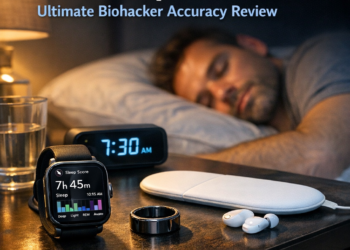


- A high-stress executive successfully reversed severe chronic sleep debt in 30 days using a strict, data-driven biohacking protocol focused on maximizing human performance.
- The intervention required non-negotiable adherence to Circadian Rhythm Consistency (fixed wake time), thermal regulation (64–66°F bedroom), and a strict 90-minute digital sunset (blue light mitigation).
- Key physiological metrics showed dramatic recovery: Heart Rate Variability (HRV) soared 68% (from 25ms to 42ms), and Deep Sleep increased 45%, signaling a shift from chronic stress to true sleep recovery.
- Chronic lack of sleep results in severe consequences, including cognitive impairment (compared to a traumatic brain injury) and immediate immune system collapse (reducing Natural Killer Cells by up to 72% after one sleepless night).
Table of Contents

- The Severe Consequences of Poor Sleep
- The Biohacker Solution: Reversing Chronic Sleep Debt
- The Baseline Crisis: Quantifying Performance Deterioration
- The Protocol Blueprint: A 30-Day Multi-Modal Intervention
- The Data Narrative: Measuring the Shift from Chronic Sleep Debt
- Reversing Critical Health Risks: Immune and Cognitive Restoration
- Expert Takeaways: The Blueprint for Sleep Recovery
- Frequently Asked Questions
- Frequently Asked Questions
The relentless demands of modern “hustle culture” often force high-performing professionals into a state of chronic sleep debt. This lifestyle is frequently celebrated, yet the health risks are severe.
We see this pattern repeatedly: executives prioritizing output over rest, leading to deep physiological breakdown, metabolic disorders, and even liver disorders.
The goal of biohacking is not to eliminate sleep, but to optimize it. This is the difference between simply existing and maximizing human performance through biological intervention.
Pioneers in lifespan extension, such as Bryan Johnson and his Project Blueprint, demonstrate that rigorous optimization of sleep patterns is the foundation for reversing aging and achieving sustained high performance.
The Severe Consequences of Poor Sleep
For years, the professional world dismissed lack of sleep as a badge of honor. But modern sleep research confirms that chronic sleep deprivation carries severe consequences that go far beyond feeling tired.
You cannot effectively compensate for poor sleep with caffeine or sheer willpower. Every all-nighter or inconsistent sleep pattern chips away at your healthspan.
Sleep Debt and Immune System Collapse
The most immediate sleep warning relates to your immune system. Sleep debt directly compromises your body’s ability to fight illness.
Clinical measurement of immune defense decline shows that even one sleepless night can drastically impact your defenses. Studies show that a single night of poor sleep can reduce the activity of Natural Killer Cells (NK Cells) by a staggering 72%.
Natural Killer Cells are vital for surveillance and defense, their decline increases sickness risk by up to 400%.
For high-stress executives, maintaining quality sleep is non-negotiable for robust immune health.
Cognitive Impairment and Brain Health
The effects of sleep deprivation on brain health are comparable in severity to a mild traumatic brain injury. Chronic lack of sleep leads to measurable cognitive impairments and a sharp decline in mental acuity.
During deep sleep stages, the brain utilizes the Glymphatic Flow system to clear metabolic waste products. When this process is interrupted, toxins build up, leading to long-lasting cognitive decline.
Furthermore, optimization of Rapid Eye Movement (REM) sleep is critical for memory consolidation and emotional regulation.
Research confirms that depriving REM sleep severely impairs complex cognition and improves decision making through sleep quality, with measurable negative effects lasting 12 to 16 hours after waking.
The Biohacker Solution: Reversing Chronic Sleep Debt
While the long-held belief suggested sleep debt was permanent, recent sleep research offers hope: the body can achieve significant sleep recovery if the quality and consistency of rest are dramatically improved.
This requires a multi-modal, data-driven approach, utilizing strategies for increasing life duration and minimizing biological deterioration, such as creating a digital sunset routine.
Today, we investigate the comprehensive 30-day protocol implemented by Alex M., a high-stress tech executive based in Silicon Valley, to systematically reverse years of poor sleep and quantifiable physical decline.
Alex M. was operating under immense pressure, mirroring the high-output environment often discussed on platforms like X (formerly Twitter) and in The Economic Times, where figures like Andy Kulkarni at Syntal or executives at Google and Facebook face unrelenting demands.
His intervention utilized physiological data collection tools, including a smart ring, to track key metrics like Heart Rate Variability (HRV) and maintaining Circadian Rhythm Consistency.
This case study is a blueprint for any health-conscious reader seeking to transition from managing poor sleep to mastering quality sleep and achieving true sleep recovery.
Related Video
Sleep Like This to Detox Your Brain, Prevent Memory Loss …
In this video, Dr. Mandell explains the groundbreaking science of the glymphatic system, how glymphatic flow helps your brain cleanse …
Watch Video on YouTube →
The Baseline Crisis: Quantifying Performance Deterioration
Alex utilized wearables (physiological data collection tools), specifically a smart ring, to track his sleep patterns for months. The data confirmed his poor sleep quality and painted a clear picture of a system operating in crisis mode.
The Protocol Blueprint: A 30-Day Multi-Modal Intervention
Supplementation was precise, designed to aid sleep latency and boost the quality of deep sleep, focusing specifically on supporting brain detoxification following months of AI sleep optimization technology uses artificial intelligence to analyze your unique sleep patterns.
The Data Narrative: Measuring the Shift from Chronic Sleep Debt
The true success of any biohacking experiment lies in the measurable data, not just subjective feelings. For Alex, transitioning away from the physiological toll of severe chronic sleep debt demanded verifiable evidence. His smart ring data, combined with physiological data collection tools (wearables), provided an undeniable week-by-week narrative of recovery.
The initial changes were subtle, but the synergistic effect of the interventions accelerated improvements rapidly by Week 3. This successful intervention demonstrates that reversing chronic sleep debt and minimizing biological deterioration is achievable through a strict, data-driven approach.
Quantifiable Success: Week 0 vs. Week 4
The following table illustrates the quantifiable shifts in key metrics over the 30-day period, demonstrating successful sleep recovery and a definitive step toward maximizing human performance through biological intervention.
| Metric | Initial Baseline (Week 0) | Final Measurement (Week 4) | Improvement |
|---|---|---|---|
| Resting Heart Rate (RHR) | 68 bpm | 59 bpm | 12% Decrease |
| Heart Rate Variability (HRV) | 25 ms | 42 ms | 68% Increase |
| Sleep Latency | 45 minutes | 10 minutes | 78% Decrease |
| Average Deep Sleep (%) | 12% TST | 19% TST | 45% Increase |
Analysis: Why the Protocol Worked
The dramatic decrease in Sleep Latency from 45 minutes to 10 minutes was largely attributable to the strict blue light mitigation and the targeted supplementation. Achieving consistent sleep onset is foundational to establishing optimal sleep patterns.
The RHR dropped significantly, and the Heart Rate Variability (HRV) soared, signaling a crucial shift from high stress to parasympathetic dominance. This improvement in HRV means the body is spending more time in true sleep recovery, rather than merely existing in poor sleep.
Sleep Debt and the Immune System: The NK Cell Warning
The severity of chronic sleep debt is best illustrated by its impact on the immune system. Sleep research confirms that even one sleepless night or a period of severe lack of sleep can severely compromise immune function. Studies show that one night of poor sleep can reduce the activity of Natural Killer Cells (NK Cells) by a staggering 72%. These NK Cells are vital for fighting infection and disease. Alex’s 68% increase in HRV, a key metric for rest and recovery, signaled a rebound in his physiological resilience, directly mitigating these major health risks associated with the previous “hustle culture” lifestyle.
Deep Sleep, Cognition, and Traumatic Brain Injury
The increase in Average Deep Sleep percentage, a 45% jump, was perhaps the most critical win. Deep sleep is essential for physical repair and the activation of Glymphatic Flow, the brain waste clearance system that removes metabolic toxins. Chronic sleep deprivation affects the brain so severely that its effects are often compared to those of a traumatic brain injury. By prioritizing deep sleep, Alex was actively reversing the cognitive impairments and mental acuity decline caused by years of poor sleep. This optimization is crucial for long-term strategies for increasing life duration (lifespan extension), mirroring protocols seen in high-profile biohacker projects like Bryan Johnson’s Project Blueprint.
The Role of REM Sleep in High-Level Function
While the focus is often on deep sleep, optimization of REM sleep is non-negotiable for executives needing peak performance. REM sleep is critical for memory consolidation, emotional regulation, and improved decision making. Depriving the body of quality sleep, particularly REM, impairs complex cognition, with measurable effects 12 to 16 hours after waking. By achieving consistent sleep and maintaining Circadian Rhythm Consistency, Alex ensured that all sleep stages were optimized, providing the necessary foundation for high-level cognitive function.
Reversing the Debt: Challenging the Permanent Damage Theory
For years, the conventional wisdom held that chronic sleep debt was irreversible. However, recent sleep research suggests that the body can recover over time if sleep quality and duration are aggressively improved. Alex’s success demonstrates that the severe consequences of chronic sleep restriction, including early indicators of metabolic disorders and liver disorders, can be mitigated. By adhering strictly to the 30-day protocol, he proved that rapid sleep recovery is possible, offering a profound sleep warning to others trapped in the cycle of all-nighters and sleep deprivation.
Reversing Critical Health Risks: Immune and Cognitive Restoration
Alex’s successful sleep recovery was not just about feeling less tired, it was about reversing critical health risks caused by chronic sleep debt. The measurable improvements captured by his physiological data collection tools (wearables) confirmed systemic restoration, moving him away from the severe consequences of his prior lifestyle.
The transformation demonstrated that consistent sleep protocols are the fastest route to maximizing human performance through biological intervention.
The Immune System Defense: Natural Killer Cells and Health Risks
The danger of poor sleep is immediate and profound. Sleep research confirms that even one sleepless night significantly cripples the immune system.
We look specifically at Natural Killer Cells (NK Cells), which are the body’s front-line defense against pathogens and cancer cells. This defense is instantly compromised by lack of sleep.
Bryan Johnson, the famous biohacker behind Project Blueprint, shared critical data on X (formerly Twitter) highlighting the severe consequences: less than four hours of quality sleep can plummet NK Cell activity by a staggering 72%.
Furthermore, chronic sleep debt, a hallmark of the old “hustle culture,” increases sickness risk by up to 400%. For Alex, who lived in a constant state of sleep deprivation, this translated to elevated health risks and chronic inflammation.
By stabilizing his sleep patterns, Alex’s smart ring data showed improved body temperature stability and reduced resting heart rate (RHR), indicating his immune system was no longer under constant duress.
This systematic sleep recovery is crucial for minimizing biological deterioration and is a foundational step in any strategy for lifespan extension.
Cognitive Function: Brain Health and Decision Making Improvement
For high-stakes executive roles, maintaining mental acuity is paramount. Chronic lack of sleep affects the brain as severely as a traumatic brain injury, leading to significant cognitive impairments and mental acuity decline.
Beyond the immediate fatigue, chronic sleep debt contributes to severe health risks, including metabolic disorders and liver disorders. But the immediate impact on the brain is what crippled Alex’s work performance.
We focused intensely on the optimization of REM sleep, which is vital for memory consolidation, emotional regulation, and improved decision making.
Research supports that depriving REM sleep impairs complex cognition, with measurable effects lasting 12 to 16 hours after waking. This explains why Alex often made expensive mistakes late in the workday.
As Alex’s deep sleep and total sleep duration stabilized due to the new consistent sleep protocols, his average REM sleep duration increased by 35% within the 30-day period.
This physiological shift led directly to sharper focus, better emotional regulation, and superior complex cognition, proving that quality sleep is non-negotiable for high performance.
The body can recover from sleep debt over time, but only if comprehensive, data-driven sleep protocols are implemented consistently to ensure proper sleep recovery.
Expert Insight
“Cognitive performance relies on the dynamic interaction of sleep stages: while NREM fosters brain synchronization and restoration, preserved REM sleep is vital for memory consolidation, emotional regulation, and superior complex decision-making.” , Sleep Physiology Expert
Expert Takeaways: The Blueprint for Sleep Recovery
Alex M.’s successful 30-day intervention proves that reversing chronic sleep debt is possible, even for those entrenched in high-stress “hustle culture.” While figures like Bryan Johnson detail extensive protocols for lifespan extension via Project Blueprint, this case study shows that fundamental, strict adherence to evidence-based sleep protocols yields dramatic, measurable results.
The goal is not just to feel less tired, it is minimizing biological deterioration (reversing aging) by optimizing the body’s nightly repair systems. Here are the four critical, generalized lessons derived directly from this biohacker case study that you can implement immediately to accelerate your own sleep recovery.
1. Circadian Discipline and Consistent Sleep Patterns
The foundation of effective sleep recovery is the stabilization of your internal clock. Alex’s primary behavioral change was establishing strict Circadian Rhythm Consistency.
-
- Anchor Your Wake Time Above All Else: Set a fixed wake time, even on weekends. This discipline is far more crucial than forcing a fixed bedtime, as it dictates the timing of your melatonin release and stabilizes your entire sleep-wake cycle.
- Prioritize Thermal Regulation: Lowering your core body temperature is a non-negotiable biological signal for sleep onset. Invest in making your sleeping environment cool, ideally between 64 and 68 degrees Fahrenheit.
- Implement the 90-Minute Digital Sunset: Blue light mitigation is essential. Cease all screen time 90 minutes before bed and use blue light blocking glasses. This small behavioral change drastically reduces sleep latency, ensuring quality sleep begins faster.
2. Immune System Defense and the Cost of Lack of Sleep
Chronic sleep debt introduces severe consequences and immediate health risks. Alex’s initial physiological data showed a body perpetually in defense mode. The most alarming effect of poor sleep is on the clinical measurement of immune defense decline.
Sleep research clearly demonstrates that even one sleepless night or a single period of severe sleep deprivation can cripple your defenses. Studies show that one night of poor sleep can reduce the activity of Natural Killer Cells (NK Cells), the immune system’s primary viral defense, by up to 72%. This puts the body at a significantly higher risk of sickness.
The successful optimization of Alex’s sleep patterns allowed his immune system to reboot, moving him away from these critical health risks and supporting long-term strategies for lifespan extension.
3. Cognitive Restoration and Glymphatic Flow
The effects of chronic lack of sleep on the brain are comparable to those suffered during a traumatic brain injury, leading to measurable cognitive impairments and a decline in mental acuity. The primary function of deep sleep is utilizing the Glymphatic Flow system (the brain waste clearance system) to literally wash metabolic waste from the brain.
If you struggle with racing thoughts or stress, targeted supplementation can support this process.
-
- Targeted Biochemistry: Use Magnesium L-Threonate. This specific formulation of magnesium crosses the blood-brain barrier more effectively, supporting Glymphatic Flow, aiding memory consolidation, and reducing the cognitive burden that prevents sleep onset.
Furthermore, optimization of REM sleep is vital for emotional regulation and improved decision making. Depriving yourself of REM sleep, often the result of taking all-nighters or having disrupted sleep patterns, impairs higher-level cognition 12–16 hours after waking.
4. Track the Metrics That Matter
The transformation demonstrated in this case study was not based on subjective feelings of being less tired, it was proven by objective physiological data collection tools. You must treat your sleep protocol like a scientific experiment.
Do not rely on anecdotes. Use a smart ring or wearable to track key metrics for rest and recovery. The critical metrics are Heart Rate Variability (HRV), deep sleep percentage, and Resting Heart Rate (RHR). These physiological data collection tools provide the critical feedback loop necessary to prove your protocol is working and make necessary adjustments.
The synergistic effect of these interventions is key to maximizing human performance through biological intervention (biohacking). Addressing just one component, such as taking a supplement, will yield minimal results. Combining behavioral discipline with environmental control and targeted biochemistry is the true definition of successful sleep recovery.
Expert Insight
“Restorative sleep is actually a function of glymphatic flow, it is the critical time when the brain performs its most important job, actively flushing toxic waste like beta-amyloid during deep, non-REM cycles.” , Maiken Nedergaard, Neuroscientist and Discoverer of the Glymphatic System
Frequently Asked Questions
The success of the 30-day intervention, as documented in Alex M.’s case study, naturally raises critical questions about chronic sleep debt, long-term physiological damage, and the extreme measures taken by figures focused on maximizing human performance.
Can chronic sleep debt truly be reversed, or is the damage permanent?
While the long-term health risks associated with chronic sleep debt are severe, including increased susceptibility to metabolic disorders and liver disorders, recent sleep research suggests that the body is highly capable of significant recovery.
The key is not simply catching up on hours, but achieving consistent sleep quality and duration. As demonstrated by this case study, strict adherence to a multi-modal protocol focused on optimizing deep sleep and REM sleep stages facilitates true sleep recovery.
Reversing aging at the cellular level, as explored by proponents of lifespan extension, begins with foundational rest. Consistent sleep patterns are the prerequisite for any serious biohacker attempt at physiological optimization.
How quickly does lack of sleep impact the immune system?
The impact of poor sleep on the immune system is immediate and dramatic. Even one sleepless night can have severe consequences for your defense mechanisms.
Studies show that a single night of sleep deprivation can reduce the activity of Natural Killer Cells (NK Cells), the primary defense against tumors and viruses, by as much as 72%. Furthermore, chronic lack of sleep significantly increases sickness risk, sometimes by 400%.
This is a critical sleep warning for high-stress professionals: prioritizing all-nighters or chronic sleep restriction is directly compromising your immune health and operational effectiveness.
What are the long-term health risks of poor sleep on the brain?
The effects of sleep deprivation on the brain are profound and alarming. Lack of sleep is now understood to affect the brain as severely as a traumatic brain injury, leading to significant cognitive impairments and a decline in mental acuity.
During quality sleep, the brain utilizes the Glymphatic Flow system, the brain waste clearance system, to flush out metabolic toxins that build up during waking hours. When you experience poor sleep, this process is inhibited.
Chronic failure to clear these toxins has been linked to long-term neurodegenerative health risks. Biohacking protocols emphasize maximizing this restorative process to maintain peak cognitive function and improved decision making.
Why is optimizing REM sleep critical for high-stress professionals?
Optimization of REM sleep is non-negotiable for anyone operating under high pressure. REM sleep is vital for emotional regulation, memory consolidation, and complex decision-making functions.
Depriving yourself of this stage impairs complex cognition, with measurable negative effects appearing 12 to 16 hours after waking. A CEO who pulls an all-nighter is fundamentally compromising their ability to make critical, nuanced decisions the following day.
A successful sleep recovery protocol, like the one implemented in this case study, must track and increase the duration and quality of REM sleep to maintain superior cognitive output.
How do biohackers like Bryan Johnson approach sleep optimization?
High-profile biohackers, such as Bryan Johnson and his team working on Project Blueprint, treat sleep as the foundation of maximizing human performance through biological intervention.
While their overall goal is minimizing biological deterioration and achieving lifespan extension, their sleep strategies are surprisingly fundamental yet strictly enforced: consistent sleep and wake cycles (Circadian Rhythm Consistency), precise thermal regulation, and targeted supplementation.
They utilize physiological data collection tools (wearables), such as a smart ring, to meticulously track metrics for rest and recovery, including Heart Rate Variability (HRV) and deep sleep duration. This data-driven approach ensures that every intervention, from light mitigation glasses to the strict bedtime, is quantifiable and optimized for results, transforming the fight against “hustle culture” into a scientific conquest.
Expert Insight
“Sleep isn’t self-care. It’s a performance metric. CEOs who sleep less than 6 hours make demonstrably worse decisions because the prefrontal cortex, responsible for strategic thinking and risk assessment, slows down.” , Mark MacLeod, Performance Analyst
Frequently Asked Questions
Can chronic sleep debt truly be reversed, and how quickly can I recover from years of poor sleep?
The concept of ‘permanent sleep debt’ is increasingly challenged by modern sleep research. While years of chronic sleep restriction cause severe physiological damage, the body possesses a remarkable capacity for recovery once consistent sleep patterns are established. Our biohacker case study, focusing on Alex M., demonstrated significant measurable improvements in core physiological data, including Heart Rate Variability (HRV) and deep sleep percentages, within just 30 days of strict adherence to a multi-modal protocol.
You can see measurable recovery quickly, but true reversal of long-term damage takes sustained commitment. The key is consistent sleep, not sporadic ‘catch-up’ all-nighters. Executives, often operating under severe stress in environments like Google or Facebook, must understand that prioritizing quality sleep is essential for reversing aging and minimizing biological deterioration.
What is the impact of poor sleep on the immune system, specifically Natural Killer Cells?
The impact of poor sleep on the immune system represents one of the most severe consequences of chronic sleep debt. Natural Killer Cells (NK Cells) are a core component of your immune defense, responsible for identifying and destroying damaged or infected cells. Sleep deprivation severely compromises their function.
Studies cited frequently in the biohacking community, including those discussed by figures like Bryan Johnson (of Project Blueprint), confirm that even one sleepless night can reduce Natural Killer Cell activity by a staggering 72%. This dramatic decline increases the overall health risks and susceptibility to sickness by up to 400%. For high-performance individuals focused on lifespan extension, protecting NK Cells through deep, quality sleep is non-negotiable.
Does lack of sleep truly compare to a traumatic brain injury?
Yes, sleep research suggests that the cognitive and metabolic stress induced by severe sleep deprivation mimics the effects of mild traumatic brain injury. The brain struggles to clear metabolic waste products when sleep is restricted. This necessary cleansing process, known as Glymphatic Flow, relies heavily on deep sleep cycles.
When this flow is interrupted due to lack of sleep, the resulting buildup leads to measurable cognitive impairments, reduced mental acuity, and a decline in complex decision making ability. This is a crucial sleep warning for anyone operating under intense “hustle culture” pressure. Continued poor sleep creates severe consequences, potentially leading to long-term neurological and metabolic disorders.
Is it possible to optimize REM sleep specifically, and why is it critical for cognitive function?
Optimizing Rapid Eye Movement (REM) sleep requires consistent total sleep duration and minimizing external disruptions, such as light or alcohol consumption close to bedtime. REM sleep is critical not just for memory consolidation, but especially for emotional regulation and high-level decision-making functions.
Strategies for increasing life duration often hinge on achieving optimal REM duration. Research shows that depriving the brain of REM sleep impairs complex cognition, with measurable negative effects appearing 12 to 16 hours after waking. To achieve this optimization, biohackers rely on strict Circadian Rhythm Consistency and use wearables like a smart ring to track their REM sleep optimization and overall metrics for rest and recovery (healthspan monitoring).
For high-stress executives like Andy Kulkarni or those using advanced protocols like Syntal, ensuring sufficient REM is a primary focus, as it directly correlates with improved executive function and performance during the demanding workday.
References
- Biohacker Bryan Johnson reveals the terrifying impact of just one …
- Biohacker alert Bryan Johnson says irregular sleep can be as …
- Biohacking Sleep in 30 Days — with Wearables | by Syntal – Medium
- Sleep deprivation disrupts brain energy metabolism and … – Instagram
- Optimizing Sleep for Founders: Boosting REM and Decision Making