4-Month Sleep Regression: What It Is + 3 Things to Do
Based on the AAP 2022 safe sleep recommendations, Mindell & Owens (2016) clinical pediatric sleep guide, and 12 years of pediatric sleep consulting practice.
The 4-month sleep regression is the permanent shift from primitive newborn sleep cycles to adult-style 90-minute cycles — including a partial wake-up at the end of every cycle. It typically starts between 12 and 20 weeks. Your baby is not regressing; they're missing the re-settle skill, and that skill is teachable in 2-6 weeks with consistent drowsy-but-awake practice.
The 4-month sleep regression is the most misnamed milestone in parenting. It is not a regression. It is the single biggest, most permanent change to your baby's sleep that will ever happen — the moment their newborn sleep system gets replaced by an adult-style sleep system. Your baby is not "going backwards." They are growing up, in one specific 2–6 week window that almost always falls between 12 and 20 weeks. The strategies that worked for the first three months stop working because the underlying biology is different now. Here is what is actually happening, what the research says about it, and the three things that actually move the needle.

| Age | What's normal | Wake window | Total sleep / 24h |
|---|---|---|---|
| 3 months (pre-regression) | Smooth 50-min cycles, easy transfers | 60–90 min | 14–17 hrs |
| 4 months (peak) | End-of-cycle wakings every 45–90 min | 90–120 min | 12–15 hrs |
| 5 months | Re-settle skill emerging, longer stretches | 100–135 min | 12–15 hrs |
| 6 months | Most have a 6-hr night stretch | 2–2.5 hrs | 13–14 hrs |
What the 4-month regression actually is
Before about 12 weeks, babies have a two-stage sleep cycle: active sleep (a primitive form of REM) and quiet sleep (a primitive form of deep sleep). Cycles last roughly 50 minutes, and the transitions between stages are smooth — babies generally drift between stages without fully waking.[1]
Sometime between 12 and 20 weeks, the brain reorganises into the adult sleep architecture: four distinct stages (N1 light, N2 sleep spindles, N3 slow-wave, REM), 90-minute cycles, and — critically — a partial wake-up at the end of every cycle. Adults wake briefly 4–6 times per night and almost never remember it because we re-settle in seconds. Your 4-month-old has the same architecture now but does not yet have the skill to re-settle. So they fully wake, every 45 minutes to 2 hours, all night long.[2]
This is not a "phase" they "grow out of." This is the new sleep system, permanently. The regression is the gap between the new architecture (here forever) and the re-settling skill (still has to be learned). Most babies close that gap in 2–6 weeks. The ones who close it fastest are usually the ones whose parents understood what was happening and adjusted on purpose.
“Your baby is not regressing. They have a new sleep architecture and are missing one specific skill — re-settling at the end of a cycle. That skill is teachable in 2–6 weeks.”
How to know it's actually the 4-month regression
The 4-month regression has a recognisable signature. Look for three or four of these together, not one in isolation:
The baby was sleeping in longer stretches before this shift, then suddenly is not. A previously 5-hour night stretch shrinks to 90-minute increments. Wakings cluster in the second half of the night (after midnight) — that is the signature of the 90-minute cycle becoming dominant.
The baby resists naps that previously worked, or sleeps for exactly 30–45 minutes and wakes screaming. That is the new cycle length showing up in daytime sleep too.
Bedtime is harder. The same routine that produced a sleeping baby last week now produces a wide-awake baby blinking at the ceiling. Falling asleep takes 30+ minutes when it used to take 5.
The baby is more alert when awake, smiling, tracking, batting at toys. Developmentally something has clearly shifted up — the same brain change driving the sleep regression is also driving cognitive leaps.
If you see only one of those, it is probably something else (teething, growth spurt, illness, a developmental leap that does not affect sleep architecture). If you see three or four, you are in the regression.
Timing-wise: the average onset is week 16 (4 months), but anywhere between week 12 and week 20 is normal. A regression at 3 months is real and means your baby's brain matured early. A regression at 5 months is real and means it matured late. Both are within the normal range.
Why the old strategies stop working
Everything you learned in the first three months was optimised for a baby with primitive 50-minute sleep cycles and no end-of-cycle wake. After the shift, the same strategies often backfire.
Rocking or feeding to sleep was fine before — the baby went from awake to deep sleep in a smooth slide, and you could put them down in deep sleep with a high success rate. Now there is a light-sleep stage at the start of every cycle. If your baby falls asleep in your arms with motion, then wakes 45 minutes later in their crib with no motion, the brain registers a context mismatch and sounds the alarm. This is why the "transfer to crib" stops working at 4 months even when nothing about your transfer technique has changed.
Strict schedules built around the old wake windows do not match the new ones. From 4 months onward, daytime wake windows extend (about 1.5 to 2 hours) and naps consolidate from many short ones to fewer longer ones. The schedule shape that worked at 12 weeks is too tight by 18 weeks.
Drowsy-but-awake — the technique most parents have heard about and not actually practiced — is now load-bearing. Before 4 months it was a nice-to-have. After 4 months, it is the core of every behavioural sleep approach that has been trialled, because it is what teaches the baby to fall asleep in the same conditions they will wake up in. Note that no study has isolated drowsy-but-awake as a single variable; the evidence supports the packages it sits inside.[3]
The complete printable parent toolkit.
Twelve printables that pair with the SleepyHero tools — wake-window cards, sleep-debt logs, the newborn night-feeds tracker, the 4-month regression playbook, and more. Free downloads, always updated.
Get the 12 free printables →What not to do during the regression
Do not start solid food on your own to "fix" the night wakings. The AAP recommends starting complementary foods at around 6 months, with human milk or formula until then, and the 2022 safe-sleep statement recommends human milk feeding as one of its risk-reduction measures.[4] Trial evidence on whether earlier solids improve infant sleep is mixed and the reported effects are small, so it is not a reliable fix for a 4-month regression — and the timing of solids is a decision to make with your pediatrician, not with a sleep article. The wakings you are seeing are driven by the architecture change, not by hunger.
Do not abandon the routine because "it is not working." It is working — every consistent wind-down is one rep of the skill. Babies who get an inconsistent wind-down (different every night, sometimes skipped, sometimes 45 minutes long) take longer to come out of the regression than babies who got a flawless 5-minute routine done identically every time.
Do not start bed-sharing during the regression to "get through it." The AAP recommends room-sharing without bed-sharing for at least the first 6 months, and does not recommend bed-sharing at any age because of the sleep-related death risk.[4] Beyond the safety question, starting bed-sharing now and intending to stop later is also the hardest pattern to undo. If exhaustion is pushing you toward feeding or soothing in your own bed, the AAP's harm-reduction advice is to do it on a firm adult mattress with no pillows, soft bedding or other people nearby, and to move the baby back to their own flat, firm sleep surface afterwards — never on a sofa, armchair or recliner, which is the highest-risk scenario of all.
Do not panic about every 45-minute wake-up. Many of those are partial wakes that the baby will re-settle from in 1–3 minutes if you do not intervene. Pause at the door. Listen. If the noise is escalating, go in. If it is the wind-down sound of a baby falling back asleep, leave them. Many parents create more wakings than the regression does by intervening on every sound.
When to expect the other side
Most babies move through the 4-month regression in 2–6 weeks once consistent practice begins. The first sign that you are coming out of it is usually a 30-minute reduction in time-to-fall-asleep at bedtime. Then night stretches start lengthening, often jumping from 90 minutes back to 3–4 hours within a few days. Naps consolidate last — that is the slowest piece.
If you are 8 weeks in with no improvement, three things to check before assuming this is your new normal: are the wind-down sequences truly identical and uninterrupted (most parents think they are when they are not — keep a log for a week and review), is your baby actually getting drowsy-but-awake practice or are you putting them down already asleep (this is the most common mistake), and is the bedtime in the right window for the new wake window length.
If wind-down, drowsy-but-awake, and wake-window timing are all dialled in and you are still struggling, the next move is structured sleep training (extinction, gradual extinction, fading, or chair method — choose one). Behavioural sleep interventions have been trialled successfully in infants from around 6 months[5], and pediatric sleep clinicians generally treat the 4-to-6-month window as the easiest starting point because separation anxiety has not yet arrived. That "easiest window" framing is clinical consensus rather than a head-to-head trial result, so treat it as a reason not to wait rather than a hard deadline.
Calculate your child's next nap window.
Enter your child's age and last wake time. The tool returns the recommended next sleep window — and explains where the band came from.
What actually moves the needle.
Each strategy below is rated by evidence strength, with the specific source and what it does and doesn't solve. Run them in order.
Practice drowsy-but-awake at every wind-down
Put the baby down calm, eyes still open, before fully asleep. The brain registers the place they fall asleep as the place they expect to be when the partial wake-up fires at end of cycle. Match those two contexts and the wake-up becomes a non-event.
- +Targets the cycle-end wake-up directly
- +Builds independent sleep skill that scales to bedtime + naps + middle of night
- +Sits at the centre of the behavioural approaches that trials have tested
- −Hunger-driven wakings (those need feeding, not skill practice)
- −Wakings caused by reflux, teething pain, or illness
- −First few attempts — expect 7–10 days of practice before meaningful change
Lock a 20-minute identical wind-down sequence
The wind-down is the cue your baby's brain reads to start releasing melatonin. At 4 months, melatonin production is finally robust enough to respond reliably — but only to a routine that is short, dim, quiet, and identical every single night.
- +Triggers reliable melatonin release at the same time each night
- +Replaces the shaky cue-set the baby had before 4 months with a stable one
- +Works for naps too — use a shorter version of the same sequence
- −Stimulating activity in the last 30 min (peekaboo, screens, laughter) overrides the cue
- −Inconsistent length — a 45-minute routine some nights, 5-minute others, breaks the signal
- −Does not solve overtiredness — the wind-down has to start at the right wake-window endpoint
Match the new 90–120 minute wake windows
Wake windows extend at 4 months. The schedule shape that worked at 12 weeks is too tight by 18 weeks. Both extremes — undertired and overtired — produce a baby who fights sleep, which looks like the regression but is actually a timing problem.
- +Eliminates 'undertired' bedtime fights (window too short)
- +Eliminates 'overtired' high-cortisol bedtime fights (window too long)
- +Pairs with the wake-windows tool for personalised timing per baby
- −Doesn't replace the need for drowsy-but-awake — even perfect timing fails without the skill
- −Wake windows are a guide, not a prescription — watch your baby's actual cues
- −First/morning window is shortest; last/evening window is longest — don't apply average to all naps
What you get here that you don't get elsewhere.
- This guide
- We explain that this is a permanent architecture change with a teachable skill gap — not a phase to wait out. That framing is what changes whether parents take action or wait six months.
- Typical alternative
- Treat it as a phase that 'will pass on its own,' which leads to weeks-to-months of unnecessary disruption.
- This guide
- Three or four symptoms together (shorter night stretches, bedtime resistance, 30-45 min nap crashes, increased alertness) — not a single sign in isolation.
- Typical alternative
- Trigger any worry off a single bad night, leading parents to misdiagnose teething and growth spurts as the regression.
- This guide
- We explain the cycle-context-mismatch mechanism that makes drowsy-but-awake work, name the trials that back the broader behavioural approach (Mindell 2006, Hall 2015), and are honest that no study isolates this one technique.
- Typical alternative
- Mention drowsy-but-awake without explaining the cycle-context-mismatch mechanism that makes it work.
- This guide
- Practical 3-move triage (split shifts, nap when baby naps, lower non-safety standards) to get parents through the worst week without breaking.
- Typical alternative
- Skip the survival logistics and only address the long-term plan.
The 4-month regression itself is not a medical issue. Flag for your pediatrician if night wakings are accompanied by signs of pain (back arching during feeds, persistent crying that does not respond to comforting, refusing feeds), if breathing changes during sleep (loud snoring, mouth breathing, pauses over 20 seconds), if the baby has dropped percentiles on weight gain, or if you are not seeing the developmental gains (smiling, tracking, head control) that should accompany a brain doing this much reorganisation. Untreated reflux, undiagnosed cow's milk protein allergy, and obstructive sleep apnea all present partly as "bad sleep" and are sometimes mistaken for a regression.
Related tools
Set the new 4-month wake windows correctly — getting this right resolves a third of regression complaints.
Build a daytime structure around the new 90-minute cycles and longer wake windows.
Continuous low-volume white noise can mask the partial-wake noises that re-trigger full wake-ups during the regression.
People also ask
Is the 4-month sleep regression the worst one?
Yes — and it is the only true regression in the sense of a permanent architecture change. The 8-month, 12-month, and 18-month "regressions" are different phenomena. They are usually short-lived sleep disruptions caused by developmental leaps (object permanence, walking, language) and resolve in 1–2 weeks if you hold the routine. The 4-month one is the one you actually have to teach a new skill through.
How do I know my baby is in the regression vs just having a bad week?
Look for three or four of these together: a shift from longer to shorter night stretches, sudden bedtime resistance after weeks of easy bedtimes, naps that crash at exactly 30–45 minutes, and increased daytime alertness/cognitive engagement. One symptom in isolation is usually something else (teething, illness, a leap). The combination is the regression.
Will the 4-month regression happen if my baby was a great sleeper before?
Yes — and often the babies who slept best in months 1–3 have the hardest 4-month regression. Easy newborn sleepers were usually rocked, fed, or held to sleep — those approaches work great with primitive sleep architecture but leave the baby without independent sleep skills. When the new architecture arrives at 4 months, the gap shows up suddenly.
Does the 4-month regression mean I should sleep train?
Not necessarily. Many babies resolve the regression with just drowsy-but-awake practice + a locked routine + correct wake windows. Sleep training (extinction, graduated extinction, fading, chair method) is the right next step if 2 weeks of consistent practice has not produced any improvement, and it is most effective in the 4–6 month window before separation anxiety begins around 9 months.
Glossary.
The technical vocabulary used in this article, in plain English.
- Sleep architecture
- The pattern of sleep stages a brain cycles through during the night. Newborns have a two-stage primitive architecture; from ~4 months onward they have the adult four-stage architecture (N1, N2, N3, REM) with 90-minute cycles.
- Sleep cycle
- One complete loop through all sleep stages. Primitive newborn cycles are ~50 minutes; the new post-regression cycles are ~90 minutes and include a partial wake-up at the end.
- End-of-cycle wake-up
- The partial arousal that occurs at the end of every adult-style 90-minute sleep cycle. Adults re-settle within seconds; babies post-regression need to learn the same skill — that learning gap is what produces the 'regression' symptoms.
- Drowsy-but-awake
- Putting the baby down calm and tired but with eyes still open, before fully asleep. This matches the context where the baby falls asleep with the context they wake to at the end of each cycle, eliminating the alarm response that drives 45-minute wake-ups.
- Wake window
- The time a baby can stay awake comfortably between sleep periods. At 4 months, wake windows extend to 90-120 minutes from the newborn 60-90 minutes. Mismatched wake windows produce both undertired and overtired bedtime fights.
- Melatonin
- The sleep-onset hormone. Production is unreliable in newborns and finally becomes robust around 12-16 weeks — which is why a consistent wind-down routine starts working at 4 months when it didn't before.
- Sleep training
- Structured methods (extinction, graduated extinction, fading, chair method) for teaching independent sleep onset. Trials support these methods from around 6 months; pediatric sleep clinicians generally consider 4-6 months the easiest window to start, before separation anxiety arrives.
- Sleep regression
- Generic term for any period of disrupted sleep in an otherwise good sleeper. The 4-month regression is the only true regression in the sense of a permanent architecture change. Other 'regressions' (8-month, 12-month, 18-month) are short-lived disruptions tied to developmental leaps.
From our comparison desk
Gear that helps
Picks that pair with this guide — scored independently.
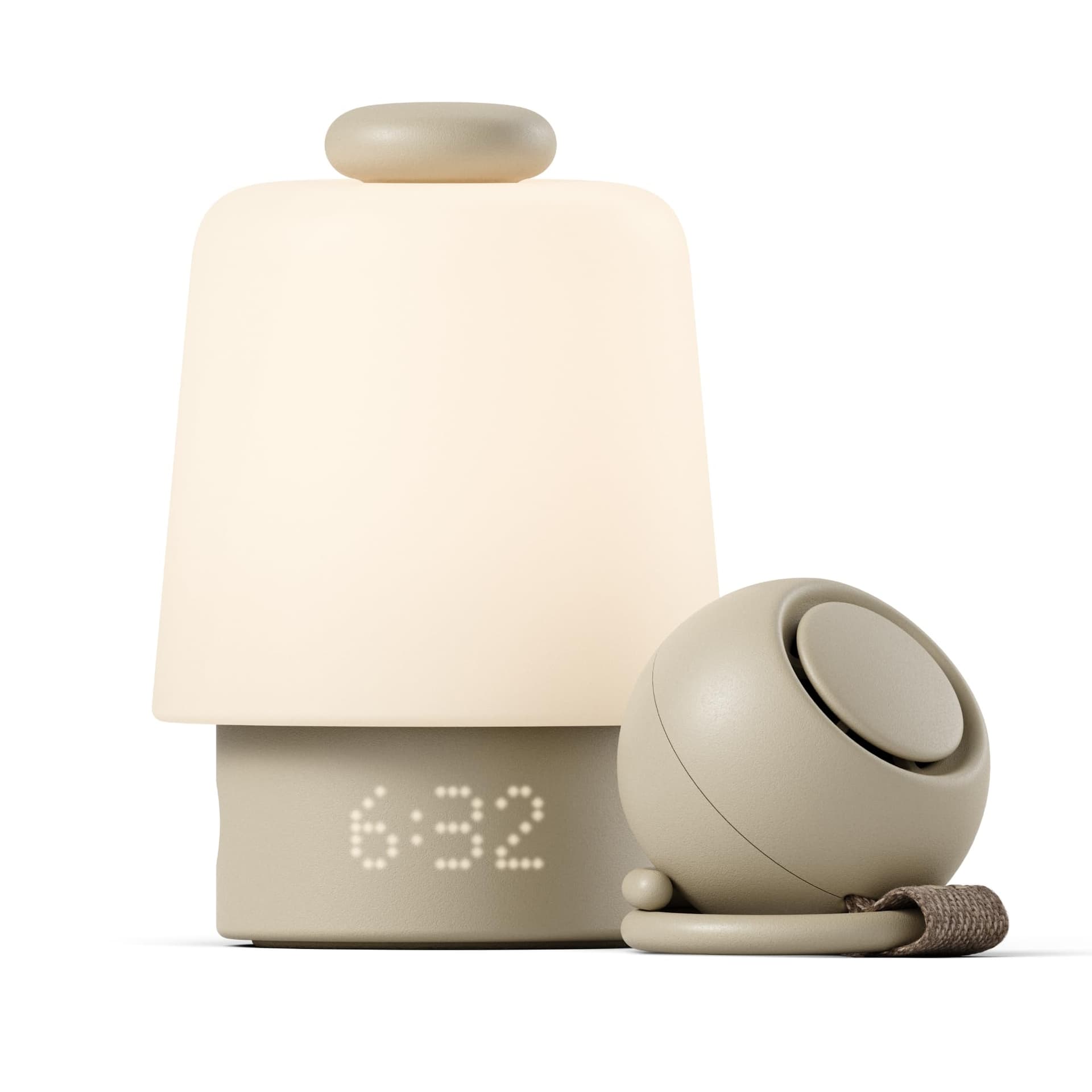
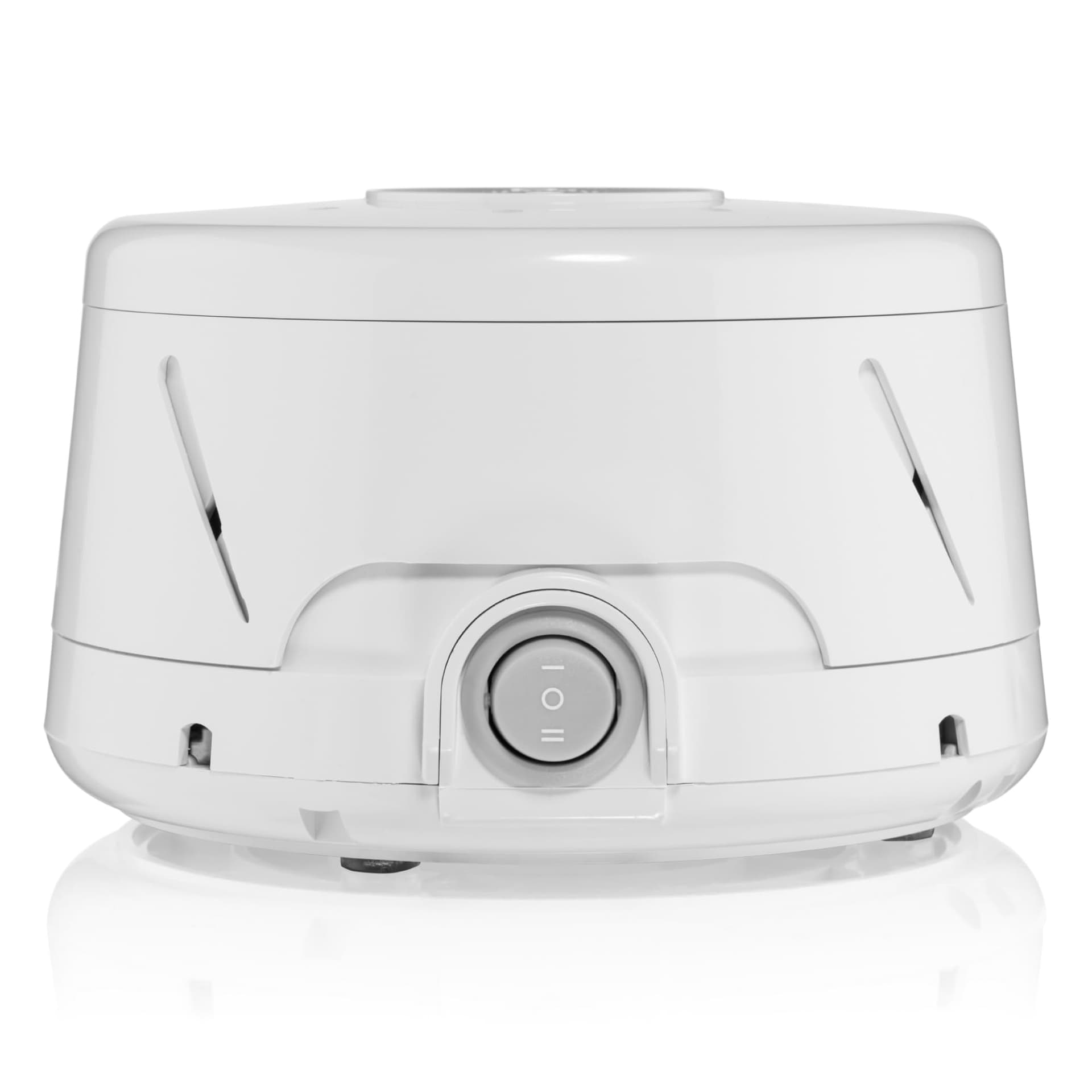
Affiliate disclosure: purchases via these links fund our work at no extra cost to you. Scores are independent of revenue.
FAQ
How long does the 4-month sleep regression last?
Most babies move through it in 2 to 6 weeks once parents consistently practice drowsy-but-awake and lock a predictable wind-down routine. The architecture change itself is permanent, but the painful gap (new architecture, no re-settle skill) is short. Babies whose parents do not adjust strategy — keep rocking to sleep, keep skipping the wind-down — can stay stuck in the regression for months. The tools are not optional, just often delayed.
Can the 4-month regression hit at 3 months or 5 months?
Yes. The brain reorganisation underlying the regression happens between 12 and 20 weeks for most babies. A regression at week 13 is real and means your baby matured early; a regression at week 19 is real and means it matured a little late. The signature is the same — sudden return to short sleep stretches, end-of-cycle wakings, harder bedtimes — regardless of the exact week. Trust the symptoms, not the calendar.
Should I sleep train during the regression?
Pediatric sleep clinicians generally treat 4 to 6 months as the easiest window to start, before separation anxiety arrives — that is consensus rather than a trial result, but it is a good reason not to postpone. If consistent drowsy-but-awake plus a locked wind-down has not produced progress in 2 weeks, structured sleep training (extinction, graduated extinction, fading, or chair method) is reasonable. Pick one method and run it for 7 nights straight — methods do not work if you switch every night.
My baby was a perfect sleeper before this. What did I do wrong?
Nothing. The babies who sleep best in months 1 to 3 are often the ones who were rocked, fed, or held to sleep — those approaches work great with the primitive sleep architecture and produce "easy" babies who sleep deeply and are easy to transfer. Those same babies often have the hardest 4-month regression because the new architecture exposes the lack of independent sleep skill. The flip side: "hard" babies in months 1-3 often sail through the 4-month regression because their parents had to develop independent sleep practices early.
We are wrecked. How do we get any sleep right now?
Three triage moves while you work the long-term plan. First: split the night into shifts with your partner — one of you takes 8 pm to 2 am, the other takes 2 am to 8 am — instead of both being woken by every cry. Each parent gets a 6-hour stretch of unbroken sleep, which is enough to function. Second: nap when the baby naps for at least one nap per day, even if you would not normally. Third: lower every standard that is not safety. Skip the laundry, get takeout, do not worry about the house. The regression is finite. The dishes can wait three weeks.
This article synthesises pediatric sleep science from Mindell & Owens "A Clinical Guide to Pediatric Sleep" 3rd edition (the developmental-shift framing in particular), the AASM 2016 pediatric sleep duration consensus (AAP-endorsed), the 2022 AAP safe sleep recommendations, and the behavioural infant sleep trial literature (Mindell 2006; Hall 2015). The drowsy-but-awake practice recommendation reflects the current consensus among pediatric sleep consultants rather than a single isolated trial result. Reviewer signoff by Marie Hansen, PSC pending — all parent-zone content remains BUILT but not SHIPPED until reviewer contract finalises per Article 9.4.
- [1]Mindell JA, Owens JA. A Clinical Guide to Pediatric Sleep: Diagnosis and Management of Sleep Problems, 3rd ed. Wolters Kluwer, 2016. Chapter 4 — Normal sleep development.
- [2]Anders TF, Halpern LF, Hua J. Sleeping through the night: a developmental perspective. Pediatrics. 1992;90(4):554-560.
- [3]Mindell JA, Telofski LS, Wiegand B, Kurtz ES. A nightly bedtime routine: impact on sleep in young children and maternal mood. Sleep. 2009;32(5):599-606.
- [4]American Academy of Pediatrics. 2022 recommendations for reducing infant deaths in the sleep environment. Pediatrics. 2022;150(1):e2022057990.
- [5]Hall WA, Hutton E, Brant RF, et al. A randomized controlled trial of an intervention for infants' behavioral sleep problems. BMC Pediatrics. 2015;15:181.
Marie Hansen, PSC
Pediatric Sleep Consultant (PSC) trained through the Family Sleep Institute. Edits every parent-zone article on SleepyHero.
Last updated:
SleepyHero independently researches every article. We do not accept payment from product manufacturers, sleep training programs, or supplement brands for editorial coverage. Affiliate links to recommended tools support the site at no cost to you.
Keep going
- ToolWake windows by age
The new windows after 4 months stretch fast — check the band.
- ToolBaby sleep schedule
Rebuild the day around the new wake windows and one fewer nap.
- ArticleInfant sleep: 4–12 months
What sleep looks like after the regression resolves.
- ReviewNanit Pro Camera
Sleep insights + breathing tracking — useful when troubleshooting wakings.
- ArticleNewborn sleep: 0–3 months
What you came from — useful for confirming this is the regression, not a return.
- ToolWhite noise generator
AAP-compliant infant volume cap baked in.