Tired but can't fall asleep — five most likely causes.
Built from CBT-I literature, AASM clinical guidelines, and circadian science.
If you're tired but can't fall asleep, the cause is almost always one of five things: a hyperaroused nervous system from late-day stress, light or screen exposure suppressing melatonin, caffeine still circulating, an irregular sleep schedule confusing your circadian clock, or conditioned arousal where your bed has become a stress trigger. The fix depends on which one — start by ruling out caffeine and light, then address arousal.
The classic insomnia presentation isn't "I can't sleep." It's "I'm exhausted, I want to sleep, and I can't fall asleep." The body is tired. The brain isn't. Here are five common causes, with the diagnostic symptom and first fix for each.
| Cause | Diagnostic clue | First fix | Time to result |
|---|---|---|---|
| Hidden cortisol | Body tired, mind racing, heart elevated | 90-sec box breath at bedroom door | Same night |
| Schedule drift | Weekend wake 90+ min later than weekday | Anchor weekend wake within 30 min | 1-2 weeks |
| Caffeine residue | Drink coffee past noon, assume tolerance | Cut all caffeine after noon × 5 nights | 4-7 days |
| Late bright light | Bright overhead or screens 90 min pre-bed | Dim every light below 100 lux | Same night |
| Conditioned arousal | Bed itself feels like a stress trigger | Stimulus control (CBT-I) — out of bed in 20 min | 2-3 weeks |
1 · Cortisol you didn't notice
Cortisol is supposed to peak in the morning and trough in the evening. Stress flattens the curve — your evening cortisol stays elevated, and you can't enter the parasympathetic state required for sleep onset.[1]
The fix isn't "relax." Cortisol responds to physical signals, not mental willpower. The body needs three things to lower cortisol enough for sleep:
- Dim light — overhead lights below 100 lux for 90 minutes
- Cool body temperature — a 1-2°C drop in core temperature is part of the sleep onset signal
- Slow breathing — 6 breaths per minute for 4+ minutes activates the parasympathetic system
A 90-second box-breath at the bedroom door before you start the routine is more effective than 30 minutes of mental "winding down." The breathing technique: inhale 4 counts, hold 4, exhale 4, hold 4. Repeat for 90 seconds. Studies on heart rate variability show this measurably shifts autonomic balance — and HRV is the proxy that predicts sleep onset latency.
Skim the symptoms. The match for your situation is your first fix to try.
Body exhausted, mind racing, can't physically settle. Heart still elevated at bedtime.
90-second box breath at the bedroom door. Cool body temperature.
Weekend bedtime is 90+ minutes later than weekday. Mondays/Tuesdays feel worst.
Anchor weekend wake time within 30 min of weekday. Wake side matters more than bedtime.
You drink coffee past noon and assume tolerance has you covered.
Cut all caffeine after noon for 5 nights. Test onset speed.
Bright overhead light or screens within 90 minutes of intended sleep.
Dim every light below 100 lux 90 minutes before bed.
Bed feels like a stress trigger; mind activates the moment you lie down.
Stimulus control: out of bed if not asleep in 20 min. CBT-I is gold standard.
“The fix isn't "relax." Cortisol responds to physical signals, not mental willpower.”
2 · A sleep schedule that drifted
If your weekend bedtime is 90+ minutes later than your weekday bedtime, you're effectively flying east every Monday. The circadian system needs ~1 day to shift 1 hour of phase, so by Tuesday or Wednesday you're misaligned with your alarm.[2]
This is "social jet lag" — first described by Roenneberg in 2006 and now one of the best-studied causes of weekday sleep onset problems. The data: 70% of working adults experience some social jet lag, and ~30% have shifts of 2+ hours every weekend.
Pull the weekend bedtime within 30 minutes of weekday bedtime. Wake time matters more than bedtime — anchor the wake side, even on weekends, even after a bad night. The wake-time anchor is what re-sets the circadian clock; bedtime drift will adjust on its own once wake-time is consistent.
If you can't or won't anchor weekend wake-time, accept that Sunday/Monday onset will be hard and don't catastrophise it as insomnia. It's a predictable cost of the schedule choice.
“Wake time matters more than bedtime — anchor the wake side, even on weekends, even after a bad night.”
3 · Caffeine you didn't account for
Covered in detail in our caffeine article — the short version is that caffeine's half-life is 5 hours on average and longer for slow metabolizers. A 2pm coffee at a 7-hour half-life leaves a meaningful residue at 11pm.[3]
Tolerance hides this. You feel fine drinking coffee late. The caffeine still suppresses adenosine receptors, raising the arousal floor enough that sleep onset takes 30-60 extra minutes — and you might attribute that to "stress" or "racing mind" rather than the chemistry it is.
Test: cut all caffeine after noon for 5 nights and see if onset speeds up. Most people who think tolerance protects them see a measurable difference within a week. If you do, you've identified the cause. If you don't, move on to causes 1, 2, 4, or 5.
Calculate your personal caffeine cutoff.
Plug in your bedtime, sensitivity, and typical dose. The calculator returns the latest time you can have your last cup without residual exceeding the sleep-disruption threshold.
The complete printable sleep toolkit.
Twelve printables that pair with the SleepyHero tools — caffeine cutoff cards, sleep-debt logs, jet-lag schedules, the cycle-boundary bedtime planner, and more. Free downloads, always updated.
Get the 12 free printables →4 · Light exposure 90 minutes before bed
Bright light suppresses melatonin. The threshold is around 100 lux for blue-rich light. A bathroom overhead is 200-500 lux. A phone screen at full brightness held 30cm from your face is ~40 lux at the eye, which is below the threshold but compounds with overhead lighting.[4]
The fix is the cheapest one in this list: dim every light to under 100 lux 90 minutes before bed. Warm-white bulbs help, but lumen reduction matters more than color temperature. The simplest intervention: install dimmer switches or use smart bulbs scheduled to dim at 9pm.
Screen content is more activating than the light itself. Doomscrolling at 100 nits is worse than a paper book at the same lux because the content keeps cortisol elevated. If you're not willing to give up screens, switch to lower-stimulation content (a slow-paced film, an e-reader) and reduce brightness to minimum.
Blue-light blocking glasses ("orange goggles") have decent evidence for melatonin preservation, but the benefit washes out if overall light intensity is still high. Dim first, filter second.
A free sleep test — score your sleep in eight questions.
The quiz scores your sleep on five dimensions and ranks the highest-leverage fix for you specifically. ~90 seconds.
5 · Conditioned arousal
If you've spent enough nights in bed unable to sleep, your brain learns to associate the bed with wakefulness rather than sleep. The bed itself becomes a stimulus that prevents sleep.[5]
This is the cause people most often miss because it doesn't feel like a "cause" — it feels like the problem itself. The diagnostic test: do you feel sleepy on the couch but instantly alert when you lie down? That's conditioned arousal.
Cognitive Behavioral Therapy for Insomnia (CBT-I) addresses this with stimulus control: only get into bed when sleepy, and if you're awake more than 20 minutes, get out of bed and do something boring under dim light until sleepy. Boring is the operative word — no phone, no TV, no scrolling.
This works better than melatonin, sleeping pills, or any supplement. It is the most evidence-backed insomnia treatment available, and it's free. The downside: it takes 2-3 weeks of strict adherence to re-condition the bed-sleep association. Most people quit at week one when nights get worse before they get better. That's the expected pattern; push through.
Apps like Sleep Reset and CBT-i Coach (free, US Department of Veterans Affairs) deliver the protocol without a therapist.
What actually moves the needle.
Each strategy below is rated by evidence strength, with the specific source and what it does and doesn't solve. Run them in order.
The 90-second box-breath at the bedroom door
Before you brush your teeth or change for bed, stand at the bedroom doorway and do 6 breaths per minute (in 4, hold 4, out 4, hold 4) for 90 seconds. This shifts autonomic balance toward parasympathetic — the physiological state required for sleep onset — before you start the wind-down routine.
- +Hidden cortisol (cause #1) — same-night effect
- +Conditioned arousal (cause #5) — disrupts the activation reflex
- +Stress-driven onset failure
- −Caffeine residue (need to fix at the chemistry level)
- −Schedule drift (need consistent wake time)
- −Light exposure (need dim environment)
Anchor weekend wake-time within 30 minutes of weekday
Pick your latest weekend wake time and pull it within 30 minutes of your weekday wake. Bedtime will follow naturally once wake is consistent. This single change resolves the Sunday-Monday onset problem for most people experiencing schedule drift.
- +Schedule drift (cause #2)
- +Sunday-night insomnia
- +Monday-morning grogginess
- −People with shift work or genuinely variable schedules
- −Caffeine or light-driven onset issues
Stimulus control (CBT-I) for 3 weeks
Only get into bed when sleepy. If you're awake more than 20 minutes, get out of bed, sit in dim light reading something boring (paper book) until sleepy, then return. Repeat as needed. Strict adherence for 21 nights re-conditions the bed-sleep association.
- +Conditioned arousal (cause #5) — addresses the root
- +Sleep onset insomnia of any cause as a secondary intervention
- +Long-standing insomnia (months to years)
- −Acute one-night onset failures
- −Insomnia where the cause is medical (apnea, RLS, etc) without addressing those first
What you get here that you don't get elsewhere.
- This guide
- We give you the specific breathing protocol (6 breaths/min × 90 sec) at the right moment (bedroom doorway) with the HRV evidence behind why it works.
- Typical alternative
- Generic "try deep breathing" with no protocol or moment specified.
- This guide
- We make explicit that wake-time anchoring beats bedtime focus for circadian re-alignment — the opposite of most popular advice.
- Typical alternative
- Tell you to "go to bed earlier" and never address the wake-side anchor.
- This guide
- We explain stimulus control with the 21-night adherence requirement and the "worse before better" warning that prevents quitting at week one.
- Typical alternative
- Mention CBT-I generically without explaining the protocol or the timeline.
- This guide
- We clarify that lumen reduction (lux) matters more than blue-light filtering — and explain when each helps.
- Typical alternative
- Hyper-focus on blue-light glasses without addressing total light load.
See a sleep physician if onset insomnia persists 3+ nights per week for more than 3 weeks despite addressing the most likely cause; if you have severe daytime impairment (cognitive function, mood, accidents); if you suspect Restless Legs Syndrome (uncomfortable leg sensations relieved by movement); if you're using sleep medications more than occasionally and want to taper; or if anxiety/depression symptoms are co-occurring. Chronic insomnia is treatable — the longer it goes unaddressed, the harder the conditioned-arousal piece becomes to break.
Related tools
People also ask
Why am I tired but can't fall asleep?
The most common cause is hidden cortisol — chronic stress flattens the cortisol curve so your evening levels stay elevated, blocking the autonomic shift to parasympathetic dominance required for sleep onset. Other common causes include caffeine residue you've underestimated, late bright-light exposure suppressing melatonin, weekend schedule drift, and conditioned arousal where your bed has become a stress trigger.
How long should it take to fall asleep?
Normal sleep onset latency is 5-20 minutes. Falling asleep in under 5 minutes regularly suggests significant sleep debt. Taking 30+ minutes regularly is the clinical threshold for sleep onset insomnia. One-off bad nights are not insomnia — pattern over 3+ nights per week is the threshold.
Should I take melatonin for sleep onset?
Melatonin is most useful for circadian misalignment (jet lag, shift work, schedule drift), taken at a low dose (0.3-0.5mg) 4-6 hours before target bedtime. The 5-10mg doses sold OTC are pharmacological, not physiological; start low and only go up if a low dose does nothing. For most cases of "tired but can't sleep," the matched fix from this article beats melatonin.
Does CBT-I really work for insomnia?
Yes — it has the strongest evidence base of any insomnia treatment and is recommended as first-line over medication by the American College of Physicians (2016). Most people see improvement within 2-3 weeks of strict adherence. The catch: the first week is often worse before it gets better, which is why so many people quit before the technique works.
Glossary.
The technical vocabulary used in this article, in plain English.
- Sleep onset insomnia
- Difficulty falling asleep at the start of the night. Distinct from sleep maintenance insomnia (waking during the night and not getting back). The two have different cause profiles and different fixes.
- Sleep onset latency (SOL)
- The time from getting into bed with intent to sleep until actually falling asleep. Normal SOL is 5-20 minutes. Above 30 minutes regularly is the clinical threshold for sleep onset insomnia.
- Cortisol
- The primary stress hormone, also a circadian-regulated hormone with a normal peak in the morning and trough in the evening. Elevated evening cortisol blocks the autonomic shift required for sleep onset.
- Parasympathetic state
- The "rest and digest" branch of the autonomic nervous system. Sleep onset requires shifting from sympathetic dominance (alert, activated) to parasympathetic dominance. Slow breathing, dim light, and cool body temperature all push the shift.
- Lux
- The unit of light intensity at a surface. Bright outdoor light is 10,000-100,000 lux; office lighting ~500 lux; the melatonin suppression threshold is ~100 lux for blue-rich light.
- Conditioned arousal
- A learned association in which the bed itself becomes a stimulus that prevents sleep, because the brain has paired the bed with prolonged wakefulness. Treated with stimulus control (CBT-I).
- CBT-I
- Cognitive Behavioral Therapy for Insomnia. The first-line treatment recommended by the American College of Physicians and the AASM. Combines stimulus control, sleep restriction, cognitive restructuring, and sleep hygiene. More effective than medication for chronic insomnia.
From our comparison desk
Gear that helps
Picks that pair with this guide — scored independently.

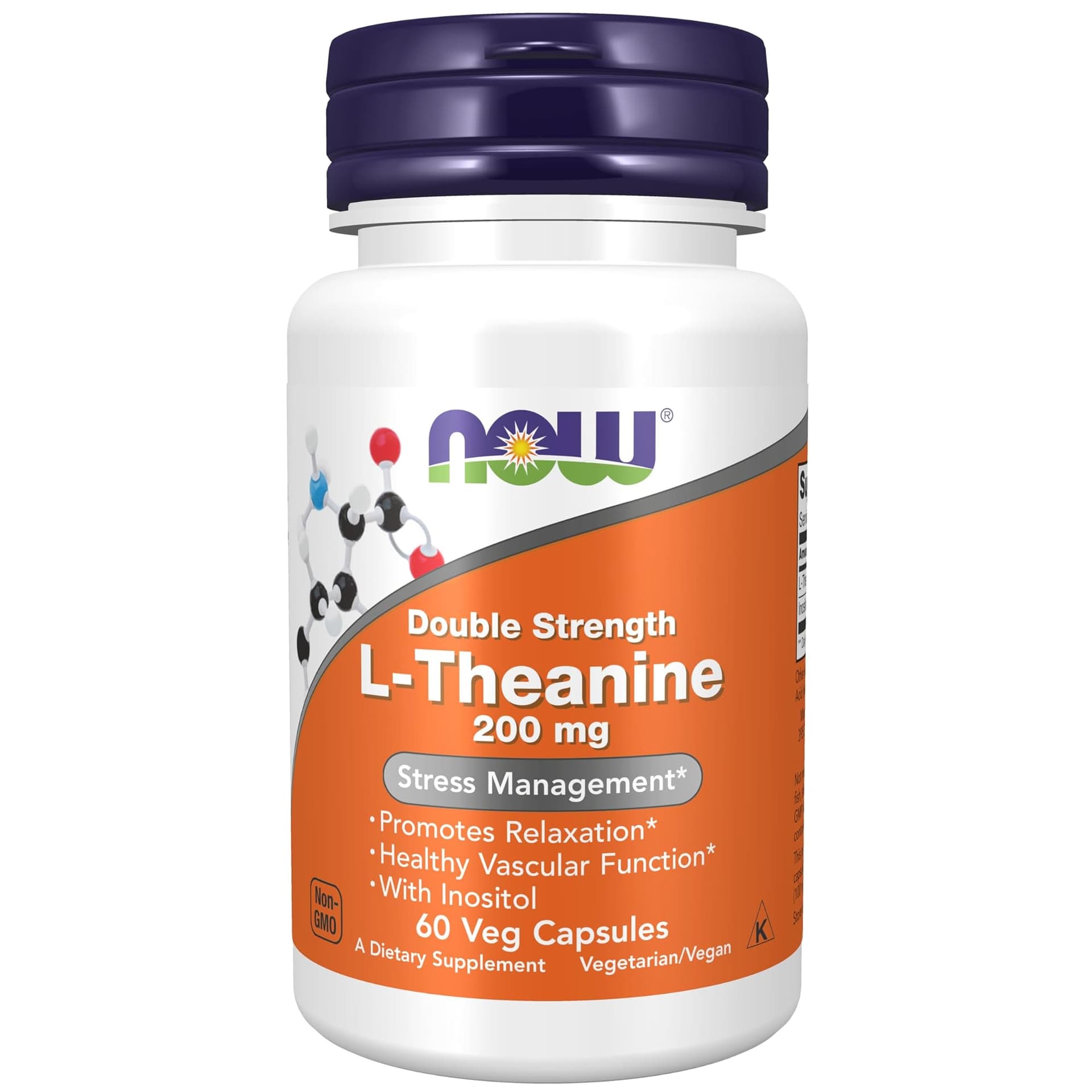
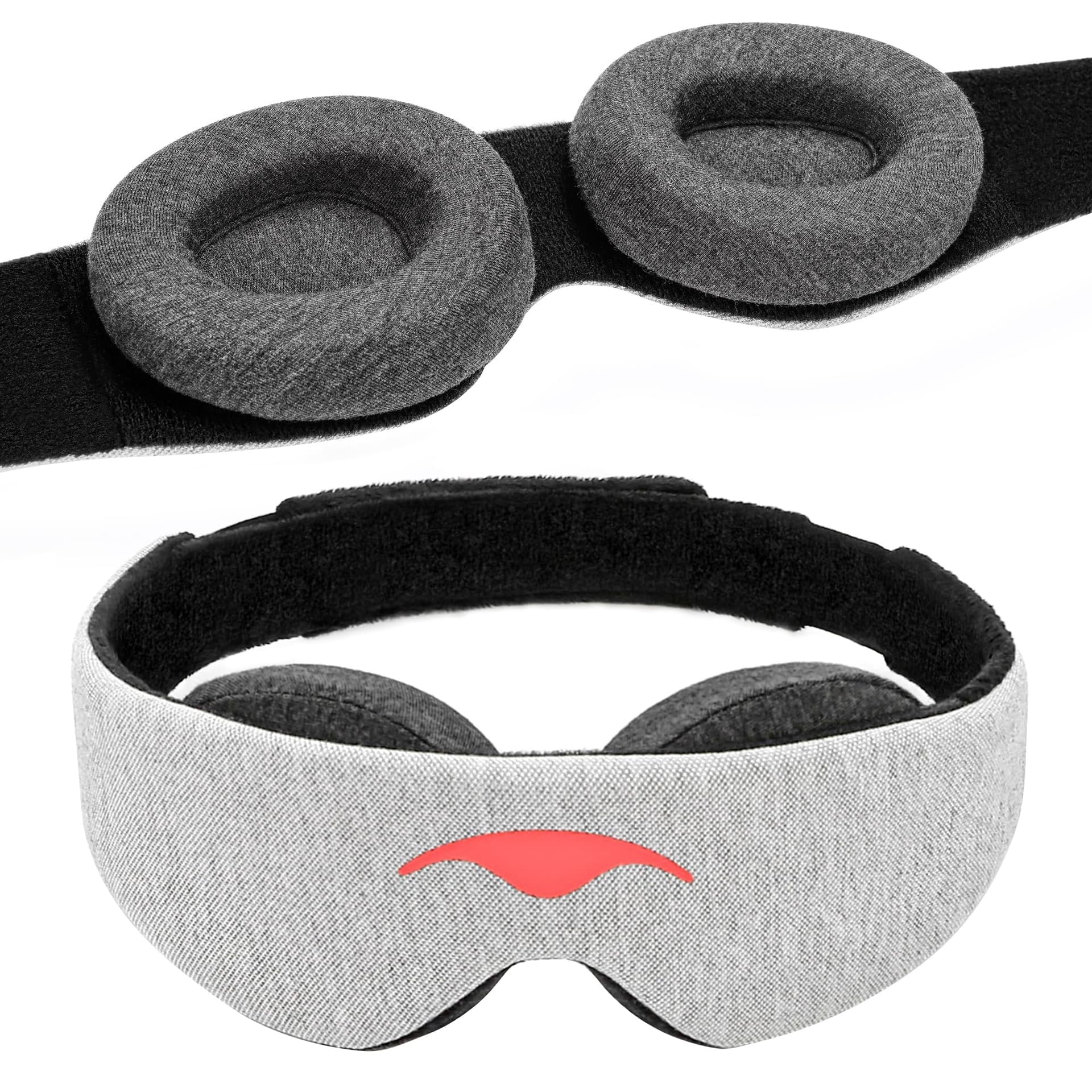
Affiliate disclosure: purchases via these links fund our work at no extra cost to you. Scores are independent of revenue.
FAQ
Should I take melatonin?
Melatonin is most useful for circadian misalignment (jet lag, shift work), taken at a low dose (0.3-0.5mg) 4-6 hours before target bedtime. The 5-10mg doses sold OTC are pharmacological, not physiological; start low and only go up if a low dose does nothing. Try the cause-1-through-5 fixes first.
How long does CBT-I take?
Most evidence-based protocols are 4-8 weeks of weekly sessions. The first improvements show up around week 2-3. Apps like Sleep Reset and CBT-i Coach (free, US Department of Veterans Affairs) deliver the protocol without a therapist.
Is screen time really that bad?
It's real but exaggerated. Screen content is more activating than the light. Doomscrolling at 100 nits is worse than a paper book at the same lux because the content keeps cortisol elevated. Boring or repetitive content under dim light is fine.
What's the difference between insomnia and one bad night?
Insomnia is the pattern: 3+ nights per week of difficulty falling/staying asleep, for 3+ weeks, with daytime consequences. One bad night isn't insomnia — calling it that activates conditioned arousal and makes the next night harder. Most adults have 5-15 bad nights per year that aren't pathological.
Does counting sheep actually work?
Mildly. Mental imagery distracts the verbal worry loop that often drives onset failure. Whether it's sheep, a beach, or counting backward from 1000 by 7s doesn't matter — the mechanism is occupying the linguistic processing that's running the worry. Boring beats interesting.
Should I avoid naps if I have onset insomnia?
Yes during a 2-3 week reset (CBT-I sleep restriction explicitly removes naps). Long-term, a 20-30 minute early afternoon nap is fine if onset insomnia is resolved. Late afternoon naps and naps over 30 minutes increase onset latency the same night.
Synthesised from CBT-I literature, AASM clinical guidelines, and Walker/Roenneberg research on circadian misalignment. Primary sources: Qaseem et al. (ACP 2016) on first-line CBT-I recommendation; Roenneberg et al. (2003-2019) on social jet lag; Tähkämö et al. (2019) on light and melatonin suppression. We update when new sleep-onset insomnia research changes the consensus order.
- [1]Vgontzas, A.N., Bixler, E.O., Lin, H.M., et al. (2001). Chronic insomnia is associated with nyctohemeral activation of the hypothalamic-pituitary-adrenal axis. JCEM, 86(8), 3787-3794.
- [2]Roenneberg, T., Allebrandt, K.V., Merrow, M., & Vetter, C. (2012). Social jetlag and obesity. Current Biology, 22(10), 939-943.
- [3]Drake, C., Roehrs, T., Shambroom, J., & Roth, T. (2013). Caffeine effects on sleep taken 0, 3, or 6 hours before going to bed. Journal of Clinical Sleep Medicine, 9(11), 1195-1200.
- [4]Tähkämö, L., Partonen, T., & Pesonen, A.K. (2019). Systematic review of light exposure impact on human circadian rhythm. Chronobiology International, 36(2), 151-170.
- [5]Qaseem, A., Kansagara, D., Forciea, M.A., et al. (2016). Management of chronic insomnia disorder in adults: A clinical practice guideline from the American College of Physicians. Annals of Internal Medicine, 165(2), 125-133.
Dr. Logan Foley, CSSC
Certified Sleep Science Coach (CSSC) trained through the Spencer Institute. Edits SleepyHero's adult-sleep tools, gear reviews, and articles.
Last updated:
SleepyHero independently researches every article. We do not accept payment from supplement brands, sleep tracker manufacturers, or pharmaceutical companies for editorial coverage. Affiliate links to recommended tools support the site at no cost to you.
Keep going
- ToolSleep score quiz
Identify which of the five hidden causes is dominant for you.
- ArticleCalming bedtime routine
The behavioural fix when 'no clear routine' is the dominant cause.
- ArticleNatural sleep remedies, ranked by evidence
See what the trial evidence actually shows.
- ArticleBreathing exercises for sleep
5-minute 4-7-8 in bed — works for the racing-mind cause.
- ArticleHerbal teas for sleep
Which blends contain chamomile, which contain valerian, and what each costs.
- ArticleThe 3am wake-up — five most likely causes
If you fall asleep fine but wake at 3am, the cause profile is different.