Jet lag — what it actually is, and what works.
Built from chronobiology phase response curve research and AASM jet lag guidelines.
Jet lag is a circadian phase mismatch — your internal clock is still on home time. The body shifts about one time zone per day naturally, so a 6-hour trip takes ~6 days to fully resolve. The interventions that actually accelerate it are timed light exposure (morning light eastward, evening light westward), low-dose melatonin, and strict adherence to local meal times.
Jet lag is often confused with travel fatigue. Travel fatigue is the cumulative cost of dehydration, immobility, and bad plane sleep — it resolves in 24 hours of normal living. Jet lag is something else: a multi-day phase mismatch between your circadian clock and the local time at the destination, and only specific interventions actually shift it. Here's what the chronobiology research says works.
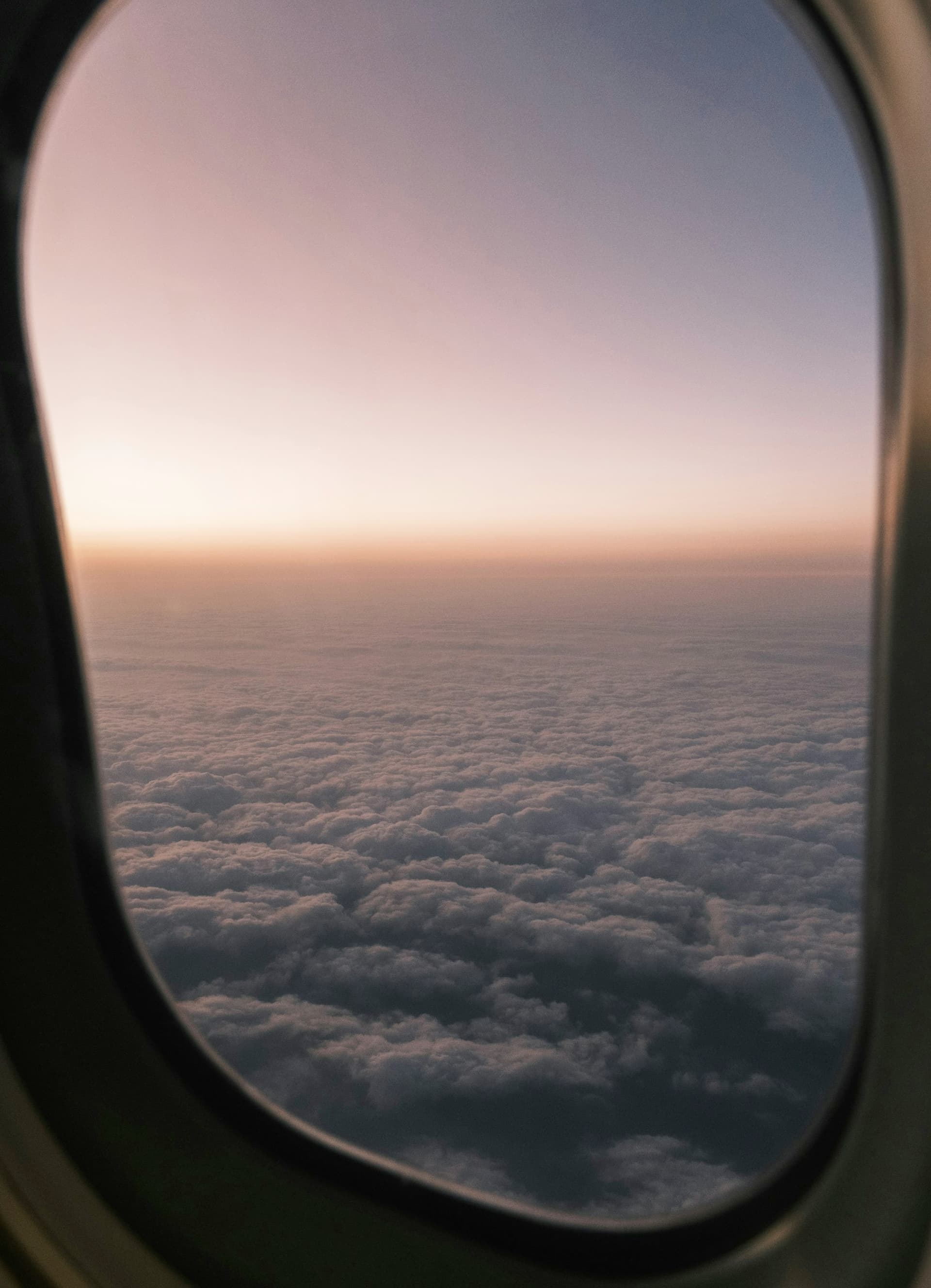
| Trip | No intervention | With protocol | Hardest phase |
|---|---|---|---|
| 3 zones west | ~3 days | ~1.5 days | Day 1 evening alertness |
| 3 zones east | ~3-4 days | ~2 days | Day 1-2 morning fatigue |
| 6 zones west | ~5 days | ~2.5 days | Late-night wakefulness |
| 6 zones east | ~6-7 days | ~3-4 days | Early morning wake-ups |
| 9-12 zones (any) | ~10-14 days | ~5-7 days | Full circadian inversion |
What's actually misaligned
Your circadian clock is anchored in the suprachiasmatic nucleus (a tiny cluster of ~20,000 neurons in the hypothalamus) and runs slightly longer than 24 hours — about 24.2 hours on average.[1] Daily light exposure is what re-anchors it to the 24-hour solar day.
When you fly across multiple time zones, the clock keeps firing on home-time signals (cortisol peaks, melatonin onset, body-temperature minimum) while the destination expects you to be awake/asleep at completely different hours. The mismatch resolves at roughly 1 hour of phase shift per day under normal conditions — meaning a 6-hour flight east takes about 6 days to fully adjust without intervention.
The symptoms aren't random. They're the product of running on home-time physiology in destination-time conditions:
- Wake-time mismatch: cortisol still peaks at home-morning (now destination-afternoon, or middle-of-the-night)
- Sleep-onset mismatch: melatonin still rises at home-evening (now destination-morning, or middle-of-the-night)
- Digestive mismatch: digestive enzymes prepare for home-meal-times (which produces the 3am hunger that's diagnostic of jet lag, not just a snack craving)
“Wrong-timing light makes things worse, not just neutral — guess at the protocol and you can extend jet lag by days.”
Eastward is harder than westward — and here's why
This isn't subjective. The circadian clock shifts more easily backward (lengthening the day, which matches its natural >24h period) than forward (shortening the day).[2]
Practical consequence: a westward flight of 6 zones takes ~3-5 days to adjust. The same flight eastward takes 5-7 days. If you're flying east, start preparing 2-3 days before departure by shifting your sleep schedule earlier in 30-minute increments.
The asymmetry is severe past 8 zones. A New York → Tokyo trip (13 hours east) often resolves the same way a New York → Tokyo trip going west (11 hours via the long route) would — your clock chooses the easier direction regardless of the actual flight path.
The exception: people whose endogenous circadian period is shorter than 24 hours (a small genetic minority) handle eastward better than westward. If you've always been "fine going east, miserable going west," you're likely in this group.
“In the Cochrane review, 0.5 to 5mg melatonin worked similarly for jet lag and doses above 5mg added nothing. Timing is the part to get right: taken at the wrong time, it can delay adaptation.”
What actually shifts the clock
Three things have strong evidence: timed light exposure, timed melatonin, and timed meals. In that order of strength.[3]
Light is the master synchroniser. Bright light in the destination's morning shifts the clock earlier (helps eastward travel). Bright light in the destination's evening shifts later (helps westward travel). The dose is meaningful — 30+ minutes of outdoor light is more effective than 30 minutes of indoor light, by a factor of 5-10x. Wrong-timing light makes things worse, not just neutral.
Melatonin: 0.3-0.5mg taken 4-6 hours before target bedtime at the destination accelerates the shift.[4] On dose, the Cochrane review found 0.5 to 5mg similarly effective, though people fell asleep faster and slept better on 5mg than on 0.5mg; doses above 5mg added nothing.[4] Time it precisely; melatonin's phase-shifting effect depends on when in the cycle it's taken. Taken at the wrong time, it can shift the clock the wrong direction.
Meals: eating at destination meal times (rather than home meal times) helps anchor peripheral clocks in the liver and gut, which feed back to the central clock.[5] The effect is smaller than light or melatonin, but free and easy. The bigger win: a small protein-and-fat breakfast at destination-morning is one of the strongest peripheral-clock signals available.
What doesn't work (despite popular belief): caffeine timing alone, "just sleep on the plane," NSAIDs/sleeping pills, alcohol, and most over-the-counter jet-lag remedies (no-jet-lag tablets, jet-lag patches, etc — all unsupported by evidence).
Plan your jet lag day-by-day.
Enter your departure, destination, and arrival date. The planner returns a 3-day pre-flight prep, arrival-day plan, and 3-day recovery — including when to seek and avoid light.
The complete printable sleep toolkit.
Twelve printables that pair with the SleepyHero tools — caffeine cutoff cards, sleep-debt logs, jet-lag schedules, the cycle-boundary bedtime planner, and more. Free downloads, always updated.
Get the 12 free printables →The pre-flight + arrival + recovery protocol
For trips longer than 4 zones, a structured protocol shifts the clock 50-70% faster than no intervention. The protocol has three phases:
Pre-flight (3 days): shift your sleep schedule by 30-60 minutes per day toward destination time. For eastward, start going to bed earlier; for westward, later. Do morning bright light if eastward, evening if westward.
Travel day: set your watch to destination time at takeoff. Eat and sleep on destination time (not flight-departure time). On long flights, this often means refusing the airline meal that's served at "your home dinner time" but is actually destination 4am.
Arrival (3 days): aggressive light exposure at the right hour of destination day, melatonin if you're using it, and strict adherence to destination meal times even when you're not hungry. Resist the temptation to nap on arrival unless it's destination-evening — naps at destination-afternoon dramatically extend the recovery.
We've built this into our jet lag planner. Plug in your departure, destination, and flight time, and it returns a day-by-day schedule of when to seek light, when to avoid light, when to take melatonin (if you choose to), and when to eat. Don't guess at timing — the wrong-direction light exposure can shift the clock the wrong way and extend jet lag by days.
What actually moves the needle.
Each strategy below is rated by evidence strength, with the specific source and what it does and doesn't solve. Run them in order.
Timed bright light at destination
Get 30+ minutes of outdoor light at the right destination hour, every day until adjusted. Eastward travel: morning light. Westward travel: evening light. This is the strongest single intervention available and works for everyone.
- +Both eastward and westward travel
- +Trips of any duration (3-12+ zones)
- +Cases where melatonin is contraindicated or unavailable
- −Indoor-only schedules with no daylight access (use 10,000-lux lamp instead)
- −If timing is wrong — wrong-direction light makes things worse
Low-dose melatonin (0.3-0.5mg) timed correctly
Take 0.3-0.5mg melatonin 4-6 hours before target bedtime at the destination. Continue for 3-5 nights. On dose, the Cochrane review found 0.5 to 5mg similarly effective for jet lag, though people fell asleep faster and slept better on 5mg than on 0.5mg; doses above 5mg added nothing.
- +Eastward trips of 5+ zones (strongest benefit)
- +Cases where light exposure timing isn't possible (long meetings, indoor schedules)
- −Westward trips under 4 zones (light alone is enough)
- −If timed wrong — can shift the clock the wrong direction
- −People taking interacting medications (warfarin, immunosuppressants — check first)
Meal timing aligned with destination
Eat at destination meal times even when you're not hungry. Skip the airline meal that lands at destination 3am. A small protein-and-fat breakfast at destination-morning is one of the strongest peripheral-clock signals available.
- +Anchoring peripheral clocks (liver, gut)
- +Reducing the diagnostic 3am hunger
- +Travelers who can't or won't take melatonin
- −As a standalone (combine with light)
- −When destination meal times conflict with work obligations
What you get here that you don't get elsewhere.
- This guide
- We explain why eastward is harder (your clock's free-running period is >24h, so it naturally drifts later) and what to do about it.
- Typical alternative
- Mention eastward is harder without explaining why or adjusting recommendations accordingly.
- This guide
- Specific dose (0.3-0.5mg) and timing (4-6 hours before destination bedtime), plus what the Cochrane review found on dose: 0.5 to 5mg worked similarly, though people fell asleep faster and slept better on 5mg, and above 5mg added nothing.
- Typical alternative
- "Take melatonin" without specifying dose, timing, or formulation.
- This guide
- Explicit warning that light exposure at the wrong destination hour shifts the clock the wrong direction and extends jet lag by days.
- Typical alternative
- Treat light as universally beneficial regardless of timing.
- This guide
- Cover peripheral clock entrainment via meal timing — backed by Wehrens 2017 — as a free, additive intervention.
- Typical alternative
- Skip meals as an intervention or only mention dehydration.
Jet lag itself doesn't require medical care, but see a clinician if: you experience persistent insomnia 2+ weeks after a major time-zone shift; jet lag triggers manic or depressive symptoms (chronotype shifts can destabilise bipolar disorder); you're on medications with strict timing requirements (warfarin, insulin, immunosuppressants — discuss timing strategy before traveling); or you experience cardiac symptoms (palpitations, dizziness) that persist past 48 hours of arrival.
Related tools
People also ask
How long does jet lag last?
About 1 day per time zone crossed without intervention, and 0.5-0.75 day per zone with the timed-light + melatonin protocol. A 6-hour eastward trip takes ~6 days to fully resolve naturally, or ~3 days with the protocol. Westward travel resolves about 30% faster than eastward.
Why is jet lag worse going east?
Your circadian clock has a natural free-running period of ~24.2 hours — slightly longer than the solar day. This means your clock is naturally biased to lengthening the day (westward travel). Eastward travel shortens the day, which fights the clock's natural drift, and shifts about 25-30% slower.
Does melatonin help jet lag?
Yes, with the right timing. Take a low dose (0.3-0.5mg) 4-6 hours before target bedtime at the destination, for 3-5 nights. The 2002 Cochrane review of 10 RCTs found clear benefit for trips of 5+ zones, with 0.5 to 5mg working similarly; people fell asleep faster and slept better on 5mg than on 0.5mg, and doses above 5mg added nothing.
Should I sleep on the plane?
Only if the timing matches your destination's night. Sleeping on a daytime-arrival flight that lands in the morning makes jet lag worse — you'll have replenished sleep pressure when you needed to be tired enough to sleep on local night-1. Set your watch to destination time at takeoff and follow that schedule.
Glossary.
The technical vocabulary used in this article, in plain English.
- Circadian rhythm
- The ~24-hour internal cycle that regulates sleep-wake, hormone release, body temperature, and other physiological processes. Anchored to the solar day primarily by light exposure.
- Phase shift
- A change in the timing of the circadian rhythm. Phase advance shifts everything earlier (helps eastward travel); phase delay shifts everything later (helps westward travel). Light, melatonin, and meals all produce phase shifts when timed correctly.
- Suprachiasmatic nucleus (SCN)
- A small region in the hypothalamus that contains the body's master circadian clock. Receives direct input from light-sensitive cells in the retina (intrinsically photosensitive retinal ganglion cells) and synchronises peripheral clocks throughout the body.
- Melatonin
- A hormone secreted by the pineal gland in darkness, peaking in the middle of the biological night. Acts as a circadian phase-setter when supplemented at the right time. For jet lag, 0.5 to 5mg worked similarly in the Cochrane review.
- Phase response curve (PRC)
- A graph showing how a stimulus (light, melatonin) shifts the circadian clock depending on when in the cycle it's applied. The PRC for light has a phase-advance region in the morning and a phase-delay region in the evening.
- Free-running period
- The natural period of the circadian clock in the absence of external time cues. Average is ~24.2 hours in adults — slightly longer than the solar day, which is why westward travel (lengthening the day) is easier than eastward.
- Travel fatigue
- The cumulative cost of dehydration, immobility, sleep deprivation, and stress from travel itself. Distinct from jet lag — resolves in 24 hours of normal living regardless of time-zone shift.
- Peripheral clocks
- Circadian oscillators in tissues outside the SCN (liver, gut, muscles, etc) that respond to feeding cues, exercise timing, and temperature in addition to the SCN's master signal. Aligning peripheral clocks to destination time accelerates jet lag recovery.
From our comparison desk
Gear that helps
Picks that pair with this guide — scored independently.
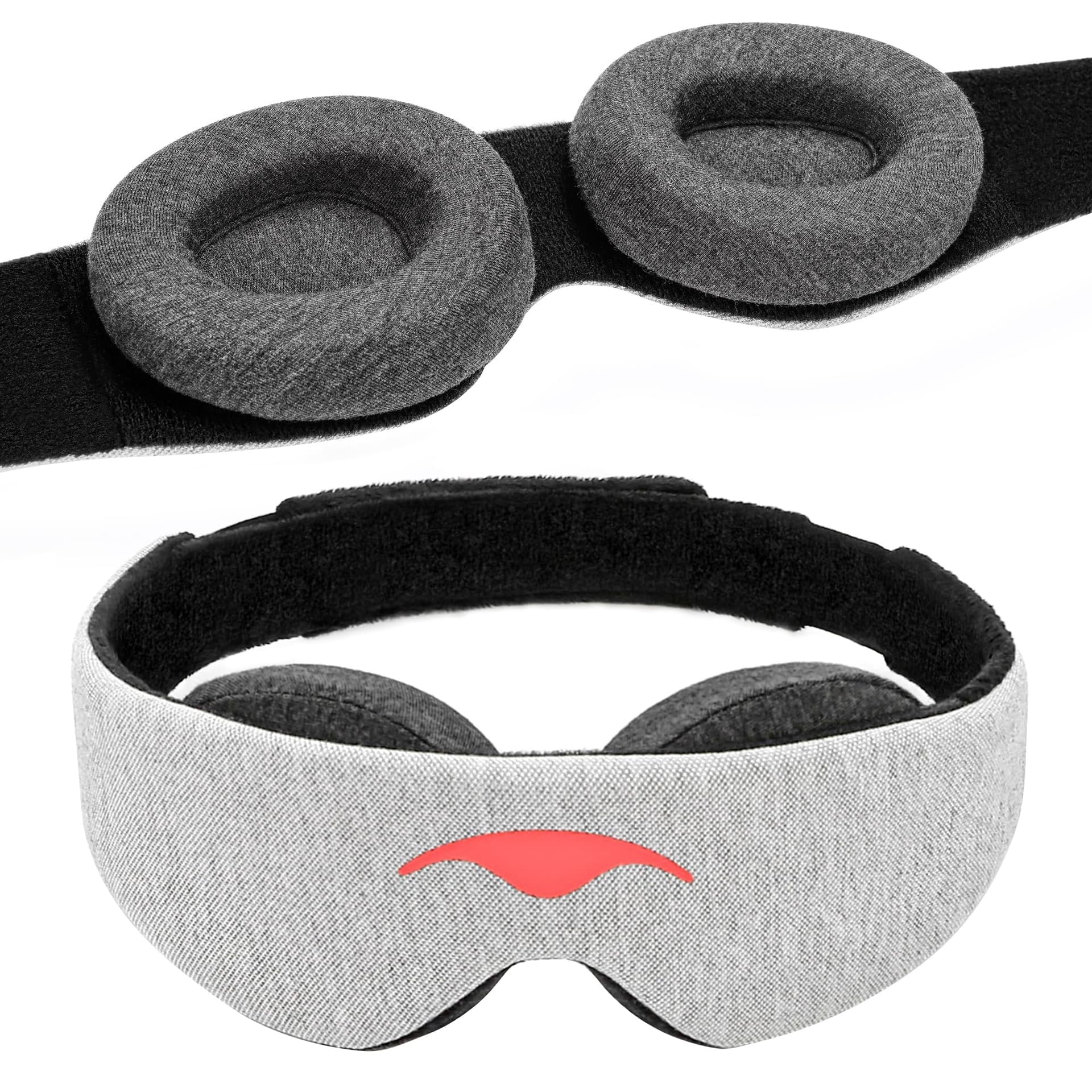

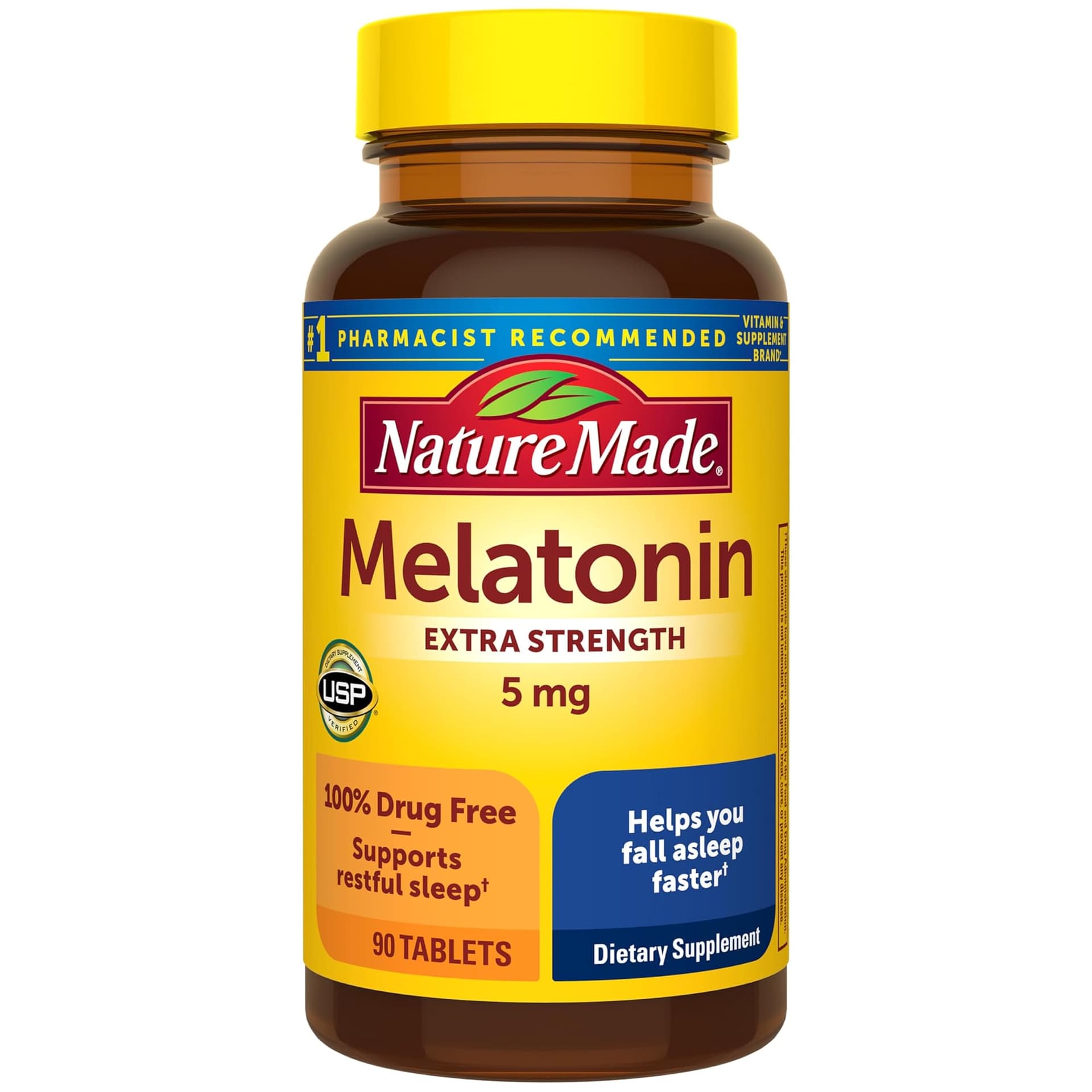
Affiliate disclosure: purchases via these links fund our work at no extra cost to you. Scores are independent of revenue.
FAQ
Should I take melatonin?
If your trip is 5+ zones, yes — at 0.3-0.5mg taken 4-6 hours before target destination bedtime, for 3-5 nights. Light exposure is the more powerful tool and works without supplements. Melatonin helps if you can't get the right light at the right time — typical for business travel with daytime meetings.
Does sleeping on the plane help?
Only if the timing matches your destination's night. Sleeping on a daytime-arrival flight that lands in the morning makes jet lag worse — you'll have replenished sleep pressure when you needed to be tired enough to sleep on local night-1. Set your watch to destination time at takeoff and follow that schedule.
Is jet lag worse with age?
Yes. Circadian flexibility declines with age, and the clock becomes harder to phase-shift past 60. The same trip might take 7-10 days to recover from at 65 vs 4-5 days at 30. Older travelers benefit disproportionately from strict protocol adherence — especially the light-timing component.
What about coffee or alcohol on the plane?
Coffee timed to destination morning is fine and helpful. Coffee timed to home-morning (which feels natural but is destination-evening or middle-of-night) prolongs jet lag — it's a stimulant when you need to be transitioning to sleep on destination time. Alcohol is universally bad for circadian recovery: it fragments REM, suppresses melatonin, and dehydrates.
How much does altitude/cabin pressure affect jet lag?
Cabin altitude (~6,000-8,000 ft pressurization) reduces blood oxygen saturation by ~5-10%, contributing to travel fatigue but not jet lag specifically. The jet-lag piece is purely circadian phase mismatch. Altitude effects resolve in 24 hours; circadian effects take 1+ day per zone.
Are no-jet-lag tablets, jet-lag patches, or homeopathic remedies effective?
No. None of these have evidence of effect beyond placebo in controlled trials. The only interventions with RCT support for accelerating phase shift are timed bright light, timed melatonin, and meal timing.
Built from chronobiology phase response curve research and AASM jet lag clinical practice guidelines. Primary sources: Roenneberg & Merrow (2016) on circadian period and asymmetry; Burgess et al. (2003) on light PRC; Herxheimer & Petrie (2002, Cochrane) on melatonin RCTs; Wehrens et al. (2017) on meal-timing entrainment of peripheral clocks. The recommendations are conservative; competitive athletes and shift workers may need more aggressive protocols, which we cover separately.
- [1]Czeisler, C.A., Duffy, J.F., Shanahan, T.L., et al. (1999). Stability, precision, and near-24-hour period of the human circadian pacemaker. Science, 284(5423), 2177-2181.
- [2]Roenneberg, T., & Merrow, M. (2016). The circadian clock and human health. Current Biology, 26(10), R432-R443.
- [3]Burgess, H.J., Crowley, S.J., Gazda, C.J., Fogg, L.F., & Eastman, C.I. (2003). Preflight adjustment to eastward travel: 3 days of advancing sleep with and without morning bright light. Journal of Biological Rhythms, 18(4), 318-328.
- [4]Herxheimer, A., & Petrie, K.J. (2002). Melatonin for the prevention and treatment of jet lag. Cochrane Database of Systematic Reviews, (2), CD001520.
- [5]Wehrens, S.M.T., Christou, S., Isherwood, C., et al. (2017). Meal timing regulates the human circadian system. Current Biology, 27(12), 1768-1775.
Dr. Logan Foley, CSSC
Certified Sleep Science Coach (CSSC) trained through the Spencer Institute. Edits SleepyHero's adult-sleep tools, gear reviews, and articles.
Last updated:
SleepyHero independently researches every article. We do not accept payment from supplement brands, sleep tracker manufacturers, or pharmaceutical companies for editorial coverage. Affiliate links to recommended tools support the site at no cost to you.
Keep going
- ToolJet lag planner
3-day pre-flight + arrival + 3-day recovery schedule, automated.
- ToolCaffeine cutoff calculator
Eastward shifts especially: caffeine timing makes or breaks the reset.
- ToolNap optimizer
Arrival-day naps can salvage or wreck the shift — get the duration right.
- ToolSleep cycle calculator
Once you've shifted, lock in a cycle-aligned destination bedtime.
- ReviewOura Ring 4 review
Tracks circadian recovery day-by-day — useful confirmation.