Sleep tools · Free
How much melatonin should you take?
Most over-the-counter melatonin in the US is dosed at 3–10mg per tablet. The research on dose is mixed: a 2013 meta-analysis found larger effects on time to fall asleep at higher doses, while a trial in older adults with insomnia found 0.3mg improved sleep and 3mg kept blood melatonin raised into the daytime. This calculator starts low on purpose and gives you a starting dose calibrated to your specific use case (sleep onset, mid-night waking, jet lag, shift work) and age band, plus the timing that makes melatonin actually work.
From our comparison desk
Cut evening light
Your body makes melatonin as the evening gets dark, and light holds it back. These cut evening light rather than adding a pill.

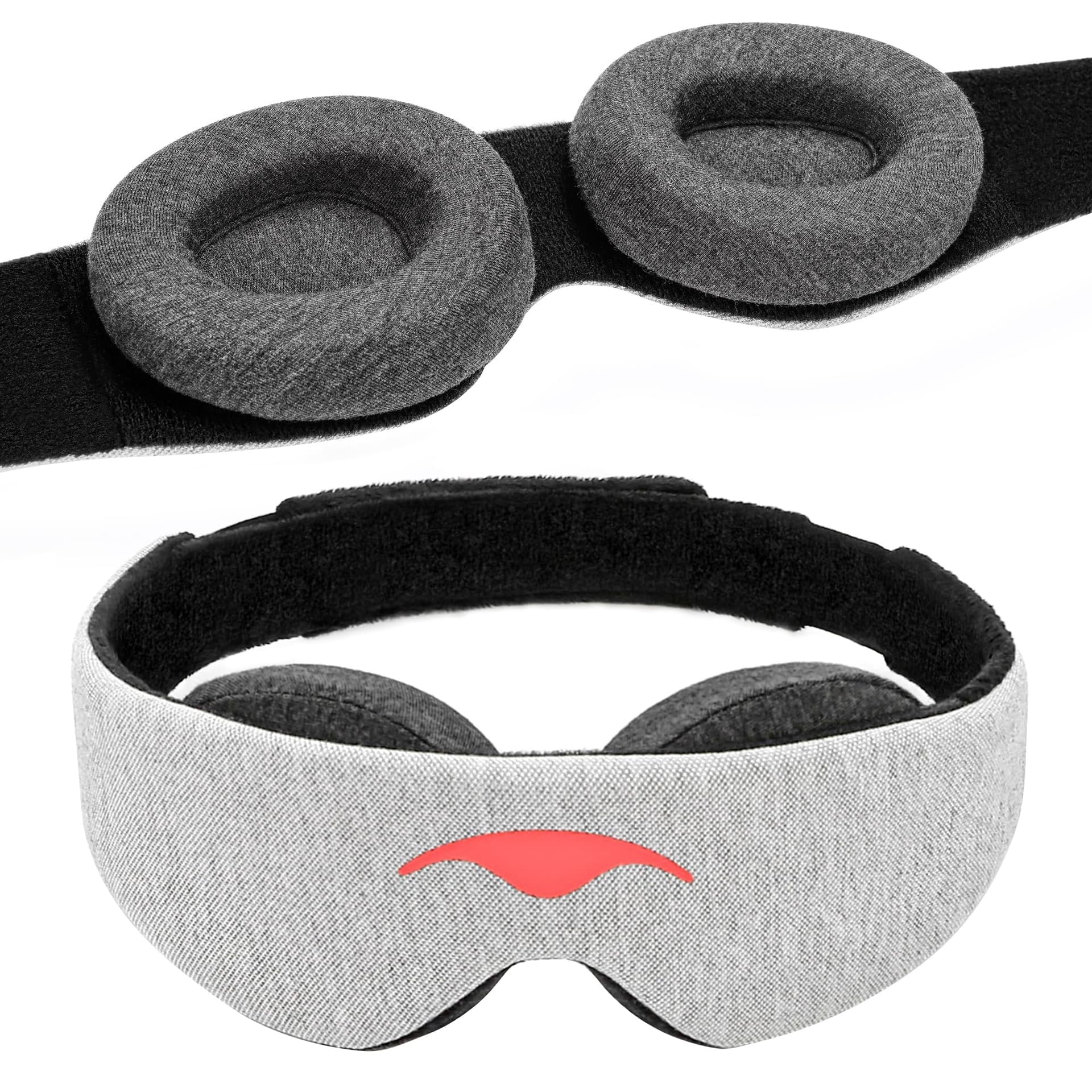
Affiliate disclosure: purchases via these links fund our work at no extra cost to you. Scores are independent of revenue.
How it works
Melatonin is a circadian-system signal, not a sedative. It tells your brain "darkness is here" — which only matters if you take it at the right time. For sleep onset, that means roughly 2 hours before your target bedtime so peak blood levels coincide with your wind-down. For mid-night waking, it's at bedtime in sustained-release form. For jet lag, it's at the destination's bedtime once you've arrived.
The over-the-counter market is the messy variable. A 2017 Erland & Saxena study found 26% of US brands varied more than 10% from their labeled dose, and 25% contained serotonin contamination. Buy from a pharmacy chain, USP-verified brand, or major manufacturer — Costco's Kirkland Signature, Nature Made, and Pure Encapsulations are well-regarded.
Two things this calculator won't do: replace a doctor's advice for chronic insomnia or pediatric use, and figure out if you actually need melatonin at all. The standard sleep-hygiene checklist (consistent bedtime, dark room, no screens 60 min before bed, caffeine cutoff) outperforms melatonin for most people. Try those first.
How to read your dose
The suggestion starts low on purpose and pairs the amount with a time, because for melatonin the when is as important as the how much. If your goal is falling asleep, the window is the hour or two before bed; if your goal is shifting a body clock that runs late, the effective timing is earlier in the evening.
Start at the low end and only adjust if it genuinely does nothing. A bigger dose is not a free upgrade: in one trial, 3 mg kept blood melatonin raised into the daytime while 0.3 mg brought it to normal night-time levels, so if you wake up groggy, go lower rather than higher. Remember too that melatonin is sold as a supplement, so actual content per pill can differ from the label, another reason to anchor on timing rather than milligrams.
The science: what melatonin does and doesn't do
Your own melatonin rises about two hours before your natural sleep onset and acts as the internal cue for night. A supplement adds to that signal, and meta-analyses (Ferracioli-Oda and colleagues; Buscemi and colleagues) find it modestly shortens the time to fall asleep, on the order of several minutes, with a small improvement in overall sleep quality.
What those numbers mean in practice is that melatonin is not a hypnotic and should not be judged like one. Its real strength is circadian: it is genuinely effective for jet lag and delayed sleep phase, where the problem is a mistimed clock, and comparatively weak when the barrier is a racing mind or 3 am waking, which have different causes.
How to use it safely
Use the lowest dose that works, at a consistent time, and treat it as a short-term nudge rather than a nightly crutch you never re-examine. It pairs best with light management, bright morning light and dim evenings, because light is the stronger circadian signal and melatonin reinforces it rather than replacing it.
Some situations call for a clinician first: children, pregnancy, and anyone on other medications, since melatonin can interact and the long-term data in those groups is thin. If nightly melatonin is the only thing standing between you and no sleep, that is a sign to look at the underlying schedule or seek an assessment, not to keep raising the dose.
References
- [1]Ferracioli-Oda E, Qawasmi A, Bloch MH. 'Meta-analysis: melatonin for the treatment of primary sleep disorders.' PLoS ONE, 2013.
- [2]Buscemi N et al. 'The efficacy and safety of exogenous melatonin for primary sleep disorders: a meta-analysis.' Journal of General Internal Medicine, 2005.
- [3]Brzezinski A, Vangel MG, Wurtman RJ, et al. 'Effects of exogenous melatonin on sleep: a meta-analysis.' Sleep Medicine Reviews, 2005.
- [4]Zhdanova IV, Wurtman RJ, Regan MM, et al. 'Melatonin treatment for age-related insomnia.' Journal of Clinical Endocrinology & Metabolism, 2001.
- [5]Herxheimer A, Petrie KJ. 'Melatonin for the prevention and treatment of jet lag.' Cochrane Database of Systematic Reviews, 2002.
FAQ
Common questions.
Is 0.5mg really as effective as 5mg?
That has not been shown. The Ferracioli-Oda 2013 meta-analysis (19 trials, doses up to 5mg) found that trials using higher doses reported larger reductions in time to fall asleep and larger gains in total sleep time; dose made no difference to sleep quality, and the authors note the dose analysis had limited power. The Brzezinski 2005 meta-analysis, often quoted for the low-dose claim, did not test dose: it assumed the effect levels off at low doses and concluded the optimal dose still needs further work. The case for starting low comes from smaller trials: in adults over 50 with insomnia, 0.3mg restored sleep efficiency, while 3mg also improved sleep but lowered body temperature and kept blood melatonin raised into the daytime (Zhdanova 2001). Our advice: start with the smallest dose that works for you, and step up only if it does nothing.
Why take melatonin 2 hours before bed instead of right at bedtime?
Melatonin's role is to time your wind-down, not to knock you out. Peak blood levels happen ~1 hour after taking it. If you take it 2 hours before bed, the signal arrives during your wind-down — which is where it does the most useful work (cueing the rest of your circadian system to shift toward sleep). Taking it at bedtime is fine but you may not feel a clear effect for 30–60 minutes.
Can I take melatonin every night long-term?
Mixed evidence. Short-term use (under 13 weeks) appears safe in adults per most trials. Long-term safety is less studied. The conservative approach: use it as needed for specific situations (jet lag, shift change, occasional insomnia) rather than a nightly habit. Talk to your doctor if you find yourself needing it nightly for more than a month.
Is melatonin safe for kids?
Talk to a pediatrician first. The AAP position: melatonin can be useful for some specific pediatric sleep disorders (autism, ADHD-related sleep issues) but should always be MD-supervised, used short-term, and only after behavioural strategies have been tried. Tiny doses (0.3–1mg) are typical; over-the-counter chewables at 3mg+ are often dosed too high.
What's the difference between regular and sustained-release melatonin?
Regular melatonin peaks at 1 hour and clears in 4–5 hours — good for sleep onset, less useful for staying asleep. Sustained-release (often called 'extended-release' or by the brand Circadin in Europe) releases over 6–8 hours — better for mid-night waking. The downside: harder to find in the US (Circadin is prescription-only here), and some sustained-release tablets are imprecisely formulated.
Does melatonin interact with other medications?
Yes — several. The big ones: blood thinners (warfarin), blood pressure medications, antidepressants (especially fluvoxamine which dramatically raises melatonin levels), seizure medications, and immunosuppressants. If you take any prescription medication, talk to your pharmacist before adding melatonin.
Will melatonin help with anxiety-driven insomnia?
Probably not directly. Melatonin times the circadian system — it doesn't sedate you or quiet anxiety. For anxiety-driven insomnia, the evidence-based first lines are CBT-i (cognitive behavioural therapy for insomnia), specific anxiety treatment, or short-term prescription medication. Melatonin can help with the circadian shift component if there is one, but it's not the right tool for the underlying anxiety.
Related
Keep going
- ToolSleep cycle calculator
Open the calculator.
- ToolJet lag planner
Open the planner.
- ToolNap optimizer
Open the nap optimizer.
- ToolCaffeine cutoff calculator
Open the calculator.
- ArticleWhy can't I fall asleep? Five causes.
Five causes to investigate.
- ArticleJet lag — what's actually happening
Read the jet-lag explainer.