Toddler sleep: 1–3 years
Based on the AASM 2016 sleep duration consensus, the pediatric parasomnia literature (Mason & Pack 2007; Petit et al. 2015), and Mindell & Owens (3rd ed.).
Toddlers (1-3 years) sleep 11-14 hours per 24 hours: typically 10-12 hours overnight + 1-2 hours of nap. The 2-to-1 nap transition happens between 13-18 months; the nap itself drops between ages 3-5. Most behavioural sleep problems at this age (bedtime resistance, night wakings, early mornings) respond to a locked 30-45 minute wind-down routine and consistent boundaries — not to negotiation.
Toddler sleep is mostly stable in structure but increasingly turbulent in delivery. The infant who slept reliably at 11 months might fight bedtime tooth and nail at 18 months — same baby, new cognitive layer. This is the age when language emerges, autonomy emerges, and bedtime negotiation becomes a sport. The schedule is simpler (one nap by mid-toddler, total sleep around 11-14 hours[^1]), but the behavioural management is the new work.

| Age | Total sleep / 24h | Wake window | Naps | Typical bedtime |
|---|---|---|---|---|
| 12–18 months | 12–14h | 3 – 4h | 2 → 1 transition | 7:00–7:30 PM |
| 18–24 months | 11–14h | 4 – 5h | 1 (1.5–2.5h) | 7:00–7:30 PM |
| 2 years | 11–14h | 5 – 6h | 1 (1.5–2h) | 7:00–8:00 PM |
| 3 years | 10–13h | 6 – 8h | 1 (1–1.5h) or 0 | 7:30–8:30 PM |
What's changing at this age
Cognitively, toddlers are working on object permanence (peaks early in this phase) and theory of mind (peaks late). The combination produces the classic 18-month-to-2-year bedtime regression: "I know you exist when you leave the room" plus "I have feelings about this" equals separation distress at exactly the wrong moment[2].
Language adds a layer. The toddler who used to fall asleep silently can now narrate the entire bedtime experience and request 47 specific things ("water," "the green cup," "the OTHER green cup"). This is normal. The structure is to honor reasonable requests inside the routine and not negotiate after the routine ends.
Physically, toddlers move from 2 naps to 1 nap (usually 13-18 months) to 0 naps (usually 3-5 years). Total daily sleep drops from ~13 hours at 1 year to ~12 hours at 3 years[1]. Wake windows stretch to 4-6 hours by mid-toddler.
“Honor reasonable requests inside the routine. Do not negotiate after lights out. The boundary is the bedtime, not the willingness to be flexible.”
The 2-to-1 nap transition
Most toddlers transition from two naps to one between 13 and 18 months. Signs your child is ready: the second nap pushes bedtime past 8 PM, both naps shorten to under 45 minutes on most days, or your child fights the second nap entirely.
The transition takes 4-6 weeks. During the gap, you'll have rough days where the single midday nap doesn't quite cover. Compensate with an earlier bedtime — 6:30 PM is fine on a tough nap day. Do not skip the early bedtime to "tire them out" — overtired toddlers fight bedtime harder, not easier.
Once on one nap, the structure stabilises around: wake 7 AM → wind down for nap around 12:30 PM → 1.5-2.5 hour midday nap → bedtime around 7-7:30 PM. Individual variation of ±30 minutes within this is normal.
Bedtime routine and resistance
A consistent bedtime routine is the strongest single intervention at this age[3]. The structure that works for most families: 30-45 minutes of wind-down, same order every night, ending at the same time. A standard sequence: dinner → bath → pajamas + brush teeth → 1-2 books → song or quiet talk → lights out.
Resistance peaks at 18 months, 2 years, and 3 years for predictable reasons (separation, autonomy, fear-of-missing-out)[2]. Strategies that work: 2-choice authority ("blue PJs or red PJs"), counting down to transitions ("two more pages, then lights out"), a transitional object (lovey, blanket — safe after 12 months), and a clear consistent endpoint (no negotiation after lights out).
What doesn't work: extending the routine to manage resistance (gives toddler more material to work with), screen time as part of wind-down, or punitive responses to bedtime resistance (escalates the conflict). On screens, be aware the strongest evidence comes from older children: a systematic review of 67 studies in school-aged children and adolescents found screen time adversely associated with shorter and later sleep in 90% of them, while noting that causation was not established[4]. Toddler-specific data are thinner, but the direction of the evidence is consistent enough to keep screens out of the wind-down.
The complete printable parent toolkit.
Twelve printables that pair with the SleepyHero tools — wake-window cards, sleep-debt logs, the newborn night-feeds tracker, the 4-month regression playbook, and more. Free downloads, always updated.
Get the 12 free printables →Night wakings, nightmares, and night terrors
Around 2 years, dreams become more vivid as cognitive development progresses. Some toddlers experience nightmares (REM sleep, late in the night, child wakes upset, often remembers the dream and is comforted by parent presence)[5]. Standard handling: brief comforting return-to-bed, no extensive talking, normalise the experience.
Night terrors are different — a non-REM arousal phenomenon, early in the night (usually within a couple of hours of bedtime), child appears awake and distressed but is actually asleep, doesn't remember in the morning[5]. Don't try to wake them; stay close to ensure safety, let it pass. Night terrors are frightening for parents but not harmful to the child. In a large longitudinal cohort, sleep terrors were most common in the preschool years and became much less common with age, so most children grow out of them[6].
Both can be triggered by overtiredness, schedule disruption, fever, or stress. The first intervention is reinforcing the schedule.
Build a daily schedule for your baby.
Enter age, wake time, and feeding type. The tool returns a full-day schedule with naps, feedings, and bedtime — based on age-appropriate wake windows.
Crib to bed transition
Most toddlers move from crib to bed between 2.5 and 3.5 years. Don't rush — the crib boundary is a sleep boundary, and removing it before the child has the impulse control to stay in bed makes night-wandering a daily issue.
Signs they're ready: climbing the crib (safety issue), expressing strong preference for a bed, or pre-school behavioural readiness (following rules in other contexts). Floor beds are an option for younger children who are climbing the crib.
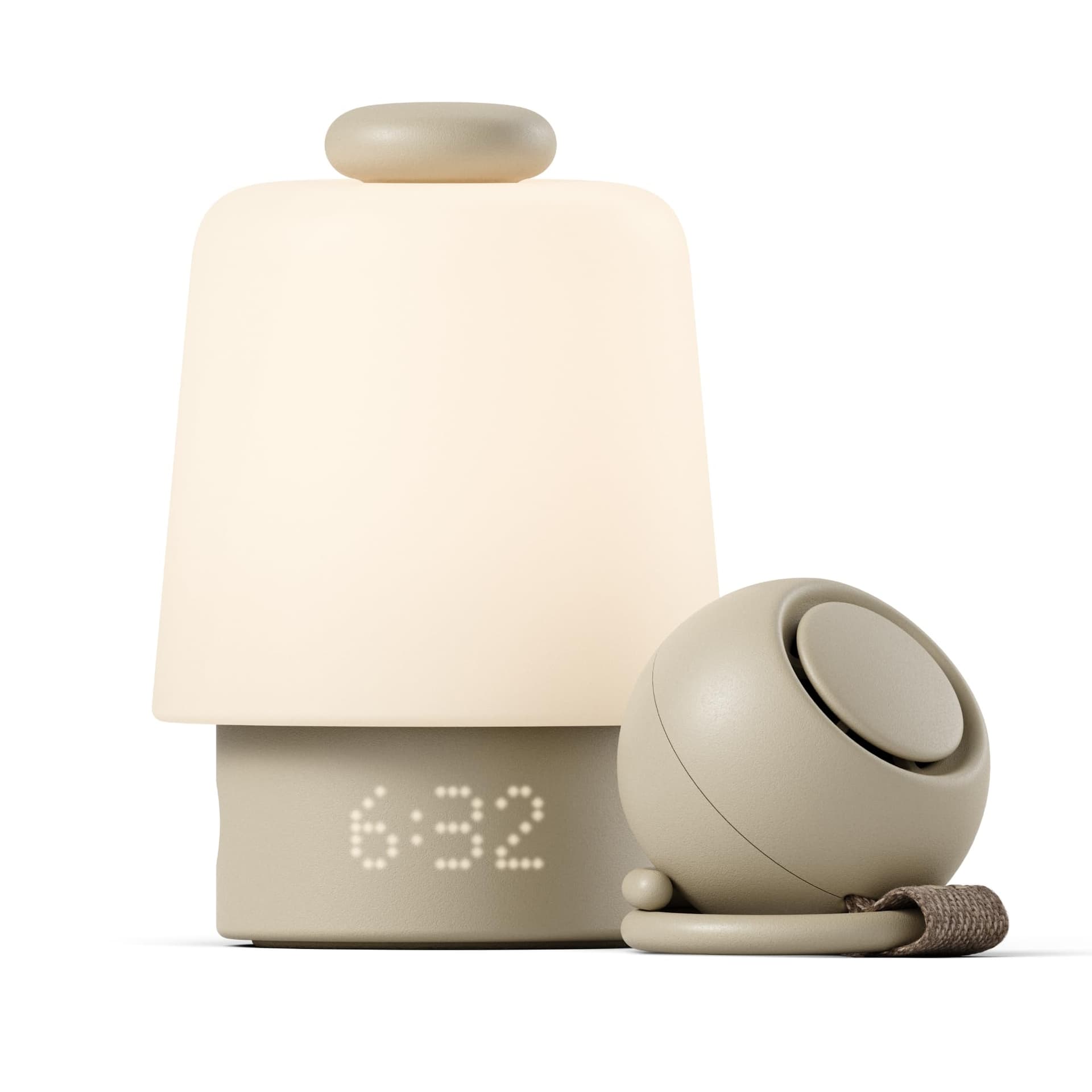
Do the transition with a low bed and a baby gate at the bedroom door (not the door closed). The gate creates a safe zone if they wander. Use a clock that signals when it's "OK to get up" (e.g., Hatch Rest+, RemiSleep Trainer) for ages 2.5+ — this works as a visual rule the toddler can read.
What actually moves the needle.
Each strategy below is rated by evidence strength, with the specific source and what it does and doesn't solve. Run them in order.
Lock the wind-down routine and never extend it
30-45 minutes, same order, same end time, every night. The routine is the cue; predictability is the active ingredient. The single biggest mistake parents make: extending the routine to manage resistance — that just gives the toddler more material. Honor reasonable requests inside the routine, no negotiation after lights out.
- +Faster sleep onset (typically <15 min)
- +Reduces bedtime resistance within 1-2 weeks
- +Survives travel, illness, daycare disruption
- −Routines under 20 min — too short to register as a cue
- −Doesn't override an underlying schedule mismatch
Use 2-choice authority to defuse power struggles
Toddlers fight for control. Give it to them in a contained way: "Blue PJs or red PJs?" "This book or that book?" "Sing first or song after?" Both choices end with the same outcome (sleep). Avoids the trap of open-ended negotiation while honoring the toddler's developmental need for autonomy.
- +Reduces 18-month and 2-year bedtime resistance
- +Builds child's sense of agency without losing the routine
- +Teaches transition skills that transfer to morning, daycare, meals
- −Doesn't fix overtired bedtime — schedule first, choice second
- −Stops working if every choice opens further negotiation
Pull bedtime earlier on a tough nap day
Counterintuitive but works: when the nap was short or skipped, an earlier bedtime — sometimes 6:00–6:30 PM — produces better sleep than the regular bedtime. Cortisol from overtired keeps a toddler 'wired' and fighting; an earlier bedtime catches them before the second wind.
- +Smoother bedtime on bad-nap days
- +Reduces 5 AM early-wake risk that follows overtired bedtimes
- +Recovers schedule by next morning
- −Routine no-nap toddlers — 6:00 PM is too early when nap-free is normal
- −Won't fix structural bedtime resistance — only the overtired flavour
What you get here that you don't get elsewhere.
- This guide
- We map predictable bedtime-resistance windows to specific cognitive leaps (18 months, 2 years) — so parents stop blaming themselves for normal developmental disruption.
- Typical alternative
- Treat each disruption as a sleep-training failure rather than a developmental signature.
- This guide
- Concrete 2-4 week 'overtired-then-resettled' expectation for the 2-to-1 transition — so parents don't bail at week one when it gets worse.
- Typical alternative
- Promise a clean transition that doesn't match the actual pattern.
- This guide
- Specific diagnostic differences (deep sleep vs REM, remembered vs not, comfort vs no comfort) and the right response for each.
- Typical alternative
- Lump them together as 'bad dreams' and recommend the same intervention for both.
- This guide
- Concrete triggers to move — climbing out, or hitting the crib's height limit — instead of vague 'when they're ready' advice that leads to early transitions and resistance.
- Typical alternative
- Push transitions before age 3 driven by sibling arrivals or marketing rather than developmental readiness.
Persistent loud snoring (possible apnea, more common as adenoids grow), severe night terrors that affect daytime function, sleepwalking that creates safety risk, regression in toilet-training that pairs with sleep regression, or any sudden major change. Pediatric sleep specialists exist if your pediatrician can't address persistent issues.
Related tools
Wake-window guidance through the 1-3 year transition, including the 2-to-1 nap window.
Build a daily schedule for ages 12-24 months. Past 24 months, the structure simplifies further.
Browser-based white noise — useful through toddler years for masking household sounds during sleep.
People also ask
When do toddlers stop napping?
Most children drop the nap between 3 and 5 years. Signs of true readiness: refusing nap consistently for 2+ weeks AND not visibly cranky in the late afternoon AND nighttime sleep stays solid. Before 3 years, nap refusal is usually about wake-window mismatch, not actual readiness — try a longer wake window before bed and the nap usually returns.
What's the difference between night terrors and nightmares?
Nightmares happen in REM sleep (late in the night), the child wakes upset, remembers the dream, and is comforted by parent presence. Night terrors happen in non-REM sleep (early in the night, usually within 2 hours of bedtime), the child appears awake and distressed but is actually asleep, doesn't remember in the morning, and isn't soothed by attempts to wake them. Night terrors are scary for parents but harmless for the child.
Why does my toddler suddenly hate bedtime at 2 years old?
Predictable developmental window. Around 2 years, several things converge: language development, separation anxiety re-emerging, vivid dreams, growing autonomy, often a major life change (preschool, sibling, new bed). The regression is usually behavioural, not architectural — sleep stages are stable but the toddler is using new cognitive tools to negotiate. Stay consistent with the routine; resolution usually within 2-4 weeks.
When should I move my toddler from crib to bed?
Most kids move between 2.5 and 3.5 years. Don't rush — the crib boundary doubles as a sleep boundary. Move when: they're climbing out (safety), expressing strong preference, or showing rule-following readiness in other contexts. Do the transition with a low bed and a baby gate at the bedroom door (not the door closed) to create a safe zone if they wander.
Glossary.
The technical vocabulary used in this article, in plain English.
- 2-to-1 nap transition
- The shift from two daily naps to one, typically between 13-18 months. Often the bumpiest nap transition because the single midday nap has to absorb the consolidation work of two — expect 2-4 weeks of overtired-then-resettled before the new pattern stabilises.
- Bedtime resistance
- Active refusal to go to bed — stalling, repeated requests, getting out of bed. Most common in toddlers from 18 months onward as autonomy and language develop. Responds to a locked routine and consistent boundaries, not to negotiation.
- Night terrors (sleep terrors)
- Episodes of intense fear and screaming during deep sleep (N3), typically in the first third of the night, with no memory of the event the next day. Different from nightmares (REM sleep, late night, remembered). Outgrown by adolescence; usually requires no treatment.
- Nightmares
- Frightening dreams that occur during REM sleep, typically in the second half of the night. The child wakes, remembers the dream, and seeks comfort. Common from age 2 onward as imagination develops. Treat with reassurance, not avoidance of triggering content alone.
- Crib-to-bed transition
- The move from crib to a toddler or twin bed, commonly between 2.5 and 3.5 years. Move sooner if your child is climbing out (a fall risk) or has reached the crib manufacturer's height limit. Earlier transitions otherwise tend to produce more bedtime resistance, because the freedom outpaces self-regulation.
- Wind-down routine
- The 30-45 minute predictable sequence before sleep — bath, pajamas, brush teeth, books, lights out. Triggers melatonin release through cue-association. The strongest single behavioural sleep intervention for toddlers.
- Sleep pressure
- The biological drive to sleep that builds the longer a person is awake. Toddler nap timing matters because too-late naps reduce sleep pressure for nighttime, producing bedtime resistance.
- Object permanence + separation
- The cognitive understanding that people exist when out of sight, which underlies separation anxiety. Toddlers' separation anxiety can flare around 18 months and again around 2 years — temporary regressions, not personality changes.
From our comparison desk
Gear that helps
Picks that pair with this guide — scored independently.

Affiliate disclosure: purchases via these links fund our work at no extra cost to you. Scores are independent of revenue.
FAQ
How long should the bedtime routine be?
30-45 minutes is the sweet spot. Shorter than 20 minutes doesn't allow enough wind-down; longer than an hour gives the toddler too much room to negotiate. Most families settle on dinner → bath → PJs → 2 books → song → lights out, in that order, every night. The order matters more than the exact duration.
My toddler refuses to nap. Is it time to drop?
Probably not at 1-2 years. Nap refusal at this age is usually about overtiredness or a wake window mismatch — try the upper bound of the wake window before bed for several days. By 3 years, some children are genuinely dropping the nap. Signs of true readiness: refusing nap consistently for 2+ weeks AND not visibly cranky in the late afternoon AND nighttime sleep stays solid.
What's the deal with the 2-year sleep regression?
Around 2 years, several things converge: language development, separation anxiety re-emerging, vivid dreams, growing autonomy, often a major life change (preschool, sibling, new bed). The regression is usually behavioural, not architectural — sleep stages are stable but the toddler is using new cognitive tools to negotiate. Stay consistent with the routine; resolution usually within 2-4 weeks.
Should I stay until they fall asleep?
Depends on the family. Sleeping with parental presence is fine if it's sustainable for you and you don't need to be there every night for years. The classic problem is creating a sleep-onset association you can't sustain (parent must be in the room or child won't sleep). If you want to phase out parental presence, the chair method (gradually move farther from the bed over weeks) works well at this age.
When can I introduce a 'sleep clock' or OK-to-wake clock?
Around 2.5 years for most kids — once they reliably understand the concept of "green means morning, red means stay in bed." Earlier than that, the clock is just a colored light. Hatch Rest+, Remi Sleep Trainer, and Loftie's kids' clock all work; pick what fits your bedroom aesthetic.
My toddler is afraid of the dark. What helps?
A dim warm-color nightlight in the room (not bright, not blue-spectrum) is the standard solution. Stuffed animals as defenders against "monsters" can help around 3 years when imagination is in full swing. Validate the fear without reinforcing it ("yes, the shadow looks like something — it's the chair"), keep a consistent routine, and avoid horror-adjacent media. The fear usually peaks at 3-4 years and resolves naturally.
Article consolidates pediatric sleep guidance from Mindell & Owens "A Clinical Guide to Pediatric Sleep" 3rd ed., the AASM 2016 sleep duration consensus, the pediatric parasomnia literature (Mason & Pack, Sleep 2007; Petit et al., JAMA Pediatr 2015), the Mindell 2009 bedtime routine RCT, and standard pediatric sleep training references. Reviewer signoff by Marie Hansen, PSC pending.
- [1]Paruthi S, Brooks LJ, D'Ambrosio C, et al. Recommended Amount of Sleep for Pediatric Populations: A Consensus Statement of the American Academy of Sleep Medicine. J Clin Sleep Med. 2016;12(6):785-786.
- [2]Mindell JA, Owens JA. A Clinical Guide to Pediatric Sleep: Diagnosis and Management of Sleep Problems. 3rd ed. Lippincott Williams & Wilkins; 2015.
- [3]Mindell JA, Telofski LS, Wiegand B, Kurtz ES. A nightly bedtime routine: impact on sleep in young children and maternal mood. Sleep. 2009;32(5):599-606.
- [4]Hale L, Guan S. Screen time and sleep among school-aged children and adolescents: a systematic literature review. Sleep Med Rev. 2015;21:50-58.
- [5]Mason TB 2nd, Pack AI. Pediatric parasomnias. Sleep. 2007;30(2):141-151.
- [6]Petit D, Pennestri MH, Paquet J, et al. Childhood sleepwalking and sleep terrors: a longitudinal study of prevalence and familial aggregation. JAMA Pediatr. 2015;169(7):653-658.
Marie Hansen, PSC
Pediatric Sleep Consultant (PSC) trained through the Family Sleep Institute. Edits every parent-zone article on SleepyHero.
Last updated:
SleepyHero independently researches every article. We do not accept payment from product manufacturers, sleep training programs, or supplement brands for editorial coverage. Affiliate links to recommended tools support the site at no cost to you.
Keep going
- ToolWake windows by age
Through the 1-3 year transition including 2-to-1 nap drop.
- ToolBaby sleep schedule
12-24 month schedule. Past 24 months the structure simplifies.
- ToolWhite noise generator
Useful through toddler years for masking household sounds.
- ArticleInfant sleep: 4–12 months
Where you came from — context for the toddler shift.
- ArticlePreschool sleep: 3–5 years
What's next — the nap-to-no-nap transition and screen rules.
- ArticleThe 4-month sleep regression
Reference for what 'sleep maturation' actually means.