HEAD-TO-HEAD · UPDATED 2026-07-27

Helix Midnight Luxe Queen Mattress vs Nectar Premier 13″ Queen Mattress

Spec-based scoring, dimension-by-dimension verdicts, and honest deal breakers. Total cost of ownership over 3 years included.

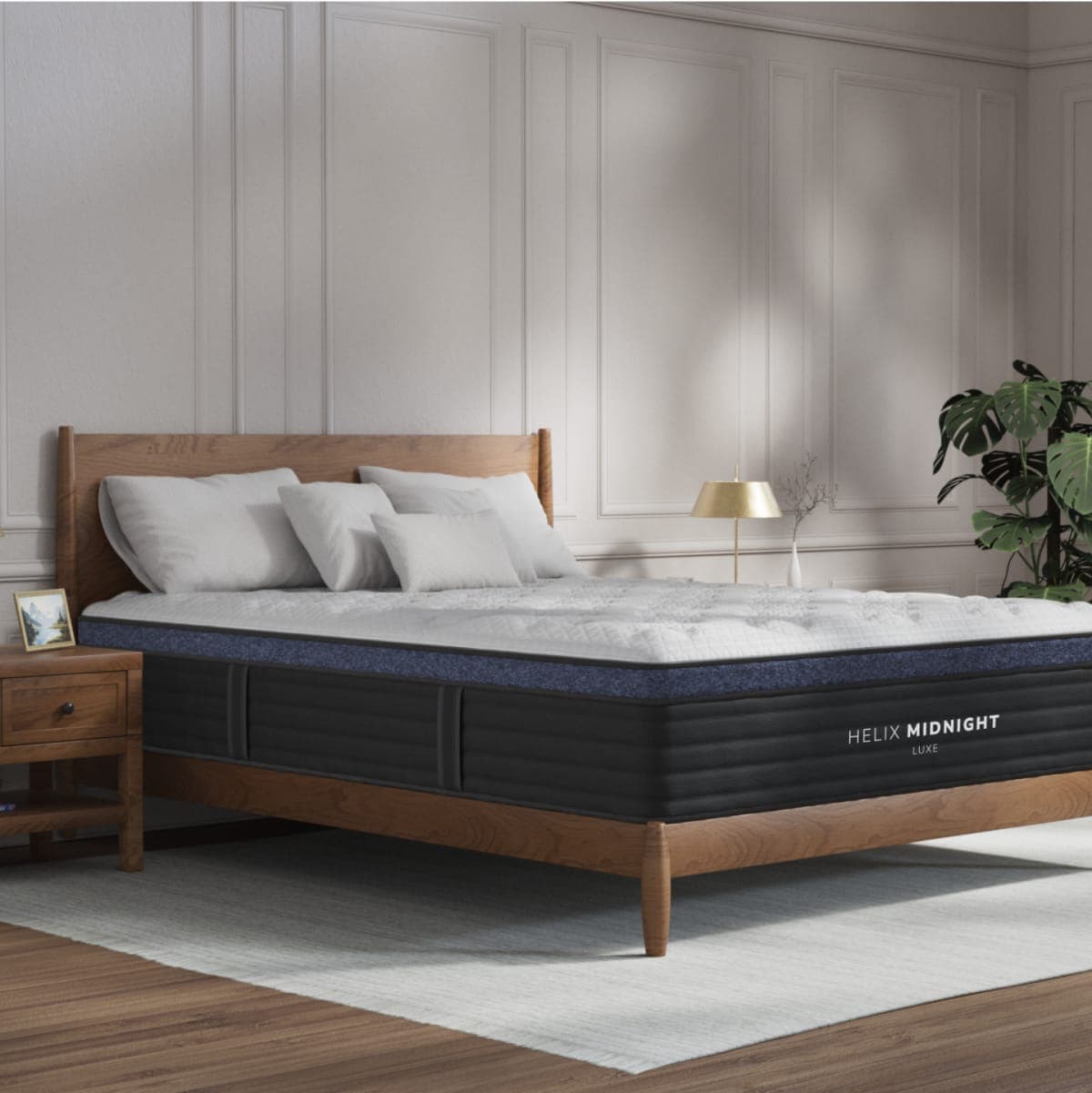
Helix Midnight Luxe hybrid mattress in a minimalist bedroom
Helix
Helix Midnight Luxe Queen Mattress
$1,999.00
(Amazon price as of – Details)
Nectar Premier 13-inch memory foam mattress in queen size
Nectar
Nectar Premier 13″ Queen Mattress
$899.99
(Amazon price as of – Details)
VS
The 60-second verdict

Get Helix Midnight if

You want coils under you — a 13.5″ side-sleeper hybrid built to order in the USA, with the better support and edge scores of the pair and a limited lifetime warranty — and you'll pay nearly twice the Nectar's price for a bed you can move on easily.

Get Nectar Premier if

You want the most mattress per dollar: a 13″ five-layer memory-foam bed at about half the Helix's price with near-best-in-class motion isolation, better cooling and a Forever Warranty — and you like being cradled rather than sitting on top of a surface.

Tied on

Our overall scores are 0.1 apart (8.5 vs 8.4), both are 13″-plus profiles in the medium band, both list side sleeping as a target position, both ship free and compressed, both are CertiPUR-US certified, and both carry open-ended warranties rather than a 10-year clock.

5-dimension score

How they compare across every dimension

SupportCoolingMotion isolationEdge supportValue
Helix Midnight Luxe Queen Mattress
Nectar Premier 13″ Queen Mattress
Support8.5·8
Cooling7.5·8
Motion isolation8·9.5
Edge support8·6.5
Value8·9

Buyer self-select

Best for you if…

If you…Pick
Best valueNectar Premier
Best for a restless partnerNectar Premier
Best for side sleepers who want coilsHelix Midnight
Best edge of the bedHelix Midnight
Best for combo sleepers who move at nightHelix Midnight
Best for hot sleepersNectar Premier
Our pick · overall

Nectar Premier 13″ Queen Mattress

Nectar takes three of five scorecard rows — motion isolation 9.5 vs 8, cooling 8 vs 7.5, value 9 vs 8 — and costs about half as much. With overall scores 0.1 apart (8.5 vs 8.4), that price gap decides it for most buyers. Helix is the right call, and worth the extra money, if you specifically want coils: it wins support 8.5 vs 8 and edge support 8 vs 6.5, it is tuned for side sleepers 130-230 lb, and it is much easier to change position on. Buy the Helix if the memory-foam sink is the thing you dislike about mattresses; buy the Nectar for everything else.

$899.99 (Amazon price as of – Details)vs $1,999.00 (Amazon price as of – Details)

Deep dive

The head-to-head, dimension by dimension

Price — nearly double, on two beds 0.1 apart

Winner: Nectar Premier

The Helix Midnight Luxe queen costs **nearly twice** what the Nectar Premier queen does — a wide gap between two beds our scoring separates by a tenth of a point, 8.5 to 8.4.

Read both numbers as ordinary selling prices, not sales. Helix sets a higher list price against the Midnight Luxe but runs a near-permanent sitewide discount, so the discounted figure is simply its ordinary price. Nectar does the same trick harder: its list price is theatre — its own con list says so. Neither of these is a deal you have to catch, and no holiday event closes a gap this wide.

What the extra money buys is narrow but not nothing: support 8.5/10 against 8/10, edge support 8/10 against 6.5/10, a coil unit instead of a foam core, and a bed built to order in the USA that ships in two to six business days. What it does not buy is better cooling (Nectar wins 8 to 7.5), better motion isolation (Nectar wins 9.5 to 8), a longer trial (both run 365 nights, Helix's on orders from its own site) or a better warranty (both are open-ended). Our value scores land at 9 for Nectar and 8 for Helix, which is the fairest one-line summary of the row.

Hybrid vs all-foam — the actual fork in the road

Tie

Everything else on this page follows from one structural fact: **the Helix is a hybrid and the Nectar is not**. Helix Midnight Luxe is a memory-foam quilted pillow-top over transition foam over individually-wrapped coils, 13.5″ tall. Nectar Premier is five layers of foam over 13″ with no coil unit at all. If you specifically want springs under you, the Nectar is not a cheaper version of the Helix — it is a different product, and this page is over.

The difference you feel is response speed. Coils push back immediately, so you turn over on the Helix. Nectar's slow-response gel memory foam sinks in and holds you, so you climb out of the impression you made and settle into a new one. Nectar's own con list names that risk plainly: the hugged-in feel divides people, and the same sensation one buyer calls pressure relief another calls being stuck. Helix's mirror-image risk is in its own cons too — lighter sleepers may find it firmer than advertised.

Firmness numbers understate how different this is. Nectar is **6.5/10 medium-firm**, Helix is **6/10 medium** — a half point apart on paper, and nothing like each other in the bed. Both land in the band the published evidence favours: Caggiari et al. (2021, *Journal of Orthopaedics and Traumatology*, 22(1):51) concluded that a medium-firm mattress promotes comfort, sleep quality and spinal alignment. That endorses the category both occupy and separates neither. We call this a tie because it is a preference, not a quality judgement — but it is the preference that should decide your purchase.

Side-sleeper pressure relief

Winner: Helix Midnight

Helix takes this one, and it is the clearest argument for the higher price. The Midnight Luxe exists for side sleepers: the pillow-top, transition layer and coil unit are tuned together to a medium 6/10 aimed specifically at sleepers between 130 and 230 lb, the band where shoulder and hip loading is most concentrated. Sleep Foundation names it their best mattress overall. Support scores **8.5/10 against Nectar's 8/10**.

Nectar is not out of position here — it lists back and side as its target positions, and 13″ of gel memory foam rated to 230 lb per side will cradle a hip perfectly well. Its weakness for side sleepers is not depth, it is response. When you roll from one side to the other, foam that takes a moment to rebound leaves you briefly in the shape of your last position, which is exactly the sensation combo sleepers dislike.

The practical split: if you sleep on your side and stay there, either bed relieves pressure and the Nectar does it for about half the price. If you sleep on your side and change position several times a night, the Helix's coils are doing real work that no amount of foam depth substitutes for. And if you weigh well under 130 lb, note Helix's own warning that its medium can read firmer than advertised — the Nectar's slower, softer surface may suit you better despite the higher firmness number.

Motion isolation vs edge support

Tie

The two beds win one each here, by different margins, and which one matters depends entirely on your bedroom. Nectar Premier: **motion isolation 9.5/10, edge support 6.5/10**. Helix Midnight Luxe: **motion isolation 8/10, edge support 8/10**. Nectar wins one by a mile; Helix is the more even bed.

On motion, 9.5/10 is the number people buy memory foam for. Five layers of slow-response foam absorb a partner getting out of bed at 5am in a way pocketed coils structurally cannot — Helix's 8/10 is good for a hybrid, and it is still a point and a half behind. If you have spent years being woken by someone else's movement, this row alone can justify choosing the cheaper bed.

On edges, the positions reverse and Nectar's weakness is real. Its own con list concedes that edge support fades at the corners, and 6.5/10 is the softest edge score of any mattress we compare. That decides whether you can sit on the side of the bed to dress, and whether two adults get the full width of a queen or lose several inches each side. Helix's 8/10 is solid — though its own cons call edge support mid-pack, which is a fair self-assessment rather than a boast. Rank your two problems rather than the two mattresses: a restless partner is the more common and more disruptive one, which is a genuine point for Nectar.

Cooling

Winner: Nectar Premier

The all-foam bed wins the cooling row, which is the opposite of what most buyers expect. **Nectar 8/10, Helix 7.5/10.** The reason is that each is working against its own construction, and Nectar is working harder.

Nectar's problem is that memory foam traps heat by default, so it puts a **cooling-fiber cover** over the stack — a surface built to move heat off you rather than simply let it vent. That is active correction on a substrate that needs it, and 8/10 is a strong result for an all-foam mattress. Helix's advantage is structural — a coil unit lets air move through the base in a way a solid foam core cannot — but it stacks a memory-foam quilted pillow-top and a transition layer above those coils, which is a lot of insulation sitting between you and the airflow. Its **GlacioTex cooling cover** is a cool-to-the-touch knit that offsets some of that.

Half a point is not a reason to switch beds, and we are not going to put a temperature figure on it because none has been measured. Set expectations properly instead: Helix's own guidance says it runs neutral, not cold, and 8/10 for the Nectar means it does not trap heat the way an uncorrected foam bed would. Neither is a specialist answer for someone who overheats every single night — that is a grid-topped bed or an active cooling system, and both cost considerably more than either of these.

Trial, warranty and where you buy

Tie

Both now run a **365-night trial** on direct orders: Nectar's from nectarsleep.com, Helix's from helixsleep.com. A year covers a full seasonal cycle including the summer nights that expose a bed that sleeps warm, and it covers month four, which is roughly when the complaints that actually send mattresses back start showing up.

Warranty is closer to a tie than the marketing suggests. Nectar carries its **Forever Warranty**; Helix carries a **limited lifetime warranty**. Both are open-ended, both cover manufacturing defects and a stated sag depth rather than the gradual softening that usually prompts a replacement, and neither has the 10-year cliff that Purple and Tempur impose. Read the sag threshold on either rather than the headline word.

One channel warning that costs people the trial. Nectar's 365 nights and Forever Warranty come with a purchase from nectarsleep.com. The same 13″ queen is listed on Amazon, but **Amazon substitutes its own 30-day return for Nectar's year-long trial** — and at our last checks Amazon's price was no lower than Nectar's own, so there is no saving to weigh against losing 335 nights. Buy this one brand-direct. Helix is sold on helixsleep.com and Amazon as well, and Helix says orders through other retailers follow that retailer's return policy, so the same rule applies: buy direct if you want the year.

Owner record, build and durability

Tie

Both have strong records, measured differently. Helix holds **4.7 stars across 12,400 ratings** — the highest star rating of any mattress we compare. Nectar holds **4.5 across 24,186**, which is roughly twice the sample at a slightly lower average. Neither number embarrasses the other; a 4.5 across 24,000 and a 4.7 across 12,000 are both the signature of a bed that mostly works.

On documented longevity, Nectar has the better-sourced case. Its product data cites Sleep Foundation and RTINGS as showing minimal sag through year three, and rates the bed for 10+ years with 8-10 years of premium performance as the realistic expectation before the comfort layer softens noticeably. Helix carries the limited lifetime warranty and a strong editorial record but no comparable published durability testing in our data — which is a difference in available evidence, not proof that one wears out sooner.

Build is where Helix earns something a scorecard misses: it is **made to order in the USA** and ships in two to six business days, and it carries GREENGUARD Gold certification on top of CertiPUR-US. Nectar is CertiPUR-US and ships compressed from stock. Two practical notes that cut across both: a 13″-plus queen of either kind is a two-person job to move or rotate, and Nectar's 13″ and Helix's 13.5″ both need deep-pocket sheets.

3-year all-in cost

Total cost of ownership

Hardware + subscription over 36 months. Subscription-first products often win on Day 1 and lose over the lifetime.

$0$500$1,000$1,499$1,999$1,999Helix MidnightNo subscription · 365-night trial (Helix orders) · limited lifetime warranty · built to order in the USA$900Nectar PremierNo subscription · 365-night trial and Forever Warranty on the direct purchase
Subscription
Hardware
Nectar Premier saves $1,099 over 3 years

Helix Midnight hardware (Amazon price as of – Details)

Nectar Premier hardware (Amazon price as of – Details)

Side by side

Spec-by-spec comparison

SpecHelix MidnightNectar Premier
Best price today$1,999.00 (Amazon price as of – Details)$899.99 (Amazon price as of – Details)wins
Editor score8.5/10wins8.4/10
Shopper rating4.7 (12,400)wins4.5 (24,186)
SubscriptionNoneNone
Free, by email
Free · no card

Get your pillow and bed setup right.

One practical idea at a time for neck, back, heat and snoring, plus what we would skip and why.

Free. Five short emails over two weeks, then about one a month. Unsubscribe any time.

Where to buy

Best prices right now

Helix Midnight Luxe hybrid mattress in a minimalist bedroom

Helix Midnight Luxe Queen Mattress

Helix

$1,999.00
(Amazon price as of – Details)
Nectar Premier 13-inch memory foam mattress in queen size

Nectar Premier 13″ Queen Mattress

Nectar

$899.99$999.00
(Amazon price as of – Details)

People also ask

Frequently asked questions

Helix Midnight Luxe vs Nectar Premier — which is cheaper?

Nectar, by a wide margin: the Nectar Premier queen costs about half as much as the Helix Midnight Luxe queen. Neither is a sale to chase — Nectar's list price is promotional theatre by its own admission, and Helix's list price carries a near-permanent sitewide discount, so both current prices are ordinary selling prices. One caveat on the Nectar: the year-long trial comes with the brand-direct purchase, and Amazon's listing for the same 13″ queen swaps in Amazon's 30-day return for Nectar's 365-night trial.

Is the Helix worth nearly twice the Nectar's price?

Only if you want coils. The extra money buys support 8.5/10 against 8/10, edge support 8/10 against 6.5/10, a pocketed coil unit instead of a foam core, and a bed built to order in the USA — plus a much easier surface to change position on. It does not buy better cooling (Nectar wins 8 to 7.5), better motion isolation (Nectar wins 9.5 to 8), a longer trial (both run 365 nights, Helix's on orders from its own site) or a better warranty (both are open-ended). Our overall scores are 8.5 and 8.4. If the coil feel is not what you're after, the extra money has nowhere useful to go.

Which is better for side sleepers?

Helix, narrowly, and for a specific reason. The Midnight Luxe is purpose-built for side sleeping — pillow-top, transition foam and coils tuned together to a medium 6/10 for sleepers between 130 and 230 lb — and Sleep Foundation names it their best mattress overall. It takes support 8.5/10 against Nectar's 8/10. Nectar's 13″ of gel memory foam, rated to 230 lb per side, cradles a hip perfectly well; its weakness is response speed, so if you change sides several times a night you feel the foam lagging behind you. Under about 130 lb, note that Helix's own cons warn the medium reads firmer than advertised.

Which is better for couples?

Nectar if your problem is a partner who moves — motion isolation is 9.5/10 against Helix's 8/10, the widest gap on this page, and that is exactly what five layers of slow-response foam are for. Helix if your problem is space: edge support 8/10 against Nectar's 6.5/10 means two adults can use more of a queen and you can sit on the side to dress without the perimeter caving. Nectar's own cons concede the corners fade. Rank which of the two annoys you more; a restless partner is usually the more disruptive.

Which one sleeps cooler?

Nectar, narrowly — 8/10 against Helix's 7.5/10 — which surprises people because Nectar is the all-foam bed. Nectar corrects for foam with a cooling-fiber cover built to move heat off the surface. Helix has the structural advantage of coils for airflow but stacks a memory-foam quilted pillow-top and transition layer above them, with a GlacioTex cool-touch cover offsetting some of that. We haven't measured a temperature difference and won't quote one. Helix's own guidance says it runs neutral, not cold; neither bed is a specialist answer for someone who overheats nightly.

Which has the better trial and warranty?

A tie. Both run a 365-night trial on orders placed with the brand directly (an Amazon order follows Amazon's returns), and on warranty it's effectively level too — Nectar's Forever Warranty against Helix's limited lifetime warranty, both open-ended with no 10-year cliff. Both cover manufacturing defects and a stated sag depth rather than the normal softening that usually prompts a replacement, so read the threshold rather than the headline word on either.

Is the Nectar Premier a hybrid?

No — and it is the most common misunderstanding on this comparison. The Nectar Premier is a five-layer, 13″ all-foam mattress with no coil unit at all. The Helix Midnight Luxe is the hybrid: memory-foam quilted pillow-top over transition foam over individually-wrapped coils, 13.5″ tall. That single difference explains most of this page — coils give Helix the better support and edge scores and an easier surface to move on, while foam gives Nectar the far better motion isolation. If you specifically want springs, the Nectar isn't a cheaper Helix, it's a different bed.

Should I buy the Nectar Premier on Amazon to save money?

We'd advise against it, and it saves nothing: at our last checks Amazon's price was no lower than Nectar's own. Amazon carries the same 13″ Nectar Premier queen, but Amazon substitutes its own 30-day return for Nectar's 365-night home trial — you give up 335 nights of testing. Buying at nectarsleep.com keeps the year-long trial and the Forever Warranty together on one purchase.