HEAD-TO-HEAD · UPDATED 2026-11-20

DreamCloud Premier Hybrid Queen vs Nectar Premier 13″ Queen Mattress

Spec-based scoring, dimension-by-dimension verdicts, and honest deal breakers. Total cost of ownership over 3 years included.

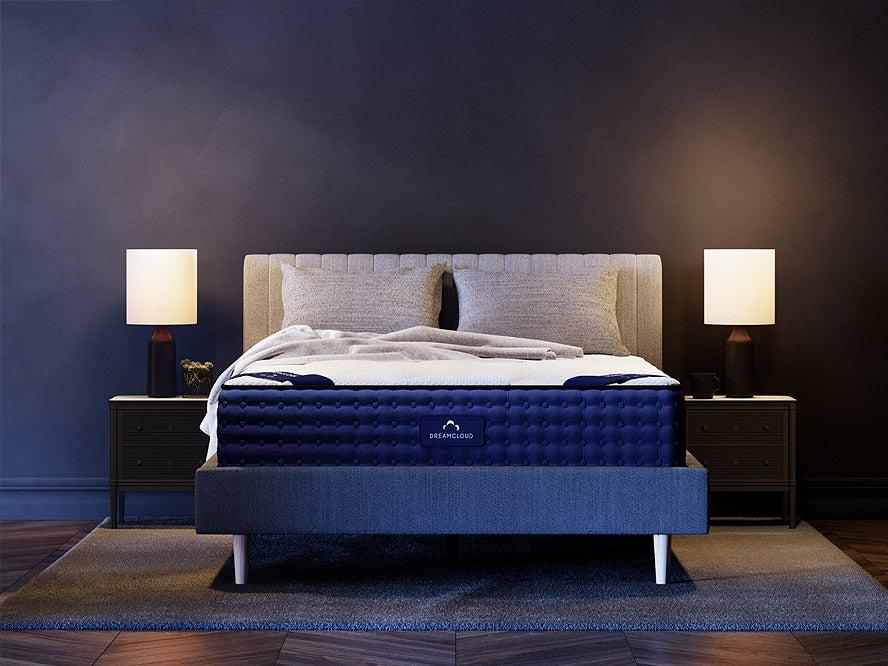
DreamCloud Premier Hybrid luxury mattress with CloudQuilt Euro-top cover
DreamCloud
DreamCloud Premier Hybrid Queen
$1,027.59
(Amazon price as of – Details)
Nectar Premier 13-inch memory foam mattress in queen size
Nectar
Nectar Premier 13″ Queen Mattress
$999.00
(Amazon price as of – Details)
VS
The 60-second verdict

Get DreamCloud Premier if

You want coils under the foam — an 8″ pocketed coil system beneath a CloudQuilt Euro-top — for the firmer base, the better edges, and a bed that lets you change position instead of holding you where you landed.

Buy at Amazon ↗

Get Nectar Premier if

You want the memory-foam hug and the quietest surface of the two for a restless partner — a five-layer 13″ all-foam bed with a cooling-fiber cover.

Buy at Amazon ↗

Tied on

Almost everything else, and unusually so. Both are 13″ and both are 6.5/10 medium-firm. Both run a 365-night trial and a Forever Warranty, both ship free and compressed, both are CertiPUR-US certified, both are Resident Home brands, and our scoring puts them level on cooling (8/10) and value (9/10). On price, compare the live prices on this page.

5-dimension score

How they compare across every dimension

SupportCoolingMotion isolationEdge supportValue
DreamCloud Premier Hybrid Queen
Nectar Premier 13″ Queen Mattress
Support8.5·8
Cooling8·8
Motion isolation8·9.5
Edge support8·6.5
Value9·9

Buyer self-select

Best for you if…

If you…Pick
Best for couples with a restless partnerNectar Premier
Best if you want the memory-foam hugNectar Premier
Best edge of the bedDreamCloud Premier
Best for back sleepersDreamCloud Premier
Best for combo sleepers who change positionDreamCloud Premier
Best delivery dealDreamCloud Premier
Our pick · overall

DreamCloud Premier Hybrid Queen

It scores 8.6 to Nectar Premier's 8.4 and takes the two structural rows — support 8.5/10 vs 8, and edge support 8/10 vs 6.5 — while matching Nectar on cooling, value, trial length and warranty. Ordered from DreamCloud, it ships free, with old-mattress removal through the paid White Glove service. On balance, the coils win. Nectar takes it back decisively for anyone sharing a bed with a restless partner: motion isolation 9.5/10 against 8, the widest single gap here.

$1,027.59 (Amazon price as of – Details)vs $999.00 (Amazon price as of – Details)

Deep dive

The head-to-head, dimension by dimension

Price — and how much it should decide

Tie

There is no subscription on either side, so the purchase prices are also the full three-year totals: compare the two current prices on this page.

Both beds are 13″. Both are 6.5/10 medium-firm. Both carry a 365-night trial and a Forever Warranty. Both score 9/10 on value in our scoring, which is the correct result — they are equally good deals at their respective prices. What the DreamCloud adds is an 8″ pocketed coil system and a CloudQuilt Euro-top instead of two more layers of foam.

One caveat that applies to both, because they share a parent company and therefore a playbook. Resident Home brands discount near-permanently off theatrical list prices — our Nectar notes say it plainly: the list price is theatre and only the sale price should be judged. So treat both current prices as ordinary selling prices rather than flash sales you have to catch. Waiting for a holiday event is not a strategy.

DreamCloud offers old-mattress removal through its paid White Glove service. Municipal mattress disposal is rarely free, so count it when you compare the two prices.

Construction — hybrid vs all-foam

Winner: DreamCloud Premier

This is the actual decision on this page, and everything else follows from it. The DreamCloud Premier is a hybrid: a CloudQuilt Euro-top over therapeutic memory foam and transition foam, sitting on an 8″ pocketed coil support system, across a 13″ profile. The Nectar Premier is not a hybrid at all — it is five layers of foam over 13″ with no coil unit anywhere in it, topped by a cooling-fiber cover.

Coils do things foam has to work harder to imitate. They hold a load at the perimeter, which is why DreamCloud's edge support scores 8/10 against Nectar's 6.5. They push back rather than yield, which is why DreamCloud's support score is higher. And they let air move through the base of the bed by construction rather than by treatment.

Foam does one thing better, and it does it emphatically: it absorbs movement instead of transmitting it, which is why Nectar takes motion isolation 9.5/10 against DreamCloud's 8. That is not a small margin and it is not a rounding error in a scoring system — it is the fundamental property of the material.

We give the row to DreamCloud because coils produce the more even bed across more situations. But this is genuinely a fork rather than a ranking. If you know you want to be held rather than supported, the all-foam bed is not a compromise — it is the thing you actually want.

Feel + firmness

Tie

Identical on paper and quite different in the bed. Both are 6.5/10 medium-firm at 13″. Both target back and side sleepers, with DreamCloud adding combo sleepers to its list. If you compared spec sheets alone you would conclude these are the same mattress at two prices, and you would be wrong.

The difference shows up when you change position. On the DreamCloud you turn over: the Euro-top compresses, the coils beneath push back, and you are on a new part of the surface. On the Nectar you climb out of the impression you made and settle into a new one, because slow-response gel memory foam yields and then holds. Our Nectar con list names the risk directly — the hugged-in feel divides people — and it is the single most common reason someone returns an all-foam bed.

DreamCloud's counterpart risk is on the surface rather than in the response. Its own cons say the pillow-top compresses over the first months, so the plushness at week one is not exactly the plushness you keep. That is normal for a Euro-top and it is why the 365-night trial matters: you want to be past the settling period well before your window closes.

We call it a tie because this maps onto preference rather than quality. Combo sleepers and anyone who has ever described a mattress as feeling like quicksand should take the DreamCloud. Back and side sleepers who want to be enveloped, and who do not move much in the night, should take the Nectar.

Support, edge support and body weight

Winner: DreamCloud Premier

DreamCloud takes support 8.5/10 to Nectar's 8, and edge support 8/10 to Nectar's 6.5. The support margin is modest; the edge margin is the second-widest gap on this page and the one with daily consequences.

Edge support is the least glamorous spec on a mattress and one of the most practical. It decides whether you can sit on the side of the bed to put your shoes on without the perimeter caving, whether you feel like you might roll off when you sleep near the edge, and whether two adults can use the full width of a queen instead of the middle two-thirds of it. Our Nectar con list notes it — edge support fades at the corners — and 6.5/10 is the weakest score either of these beds records on any dimension. DreamCloud's 8/10 is good rather than exceptional: a true innerspring with a reinforced perimeter still beats it.

Body weight tracks the same way. Sleep Foundation and Sleepopolis expect the DreamCloud to feel too soft above 230 lb; Nectar's specification is up to 230 lb per side. Neither is a specialist heavy-duty bed, but if either partner is around or above that 230 lb line, the coil base is the safer structural bet.

For a light-to-average back sleeper who does not sit on the edge of the bed to dress, this row is worth less than it sounds. For a couple, or for anyone over about 230 lb, it is the reason to choose the DreamCloud.

Motion isolation (couples)

Winner: Nectar Premier

Nectar's clearest win and the widest single gap on this page: motion isolation **9.5/10** against DreamCloud's **8**.

The mechanism is exactly what you would expect. Five layers of slow-response foam absorb a partner's movement and dissipate it before it travels; DreamCloud's 8″ pocketed coil unit contains movement well by the standards of a spring bed but still passes some of it along. Pocketed coils are far better than a connected innerspring here — an 8/10 is a good hybrid score — but 9.5 is the number people buy memory foam for, and it is close to the ceiling of what any mattress achieves.

Reviewers still rate the DreamCloud well here: Sleep Foundation says couples can expect only the lightest of motion transfer. If your partner gets up at 5am, works shifts, or simply rolls over a lot, that concession is the sentence to weigh most heavily on this page.

Rank your two problems rather than the two mattresses. If a restless partner wakes you, take the Nectar — it wins this by 1.5 points. If your problem is instead that two adults cannot use the full width of the bed, take the DreamCloud, which wins edge support by the same 1.5 points. Very few couples have both problems equally.

Cooling

Tie

Level at 8/10 each in our scoring, and it is a genuine tie rather than a dodge — the two beds arrive at the same result by opposite routes, which is the interesting part.

DreamCloud uses architecture. An 8″ pocketed coil system means the base of the mattress is mostly air, so heat has somewhere to go, and the therapeutic memory foam and CloudQuilt top above it are there to stop the comfort layer undoing that. Nectar has no coils to help it, so it corrects at the surface instead: a cooling-fiber cover built to move heat off the top of the bed rather than simply let it vent. On an all-foam mattress, 8/10 is a strong cooling score and it is the reason the Premier sits above Nectar's entry models.

What neither of them is, is a specialist. 8/10 means "does not trap heat the way a plain memory-foam bed does", not "actively cools you". If waking up hot is the specific complaint that sent you shopping, the honest advice is that this row will not separate these two and neither will solve it — passive grid-topped beds and active climate covers are a different category and a different budget.

We have not put either mattress in front of a thermal camera and we will not quote you a temperature difference between them. The scoring says they are level; the constructions say they should be.

Trial, warranty and where you buy it

Tie

A dead heat on paper, and worth stating plainly because both brands market these terms as differentiators. Both run a **365-night trial**. Both carry an open-ended **Forever Warranty**. Both apply the industry-standard condition that you sleep on the mattress for at least 30 nights before starting a return. Both ship free and compressed. Neither has a subscription. There is nothing to choose here, and no reason to let this row influence the decision.

The one real difference is the channel, and it is a trap worth naming. Nectar's 365-night trial and Forever Warranty come with the purchase at nectarsleep.com. Buy the same 13″ queen through Amazon instead and Amazon's standard 30-day return replaces the year — you lose eleven months of decision window on a bed whose main risk is that the hugged-in feel divides people. Compare the Amazon price with Nectar's own, and weigh any saving against the shorter window.

On what a Forever Warranty actually covers, the same caveat applies to both: it protects against manufacturing defects rather than the gradual softening that is the reason most people replace a mattress. Read the sag-depth threshold on either policy before treating the word "forever" as decisive. Nectar's product data cites Sleep Foundation and RTINGS as showing minimal sag through year three and rates the bed for 10+ years, with 8-10 years of premium performance the realistic expectation — that is the better-documented durability case of the two, and it belongs to the Nectar.

On delivery, DreamCloud ships free and offers old-mattress removal through its paid White Glove service. Nectar's includes free compressed shipping only.

Side by side

Spec-by-spec comparison

SpecDreamCloud PremierNectar Premier
Best price today$1,027.59 (Amazon price as of – Details)$999.00 (Amazon price as of – Details)wins
Editor score8.6/10wins8.4/10
SubscriptionNoneNone
Free, by email
Free · no card

Get your pillow and bed setup right.

One practical idea at a time for neck, back, heat and snoring, plus what we would skip and why.

Free. Five short emails over two weeks, then about one a month. Unsubscribe any time.

Where to buy

Best prices right now

DreamCloud Premier Hybrid luxury mattress with CloudQuilt Euro-top cover

DreamCloud Premier Hybrid Queen

DreamCloud

$1,027.59$1,099.00
(Amazon price as of – Details)
Nectar Premier 13-inch memory foam mattress in queen size

Nectar Premier 13″ Queen Mattress

Nectar

$999.00
(Amazon price as of – Details)

People also ask

Frequently asked questions

DreamCloud Premier vs Nectar Premier — which should I buy?

DreamCloud Premier for most buyers, by a narrow margin: it scores 8.6 to Nectar's 8.4 and wins the two structural rows — support 8.5/10 vs 8, and edge support 8/10 vs 6.5. Buy the Nectar Premier instead if you share a bed with a restless partner (motion isolation 9.5/10 vs 8, the widest gap here), or if you specifically want the memory-foam hug. Everything else is level: both are 13″, both 6.5/10 medium-firm, both 365-night trial, both Forever Warranty, both 8/10 cooling.

Is the DreamCloud worth choosing over the Nectar?

If you sit on the edge of the bed, share a queen with another adult, or sleep on your back — yes. What it adds is an 8″ pocketed coil system and a CloudQuilt Euro-top instead of two more layers of foam, and coils are what produce DreamCloud's better edge support (8/10 vs 6.5). If you sleep alone, want to sink in, and do not sit on the perimeter, the Nectar does the job.

Is the Nectar Premier a hybrid?

No, and it is the most common misunderstanding about this pair. The Nectar Premier is five layers of foam over a 13″ profile with no coil unit anywhere in it. The DreamCloud Premier is the hybrid: a CloudQuilt Euro-top over therapeutic memory foam and transition foam, on an 8″ pocketed coil support system. They are the same height and the same firmness rating, which is why the spec sheets look almost identical — but the construction underneath is completely different, and it drives every scoring difference between them.

Which is better for couples?

It depends which couples problem you have, and the two beds win opposite halves of it. If a partner's movement wakes you, Nectar Premier — motion isolation 9.5/10 against DreamCloud's 8, the widest single gap on this page, and our DreamCloud cons flag motion transfer as noticeable for light-sleeping couples. If the problem is that two adults cannot use the full width of the bed, DreamCloud — edge support 8/10 against 6.5, with our Nectar cons conceding the corners fade. Rank your two problems; very few couples have both equally.

Which is better for back sleepers and heavier bodies?

For back sleepers, the DreamCloud Premier: support scores 8.5/10 against Nectar's 8 in our scoring, and Mattress Clarity says it gives great support for back sleepers under 230 lb. For heavier bodies, neither is a clear pick: Sleep Foundation and Sleepopolis expect the DreamCloud to feel too soft above 230 lb, and Nectar specifies up to 230 lb per side.

Which one runs cooler?

Neither — they tie at 8/10 in our scoring, reaching the same result by opposite routes. DreamCloud's 8″ coil unit means the base of the bed is mostly air, with therapeutic memory foam and a cooling-fiber CloudQuilt top above it. Nectar has no coils to help, so it corrects at the surface with a cooling-fiber cover built to move heat off the top. Both are strong scores for their construction; neither is a specialist cooling bed. We have not run thermal testing on either and will not quote a temperature difference.

Are DreamCloud and Nectar the same company?

Same parent, different brands: both are Resident Home labels, which is why they share a playbook — 13″ profiles, 6.5/10 medium-firm, 365-night trials, Forever Warranties, and aggressive near-permanent discounting. Our Nectar notes put it bluntly: the list price is theatre and only the sale price should be judged. Treat both current prices as ordinary selling prices rather than sales to chase. The small gap between them is essentially the cost of the coil unit.

Should I buy the Nectar Premier on Amazon to save money?

Not without checking what you give up. Buying at nectarsleep.com includes the 365-night trial and the Forever Warranty; buying the same 13″ queen through Amazon means Amazon's standard 30-day return replaces the year-long trial. That is eleven months of decision window on a bed whose main risk is that the hugged-in memory-foam feel divides people. Compare the Amazon price with Nectar's own, and weigh any saving against the shorter window.