
WEDGE PILLOWS·INTEVISION
InteVision Foam Bed Wedge + Headrest
Editor score8.3/10
Best for: Experienced wedge users who want maximum elevation without the neck strain
Price
Check price
At Amazon · price changes often, check before buying
Buy at Amazon ↗Review updated 2026-07-28
Dimensions
25" x 24" x 12"
Top layer
2" (gel) memory foam
Base
Firm support foam
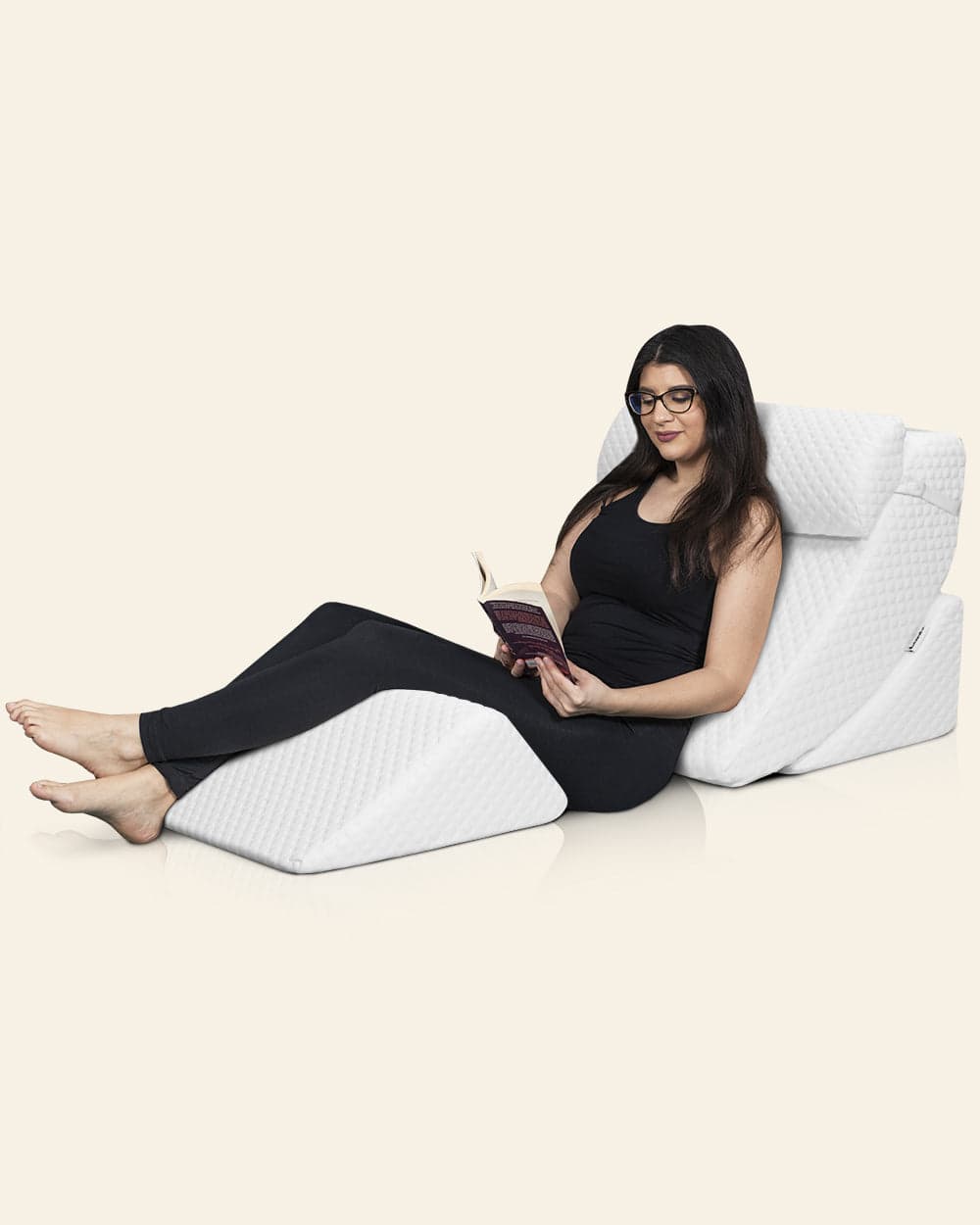
The tall two-piece — a 12-inch wedge plus a patented adjustable headrest that answers the neck-strain complaint most wedges ignore. Aggressive height, not a gentle start.
InteVision's patented two-pillow design is the feature born from the category's oldest complaint: a 25 x 24 x 12-inch wedge with a 2-inch (gel) memory foam top over a firm base, plus a separate adjustable headrest pillow that stops your neck cranking forward against the slope. The removable cover is 400-thread-count Egyptian cotton. Be clear-eyed about the height, though — 12 inches is the aggressive end of the category, and gentler sleepers should be looking at 7.5-to-10-inch wedges instead. Owner reviews repeat the same notes: the firm base surprises buyers expecting plush, sliding down is common the first nights, there's some off-gassing at unboxing, and the cover is a wrestle to remove — while the headrest combination is consistently praised. We could not verify a current price anywhere (the brand site is a catalog and marketplace figures contradict each other), so check the current price on Amazon. Persistent reflux or suspected sleep apnea needs a doctor, not more foam.
Where to buy
amazon
AmazonBest price✓ Fast delivery · easy returns
Egyptian-cotton cover variant
Price varies
Prices for this product are not currently verified — check the retailer's site for the price that applies. As an Amazon Associate and affiliate we may earn a commission on purchases made through these links, at no extra cost to you.
How our prices work
We show the price at our recommended retailer and the manufacturer's list price for comparison. Amazon prices come from Amazon's own product data service and are refreshed twice a day; each one shows the date and time Amazon gave it, and one older than 24 hours is replaced by “Check price”. Other retailers' prices are checked by hand and show the date of that check. Retail prices move constantly, so the price on the retailer's own page at checkout is the one that applies. More on Amazon prices
Should you buy it?
What we like
- Adjustable headrest pillow fixes the classic wedge neck-crank
- 400-thread-count Egyptian cotton removable cover
- 2-inch memory foam top takes the edge off the firm base
What to know before buying
- 12 inches is aggressive — too much wedge for beginners
- Slide-down and firmness surprises dominate the first nights
- Cover is hard to get off, and some off-gassing at first
Free, by email
Free · no cardGet your pillow and bed setup right.
One practical idea at a time for neck, back, heat and snoring, plus what we would skip and why.
Free. Five short emails over two weeks, then about one a month. Unsubscribe any time.
At a glance
Dimensions25" x 24" x 12"
Top layer2" (gel) memory foam
BaseFirm support foam
HeadrestSeparate adjustable pillow — patented 2-pillow design
Cover400TC Egyptian cotton, removable
Height class12" — the aggressive end
Best forMaximum elevation without neck strain
How it scores
How our 8.3/10 breaks down — rated on the dimensions that matter most for wedge pillows, from published specifications and third-party test data, not the marketing.
Incline & support
8.5/10
Foam quality
8/10
Cover & washability
7/10
Slide-down resistance
6.5/10
Value
7.5/10
Compare with alternatives
Quick verdicts for the wedge pillows most often considered alongside the InteVision Foam Bed Wedge + Headrest.
VS·HEAD-TO-HEAD
InteVision Foam Bed Wedge + Headrest vs Kolbs Bed Wedge Pillow, Standard 7.5"
The gentle-entry wedge — 7.5 inches of firm high-density foam under a memory foam top with a jacquard cover; check the current Amazon price, because the brand store was sold out at our check.
→ First-time wedge users who want gentle elevation, not a foam cliff
VS·HEAD-TO-HEAD
InteVision Foam Bed Wedge + Headrest vs Brentwood Home Zuma Foam Wedge, 10-Inch
The honest budget block — one piece of firm CertiPUR-US BioFoam sold direct in three heights, with no plush layer and no pretense of one.
→ Budget buyers who want firm, no-frills elevation — and know they want firm
VS·HEAD-TO-HEAD
InteVision Foam Bed Wedge + Headrest vs Helix Wedge Pillow
The premium single-height pick — gel-infused memory foam over a firm 10-inch base with a 100-night trial, sold only through Helix, at a premium over basic foam wedges.
→ Snorers and reflux sleepers who want a trial period before committing to a wedge
Decision support · what no other comparison site has
Take the quiz · 60 secNot sure which one is right for you?
Our 60-second sleep score quiz asks 8 questions and recommends the right sleep gear for your goals. Free, no signup.
Editor's deep dive
Is the InteVision Foam Bed worth it?
The short answer
The InteVision Foam Bed Wedge pairs a 12-inch firm-base wedge (2-inch memory foam top) with a patented adjustable headrest pillow that prevents the neck strain flat wedges cause. It suits experienced users wanting maximum elevation; beginners should start lower. No verified current price — check the Amazon listing.
Who it's for
Sleepers who already know a low wedge isn't enough — established reflux elevation users moving up in height [1][2] — and anyone whose last wedge left their neck aching, since the adjustable headrest is the direct fix for that. The 400-thread-count Egyptian cotton cover is a genuine cut above category norms. It is not for wedge beginners (12 inches is a lot of commitment to an unproven sleeping style), not for plush-feel expectations (the base is firm and owners say so loudly), and not for anyone unwilling to spend the first few nights re-learning where their body slides to.
Best for you if…
Wedge veterans needing more height Great fit
12 inches with a real comfort layer and a neck solution — the top end of the category done properly.
Neck-strain sufferers on flat wedges Great fit
The adjustable second pillow is the patented answer to exactly this complaint, and it's the most-praised feature in owner reviews.
First-time wedge buyers Skip it
Starting at the aggressive end multiplies the slide-down, firmness, and height adjustment all at once — start at 7.5 to 10 inches.
Buyers who want a verified deal Decent fit
The product earns its score, but with no trustworthy price signal you're buying at whatever Amazon says today — check before assuming value.
Bottom line
The InteVision is the thinking sleeper's tall wedge: the two-pillow design solves the neck problem that makes people abandon wedges, and the Egyptian cotton cover and memory foam top show real attention to the parts you touch. The costs are all knowable in advance — a firm base that surprises plush-expecting buyers, first-week slide-down, initial off-gassing, and a cover that fights removal. Our one hard caveat is commercial, not physical: we couldn't verify what this actually costs right now, so we won't pretend to. Check the current price, and judge it against the 7.5-to-10-inch alternatives before defaulting to maximum height.
How we scored this
Editorial synthesis — SleepyHero has not tested this product hands-on. We scored the InteVision on published specs and owner consensus (headrest praise, firm-base surprise, slide-down, off-gassing, cover removal), weighing incline effectiveness, foam quality, washability, slide-down resistance, and value — the last necessarily provisional since no current price could be verified. Medical boundary: a wedge manages nighttime reflux and snoring symptoms through elevation — it does not treat the underlying condition. Persistent or worsening reflux, or snoring that suggests sleep apnea, needs a doctor [1][2]; post-surgery users should follow their clinician's guidance on angle and duration. Edited by Dr. Logan Foley.

Frequently asked questions
What does the second pillow actually do?
It sits on top of the wedge and adjusts independently, keeping your neck in a neutral line instead of cranked forward against the slope — which is the single most common complaint about one-piece wedges. It's the reason to buy an InteVision over a plain block, and it's the part owners consistently praise even when they grumble about everything else.
Is 12 inches too high for a first wedge?
For most first-timers, yes. Twelve inches is the aggressive end of the category — great for people who already know they need serious elevation, jarring for people easing in, who should start at 7.5 to 10 inches (see the Kolbs or Brentwood Zuma). Post-surgery users shouldn't pick a height off a review at all: follow your clinician's guidance on angle and duration.
How much does the InteVision wedge cost?
We honestly don't know right now, so we won't print a number: InteVision's own site is a catalog without prices, and the marketplace figures we found contradict each other. Check the current price on the Amazon listing — and treat any 'was/now' discount framing there with suspicion, since there's no stable list price to discount from.
Will it help my reflux or snoring?
Sleeping elevated is a recognized way to manage nighttime reflux symptoms [1][2], and it can ease simple positional snoring. But a wedge manages symptoms — it doesn't treat causes. Reflux that persists or worsens, or snoring with gasping and daytime exhaustion (a sleep-apnea pattern), needs a doctor before it needs a taller pillow.
Affiliate disclosure: SleepyHero earns a small commission when you buy through these links. It doesn't cost you extra. Reviews and rankings are editorial — we don't accept payment for placement.