Buying guide · updated 2026-11-04

Best sleep trackers without a subscription: band, watch, ring or bed pad

The dirty secret of the sleep-tracking boom is the monthly bill. Oura locks your detailed sleep scores behind a monthly membership; Whoop has no upfront price at all because the whole product IS a monthly subscription. Miss a payment and the ring or band on your wrist stops showing you anything useful. But you do not have to rent your own sleep data. Every tracker below gives you full sleep stages, heart-rate, and long-term trends for a one-time purchase and nothing more — the app is free forever. We compared each on published accuracy where it exists, battery life, and value, and confirmed the free tier is genuinely complete, then ranked them. This guide is for choosing the type of tracker: a band, a watch, a ring or a pad under the mattress. If you already know you want a ring, our smart ring guide compares four subscription-free rings side by side.

Quick answer

The best subscription-free sleep tracker for most people is Google's Fitbit Air: a 12 g screenless band that shows sleep stages, a nightly score, HRV and SpO2 in the free Google Health app and runs up to a week per charge. Want a screen, built-in GPS and an ECG too? The Fitbit Charge 6. Want a ring instead of Oura's monthly fee? The RingConn Gen 2, which scores a touch higher on our rubric but costs far more. Nothing to wear at all? The Withings under-mattress pad. The budget pick is the Amazfit Bip 6, a full watch with a two-week battery.

Edited by Logan Foley, CSSC·Editorially selected against published specs

The full breakdown

Every pick reviewed

#1 · Best overall — no subscription

Google Fitbit Air

Full Fitbit sleep data on a screenless 12 g band: stages, a sleep score, HRV and SpO2 in the free Google Health app.

Google Fitbit Air screenless tracker on its Obsidian band
Editor score8.3/10
$96.90
(Amazon price as of – Details)Shop at best price →Full review →

Google's Fitbit Air, launched in May 2026, is the tracker we now recommend to most people who want real sleep data without a monthly bill. It is a screenless band, 12 g in total per Google, so there is no screen to light up the bedroom and little to notice on your wrist. The free Google Health app shows sleep stages, a nightly sleep score, sleep schedule and consistency, plus HRV, breathing rate, SpO2, skin temperature variation and resting heart rate; Google also lists a readiness score among the Air's free app features, and the band checks for signs of AFib while you are still or asleep. Google Health Premium, with three months included, adds a coach built with Gemini and more detailed sleep insights, but the core data is complete without it.

It costs less than the Charge 6 and lasts up to a week per charge. What it gives up is mostly daytime: no screen, no built-in GPS (it uses your phone's) and no ECG, and Google's Air pages list no Smart Wake alarm. Its sleep algorithms are also new, with no independent sleep-lab validation study yet, so treat single nights as estimates, as with any tracker. Best for anyone who wants the Fitbit sleep data in a light, quiet form and zero obligation to pay again.

Pros

  • ✓Sleep stages, score, HRV and SpO2 free in the Google Health app
  • ✓No screen to light up in bed; 12 g including the band
  • ✓Up to 7 days per charge; 5 minutes of charging gives a day, per Google
  • ✓Costs less than the Charge 6 and works with Android or iPhone

Cons

  • ✗No screen, built-in GPS or ECG, and no Smart Wake alarm listed
  • ✗The coach and detailed sleep insights need Google Health Premium after the 3-month trial
  • ✗New sleep algorithms with no independent sleep-lab validation study yet
  • ✗Google Account required
#2 · Best with a screen — GPS and ECG too

Fitbit Charge 6

A tracker line tested against a sleep lab, with the same free sleep data as the Air plus a screen, GPS and an ECG for the day.

Fitbit Charge 6 sleep + fitness tracker in graphite
Editor score8.1/10
$123.99$159.95
(Amazon price as of – Details)Shop at best price →Full review →

Fitbit Charge 6 is the pick if you want the Fitbit sleep data and a screen on your wrist during the day. The free Google Health app (formerly the Fitbit app) shows nightly sleep stages, a sleep score, resting heart rate, SpO2, and long-term trends — the metrics people actually act on — with nothing paywalled to see them. Google does sell an optional monthly tier, Google Health Premium (formerly Fitbit Premium), that adds coaching and more detailed sleep insights, but the core tracking is complete without it, which is exactly what a no-subscription buyer needs.

It's mid-priced, comfortable enough to wear all night, and lasts about a week between charges. Since Google folded Fitbit in, it also plays nicely with Android and the Google ecosystem. Best for anyone who wants a brand with a sleep-lab track record, a slim band that doubles as a daytime step-and-heart tracker, and zero obligation to ever pay again.

Pros

  • ✓Sleep stages, score, SpO2, and trends all free — no fee to see your data
  • ✓Fitbit sleep staging has been tested against a sleep lab (on the earlier Charge 2)
  • ✓~7-day battery — no nightly charging gaps
  • ✓Slim, comfortable band that works as a day tracker too
  • ✓Premium is optional; core tracking never gets paywalled

Cons

  • ✗The deepest coaching insights do sit behind optional Google Health Premium (formerly Fitbit Premium)
  • ✗Heavier and pricier than the screenless Fitbit Air
  • ✗Small screen vs a full smartwatch
  • ✗Google account now required to set up
#3 · Best-value smart ring — no membership

RingConn Gen 2 Smart Ring

Oura-style ring tracking — stages, HRV, recovery — for a one-time price with no monthly fee.

RingConn Gen 2 Smart Ring
Editor score8.4/10
$299.00
(Amazon price as of – Details)Shop at best price →Full review →

RingConn Gen 2 exists to answer one question: what if you want Oura's comfortable, wear-it-and-forget-it ring tracking without Oura's monthly membership? It delivers sleep stages, HRV, resting heart rate, blood-oxygen, and a recovery-style readiness view — all in the free app, forever. For side sleepers and anyone who finds a watch clunky in bed, a titanium ring is the most comfortable tracker you can wear, and RingConn's battery, rated at about 10-12 days, outlasts Oura's.

It costs more up front than a band, but run the math: an Oura Ring plus two years of membership costs meaningfully more, and you'd still be renting. RingConn's newer Gen 3 adds vibration alerts, vascular trends and a longer battery rating at a higher price; our smart ring guide compares both with the Gen 2 Air and the Samsung Galaxy Ring. Best for the buyer who specifically wants ring-style tracking and refuses to pay a recurring fee for it.

Pros

  • ✓Full stages, HRV, SpO2, and readiness in a free app — no membership
  • ✓Titanium ring is the most comfortable form factor for sleep
  • ✓Rated about 10-12 days per charge, far longer than Oura
  • ✓Cheaper than Oura once you count even one year of its fee
  • ✓The go-to 'Oura without the subscription' pick

Cons

  • ✗Costs more up front than a band
  • ✗Rings can't show notifications or double as a watch
  • ✗Smaller ecosystem and app polish than Oura's
#4 · Best no-wearable — nothing to charge

Withings Sleep Analyzer (Under-Mattress Pad)

A pad under your mattress tracks sleep, snoring, and apnea signals — no wearable, no charging, no fee.

Withings Sleep Analyzer (Under-Mattress Pad)
Editor score8.3/10
$199.95
(Amazon price as of – Details)Shop at best price →Full review →

Withings Sleep Analyzer is for people who don't want to wear or charge anything. It's a thin pad you slide under your mattress, beneath the sheets; it senses your movement, heart rate, and breathing all night and syncs sleep stages, a sleep score, snoring duration, and — its standout feature — a breathing-disturbance index that flags possible sleep apnea. In a study run with Withings on 118 patients with suspected apnea, the pad flagged moderate-to-severe apnea in 88% of those who had it. All of it is in the free Withings app with no subscription.

It's a fixed cost with nothing recurring, and because it never leaves the bed there are no gaps from a dead battery or a night you forgot to wear it. It only tracks in bed (no daytime data), and it works best for a single sleeper on that side of the bed. Best for anyone who wants set-and-forget tracking, is worried about snoring or apnea, or simply hates wearables.

Pros

  • ✓Nothing to wear or charge — slides under the mattress once
  • ✓Purpose-built snoring + apnea (breathing-disturbance) tracking
  • ✓Full stages, score, and heart rate in a free app — no fee
  • ✓Never a missed night from a dead battery
  • ✓Great for wearable-haters and set-and-forget users

Cons

  • ✗In-bed only — no daytime activity or heart data
  • ✗Tracks one side of the bed / one sleeper
  • ✗Apnea signal is a screening flag, not a diagnosis
#5 · Best for athletes + Android

Garmin Venu 3

Deep sleep, HRV and recovery data all free in Garmin Connect; Garmin's optional Connect+ plan only adds extras.

Garmin Venu 3 sleep + fitness tracker with AMOLED display
Editor score8.0/10
See price in cart
Shop at best price →Full review →

Garmin Venu 3 is the pick if you also train and want your sleep data tied to recovery — and it earns its place here because Garmin keeps every core feature free. Sleep stages, an overnight HRV reading, a morning Sleep Score with coaching, Body Battery energy tracking, and a full training suite are all in the free Garmin Connect app. Garmin does sell an optional Connect+ plan with extra AI insights, but says every existing feature stays free. It's a proper AMOLED smartwatch with multi-day battery, which is rare in this category.

It's an investment, but it replaces both a sleep tracker and a training watch with no ongoing cost. Android and iPhone users get the same full experience. Best for runners, cyclists, and anyone who wants recovery-oriented sleep insight without joining the Whoop membership treadmill.

Pros

  • ✓All sleep, HRV and training data free; Connect+ is optional
  • ✓Overnight HRV + morning Sleep Score with recovery coaching
  • ✓Multi-day battery, unusual for a full smartwatch
  • ✓Identical experience on Android and iPhone
  • ✓Replaces a training watch and a sleep tracker in one

Cons

  • ✗Among the pricier picks here
  • ✗On our worth-the-money list we would skip it: it scores below the RingConn Gen 2, and much of the price pays for the sports watch
  • ✗Bulkier on the wrist for sleep than a ring or band
  • ✗Deep training features are overkill for pure sleep tracking
#6 · The iPhone route — but buy the current model

Apple Watch Series 10

Full sleep stages and an FDA-cleared apnea notification with no data subscription — though Apple has discontinued this generation; its current lineup is Series 12, Ultra 4 and SE 3.

Apple Watch Series 10 46mm with sleep tracking
Editor score7.8/10
$429.00
(Amazon price as of – Details)Shop at best price →Full review →

Apple Watch is the natural route for iPhone owners who want sleep tracking folded into a watch they'd wear anyway. It records sleep stages and trends in the built-in Health and Sleep apps with no subscription, and the Series 10 introduced an FDA-cleared sleep-apnea notification feature that watches for breathing disturbances over time — a genuinely useful health signal at no extra cost. (Apple sells Fitness+ for workouts, but none of your sleep or health data is behind it.)

One important caveat: Apple has discontinued the Series 10 (verified 28 July 2026, when the Series 10 product page redirected to Apple's watch collection index); its current lineup, checked again 25 October 2026, is Series 12, Ultra 4 and SE 3. The subscription-free argument on this page applies to the whole Apple Watch line, so it still holds; just buy a current model rather than hunting remaining Series 10 stock, unless the discount is steep enough to be worth a shorter software-support runway.

Its one real weakness for sleep tracking is battery: you'll charge daily, so build in a top-up (in the shower, at your desk) to be sure it's ready for bed. Best for committed iPhone users who want one device for notifications, fitness, and sleep — and never a data subscription.

Pros

  • ✓Sleep stages + trends free in the Health app — no subscription
  • ✓FDA-cleared sleep-apnea notifications
  • ✓Seamless for iPhone users; one device for everything
  • ✓Fastest, most polished ecosystem in the category
  • ✓No fee to access any of your sleep or health data

Cons

  • ✗The Series 10 reviewed here is discontinued — Apple now sells Series 12, Ultra 4 and SE 3
  • ✗~18-hour battery means a daily charge — plan a top-up before bed
  • ✗iPhone-only; useless with Android
  • ✗Premium pricing is a lot if you only want sleep tracking
  • ✗On our worth-the-money list we would skip it: one of the lowest sleep scores among the trackers we cover
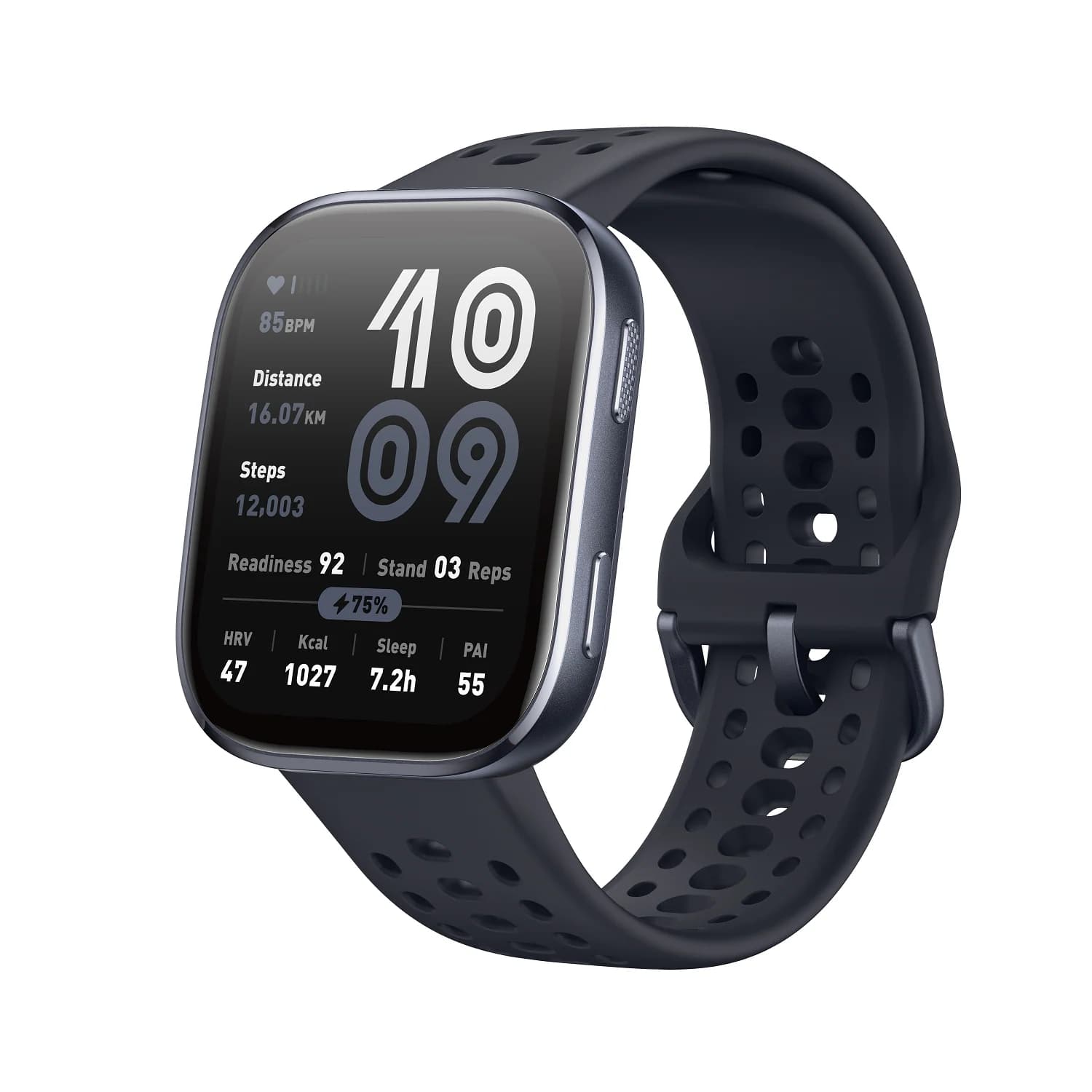
#7 · Best budget sleep tracker — cheapest way in

Amazfit Bip 6 Smart Watch

A cheap sleep tracker that is a real watch: stages, sleep HRV, breathing quality and naps in the free Zepp app, on a battery Amazfit rates at up to 14 days.

Amazfit Bip 6 smart watch in black
Editor score7.9/10
$79.00
(Amazon price as of – Details)Shop at best price →Full review →

The Amazfit Bip 6 is the budget pick because it is the least expensive tracker in this guide with a live listing and a sleep feature list that reads like the pricier picks: sleep stages including REM, sleep heart-rate variability, breathing quality, a nightly score, and daytime naps over 20 minutes, all recorded by Amazfit's BioTracker sensor and shown in the Zepp app, which Amazfit states is free. Battery is the reason a cheap tracker belongs on a sleep list at all: up to 14 days in typical use, so there is no nightly charge to forget and no hole in the record. It took this slot from the Amazfit Band 7 when Amazon stopped offering the Band 7 in September 2026. The Band 7 is listed again and costs less, but it is a slimmer band with a thinner app, and we score it lower.

What you give up is evidence. Amazfit publishes no accuracy study, so read the stages and HRV as trends over weeks rather than verdicts on a single night — the same caveat as every wrist tracker, only without Fitbit's or Garmin's track record behind it. For a first tracker, a gift, or a low-risk way to find out whether sleep data changes your habits before spending ring money, it is the one to buy.

Pros

  • ✓Sleep stages, sleep HRV, breathing quality, score and naps — free in the Zepp app
  • ✓Up to 14 days of battery in typical use — almost never a charging gap
  • ✓1.97-inch AMOLED in an aluminium case at 27.9 g — comfortable overnight
  • ✓Built-in GPS and 5 ATM water resistance, so it works as a day watch too
  • ✓In stock on Amazon as of 18 September 2026

Cons

  • ✗No published accuracy study — trends over precise numbers
  • ✗Heavy use with every monitor on drops the battery to about 6 days
  • ✗Optional Zepp add-ons exist (skip them — the sleep data is free)

Related

Best smart rings without a subscription →

RingConn Gen 3, Gen 2, Gen 2 Air and Samsung Galaxy Ring compared.

All sleep trackers compared →

Every band, watch, ring and bed pad we cover, side by side, subscription models included.

How sleep cycles and stages work →

What the deep, light and REM figures in a tracker's report are estimating.

Free, by email
Free · no card

Help for nights your mind won't switch off.

Two free printables now, then four short emails: one change to try tonight, how to choose, and what we'd skip.

Free. Five short emails over two weeks, then about one a month. Unsubscribe any time.

Buying criteria

What to look for in a subscription-free sleep tracker

1.Confirm the free tier is actually complete

"No subscription" is not the same as "free app." Fitbit, Garmin, Apple, Amazfit, RingConn, and Withings all give you sleep stages, heart rate, and history at no cost — the core data is yours. Google, Amazfit and Garmin do sell optional premium tiers with extra coaching (Google's is Google Health Premium, formerly Fitbit Premium), but core nightly tracking is never paywalled. Oura and Whoop are the two to avoid if you hate fees: Oura gates most of its scores behind a monthly fee, and Whoop cannot be used at all without its membership.

2.Wearable, ring, or under-mattress

The best form factor is the one you'll actually keep using. Watches and screen bands (Fitbit Charge, Garmin, Apple) double as day watches; a screenless band (Fitbit Air) is the lightest band here to wear in bed; smart rings (RingConn) are the most comfortable for sleep and last days per charge; a non-wearable sleep tracker — the Withings under-mattress pad — means nothing to wear or remember to charge. Rings and pads tend to win on pure sleep comfort; watches win if you also want daytime fitness and notifications.

3.Battery life you won't fight

A tracker you charge nightly is a tracker with gaps in your sleep data. Rings and budget watches are the champions here — RingConn is rated for about 10-12 days, the Amazfit Bip 6 is rated for up to two weeks in typical use — while full smartwatches like the Apple Watch need a daily top-up (charge it in the shower or at your desk so it's ready for bed). Under-mattress pads never need charging at all.

4.Accuracy for the metric you care about

No consumer tracker is a sleep lab, and the published checks are thin. In a sleep-lab test of an earlier Fitbit, the Charge 2, it correctly identified 96% of the time asleep but only about half of deep sleep. Withings tested its under-mattress pad on 118 patients with suspected sleep apnea, and it flagged moderate-to-severe apnea in 88% of those who had it; four of that study's authors work for Withings. Rings and Garmin put HRV and recovery trends front and centre. Match the device's strength to the question you're trying to answer.

People also ask

Frequently asked questions

Which sleep trackers require a subscription?

The two big ones are Oura and Whoop. Oura works without its monthly membership but locks most of your detailed scores and insights behind it. Whoop has no purchase price because the device is inseparable from its monthly membership — cancel and it stops working. Google (for Fitbit), Amazfit and Garmin sell optional premium tiers, but core sleep tracking is free on all three. Apple, RingConn and Withings show your core sleep data with no subscription.

Are the Fitbit Air and Charge 6 free to use without Premium?

Yes. Sleep stages, your nightly sleep score, resting heart rate, SpO2, and long-term trends are all in the free Google Health app, which replaced the Fitbit app in 2026. Google Health Premium (formerly Fitbit Premium), a monthly subscription, adds a coach built with Gemini, more detailed sleep insights and guided content; on the Charge 6, Google's store page also lists the Daily Readiness Score as a Premium feature. Nice-to-haves, not the core data. You can track your sleep indefinitely without ever paying.

Fitbit Air or Fitbit Charge 6 for sleep?

For sleep alone, the Air: it is lighter, has no screen to light up at night, costs less and shows the same free sleep data. The Charge 6 is worth the extra if you also want a screen, built-in GPS and an ECG app during the day, or a Smart Wake alarm, which Google's Air pages do not list.

What's the best no-subscription alternative to the Oura Ring?

RingConn Gen 2. It delivers the same wear-and-forget ring experience — sleep stages, HRV, SpO2, and a recovery/readiness view — with a longer battery (rated about 10-12 days) and, crucially, no monthly membership. Over a year or two it costs less than an Oura Ring plus its subscription, and you never rent access to your own data.

Can I track sleep without wearing anything?

Yes — the Withings Sleep Analyzer is a pad that goes under your mattress and tracks sleep stages, heart rate, snoring, and breathing-disturbance (apnea) signals with no wearable and no subscription. There's nothing to charge or remember to put on, which makes it the most reliable option for consistent nightly data.

Do cheap sleep trackers actually work?

For trends, yes. A budget tracker like the Amazfit Bip 6 shows whether your sleep is getting better or worse over weeks and captures resting heart rate, rough stages and sleep HRV. It is less proven than a Fitbit or a ring on any single night, but it is a low-cost way to find out whether tracking motivates you before spending more.

How accurate are subscription-free trackers vs a sleep lab?

No consumer device matches a clinical polysomnogram, subscription or not, and a monthly fee pays for coaching and presentation, not better sensors. In a sleep-lab test of an earlier Fitbit, the Charge 2, it correctly identified 96% of the time asleep but only about half of deep sleep. Use any of these for trends and habit change, not medical diagnosis.

More buying guides

All buying guides →
Sleep trackers

Best smart rings without a subscription: RingConn Gen 3, Gen 2, Gen 2 Air and Galaxy Ring

Mattress toppers

Best firm mattress toppers, ranked for a mattress that has gone too soft

Mattresses

Best mattress for hot sleepers — cooling beds compared by sleep editors

Cooling tech

Best cooling mattress pads for hot sleepers — active systems and passive pads compared

Humidifiers

Best humidifiers for a baby nursery — cool-mist, quiet, and easy to clean

Cooling tech

Best Eight Sleep alternatives — bed cooling without the Autopilot membership

Sleep masks

Best sleep masks for side sleepers — thin and contoured picks the pillow won't shove into your face

Sleep sacks

Best sleep sacks for winter — ranked by TOG rating and real cold-room warmth

Wedge pillows

Best wedge pillows for snoring (and the reflux that often comes with it)

Sleep earplugs

Best reusable earplugs for sleeping: washable, low-profile, and honest about what they block

Bedroom fans

Best quiet fans for sleeping: bedroom fans that cool on high and disappear on low

Sound machines

Best white noise machines for babies — continuous sound you can keep at a safe nursery volume

Cervical pillows

Best cervical pillow for side sleepers — 5 compared by shoulder-gap fit

Sleep headphones

Best sleep headphones for side sleepers — the flattest, no-pressure picks

Mattresses

Best flippable mattress — the two-sided beds worth buying, and the one-sided alternatives if you only need one firmness

Silk pillowcases

Best silk pillowcases for hair and skin — real mulberry, ranked by momme weight

Pillows

Best cooling pillows — ranked by construction, not by the word on the box

CPAP comfort

Best CPAP pillows for side sleepers — ranked by how well the cutouts actually clear your mask

Blue light glasses

Best blue light glasses for sleep — ranked by what the lens actually blocks

Mattresses

Best mattress for side sleepers — 2026 picks compared by sleep editors

CPAP comfort

Best CPAP comfort accessories — 7 cheap fixes matched to the 5 complaints CPAP users actually have

Pillows

Best pillow for side sleepers — compared on loft, support, and neck alignment

Sheets

Best cooling sheets — compared on breathability and moisture-wicking

Sleep earplugs

Best earplugs for light sleepers — ranked by how much noise they actually block

Weighted blankets

Best cooling weighted blankets for hot sleepers — ranked by how well they shed heat

Blackout curtains

Best blackout curtains for day sleepers and shift workers — ranked by true light blocking

Sunrise alarms

Best sunrise alarm clocks for heavy sleepers — ranked by brightness, ramp, and backup alarm

Mattress toppers

Best mattress toppers for side sleepers — ranked by shoulder-and-hip pressure relief

Knee pillows

Best knee pillows for side sleepers — ranked for keeping your hips stacked

Sources

  1. [1]de Zambotti, M., et al. (2018). A validation study of Fitbit Charge 2 compared with polysomnography in adults. Chronobiology International, 35(4), 465-476. 44 adults, one night in a sleep lab (35 in the main analysis); the Fitbit detected sleep with 0.96 sensitivity and wake with 0.61 specificity, and scored deep (N3) sleep with 0.49 accuracy and REM with 0.74. Read on PubMed 25 October 2026. View source ↗
  2. [2]Edouard, P., et al. (2021). Validation of the Withings Sleep Analyzer, an under-the-mattress device for the detection of moderate-severe sleep apnea syndrome. Journal of Clinical Sleep Medicine, 17(6), 1217-1227. 118 patients with suspected sleep apnea; 88.0% sensitivity and 88.6% specificity at an apnea-hypopnea index of 15 or more. Four authors are Withings employees and Withings supplied the devices. Read on PubMed 25 October 2026. View source ↗

Editorial process

Edited by Logan Foley, CSSC. Picks are editorially selected against published specs, verified pricing, and category-specific criteria. Amazon prices come from Amazon's own product data service, are refreshed twice a day and show the date and time Amazon gave them; one older than 24 hours is replaced by “Check price”. Other retailers' prices are checked by hand. We never show a discount we cannot verify. Only Amazon, Layla and Promeed pay us; other brand-direct links earn us nothing.

SleepyHero is a participant in the Amazon Services LLC Associates Program. Purchases via our links help fund our reviews at no cost to you. Product prices and availability are accurate as of the date/time indicated and are subject to change. Any price and availability information displayed on Amazon.com at the time of purchase will apply to the purchase of this product.