Buying guide · updated 2026-07-17

Best sunrise alarm clocks for heavy sleepers — ranked by brightness, ramp, and backup alarm

If you're a genuinely heavy sleeper, the polite little glow that wakes a light sleeper does nothing for you — you need the brightest dawn you can buy, a ramp long enough to lift you out of deep sleep, and a backup that's impossible to ignore when the light alone isn't enough. That last part is the honest truth most sunrise-alarm roundups skip: for a truly deep sleeper, light by itself often fails, so the sound — or vibration — behind it matters just as much as the lux. The units that win here pair a high-output sunrise with a loud, escalating audible alarm, and for people who sleep through everything else we point to a separate vibrating bed-shaker. We compared all seven sunrise alarms in our database against their published specs — peak brightness, ramp length, and backup-alarm strength — and ranked the six that actually stand a chance of waking a heavy sleeper. Skip the gentle 'ambient glow' clocks; you need light with teeth and a siren behind it.

Quick answer

The best sunrise alarm clock for heavy sleepers is the Philips SmartSleep HF3520 — its clinically validated 300-lux dawn plus five loud wake sounds and FM radio deliver the light-and-sound combination deep sleepers need. Want a brighter, 90-minute ramp? The higher-priced Lumie Shine 300. Still sleep through it? The lower-priced Dekala backs its sunrise with four loud alarms and a Pulse Wake mode.

Edited by Logan Foley, CSSC·Editorially selected against published specs

The full breakdown

Every pick reviewed

#1 · Best overall for heavy sleepers

Philips SmartSleep Wake-Up Light (HF3520)

The proven 300-lux benchmark with five loud wake sounds and FM behind the light — the strongest light-plus-sound combination at a sane price.

Philips SmartSleep Wake-Up Light (HF3520)
Editor score8.7/10
$108.99
(Amazon price as of – Details)Shop at best price →Full review →

Philips invented this category and the HF3520 is still the one to beat, which makes it the safe, proven pick for a heavy sleeper. Its colored sunrise simulation — deep red to warm orange to bright yellow — reaches a clinically validated 300 lux and starts pulling you out of sleep before any sound plays. But the reason it wins here isn't just the light: it's that Philips pairs that bright dawn with five natural wake sounds and FM radio that kick in as a loud audible backup, so if the light didn't finish the job the noise does. No app, no subscription, no microphone — it does one thing with medical-grade seriousness, and 17,400 reviews at 4.5 stars back it up.

The honest caveats matter for the deepest sleepers. The ramp maxes out around 40 minutes, so genuine slow-wakers may want the Lumie's 90-minute runway; the buttons and interface are dated; and there's no vibration if even a loud tone doesn't rouse you (add a bed-shaker for that). It is a mid-range rather than budget alarm clock. But nothing else on this list pairs proven brightness, a reliable loud sound backup, and no-app simplicity as well. Best for the heavy sleeper who wants the mainstream, battle-tested pick that just works — every morning, for years.

Pros

  • ✓300-lux clinically validated colored sunrise — bright enough to start the wake before sound
  • ✓Five natural wake sounds + FM radio as a loud audible backup
  • ✓No app, no subscription, no microphone — reliable, forever
  • ✓17,400 reviews at 4.5 stars — the most proven pick here

Cons

  • ✗Ramp maxes near 40 minutes — deepest slow-wakers may want the Lumie's 90
  • ✗Dated buttons and interface
  • ✗No vibration backup if sound still doesn't wake you (add a bed-shaker)
#2 · Best maximum brightness + longest ramp

Lumie Bodyclock Shine 300

Out-brightens the Philips and offers a 15-to-90-minute ramp, the longest in this guide — the most light a heavy sleeper can get in one device.

Lumie Bodyclock Shine 300
Editor score8.5/10
$169.00
(Amazon price as of – Details)Shop at best price →Full review →

Lumie is an actual light-therapy specialist — it has supplied devices to the NHS and elite sport for decades — and the Shine 300 brings that heritage to the nightstand. Two things make it the enthusiast's heavy-sleeper pick. First, it peaks brighter than the Philips, so it's the highest raw light output in this lineup. Second, its sunrise is adjustable from 15 to 90 minutes, the longest ramp in this guide (Lumie's pricier Luxe models share it); for a deep sleeper who needs a long runway, that 90-minute ramp is the whole point — more total light, delivered more gradually, to lift you out of deep sleep instead of ending on you. It adds 15 wake sounds, a matching sunset fade, and a light-sensitive display that dims or switches off at night.

The trade-offs are cost and polish, not capability. It costs more than the Philips, the styling is clinical rather than cozy, and it's a UK-first brand, so US support is thinner. And like every pure wake-up light, its backup is sound-only: no vibration if the tones don't reach you. Best for the deep, slow waker who wants the brightest, longest, most tunable dawn on the market and will actually set that 90-minute ramp — the person for whom the light itself, given enough of it, does most of the waking.

Pros

  • ✓Brighter peak than the Philips 300-lux benchmark
  • ✓15-to-90-minute ramp — the longest, most adjustable dawn in this guide
  • ✓15 wake sounds and a fully dimmable (dark) display
  • ✓Genuine light-therapy pedigree (NHS supplier)

Cons

  • ✗Costs more than the Philips
  • ✗Clinical styling; UK-first brand with thinner US support
  • ✗No vibration backup — sound-only if the light doesn't reach you
#3 · Best for the deepest sleepers (four loud alarms)

Dekala Sunrise Alarm Clock

Four loud alarms and a Pulse Wake mode behind a 30-minute sunrise, for sleepers who have never woken to light alone.

Dekala Sunrise Alarm Clock
Editor score7.9/10
$40.79$47.49
(Amazon price as of – Details)Shop at best price →Full review →

This is the guide's answer for the sleeper who has slept straight through every wake-up light they've ever owned. The Dekala covers the sunrise-clock basics — a 30-minute brightening ramp, natural sounds, FM radio and a sunset wind-down — and its Amazon listing adds four loud alarms and a Pulse Wake mode. Dekala's own store does not list this model or say how Pulse Wake works, so treat it as a loud-alarm clock rather than a confirmed vibration alarm; if you need a physical shake, pair it with a separate bed-shaker. Early buyers rate it 4.9.

The caveats are about pedigree, not the idea. It's a newer product with a small review base (under 100), so it's less battle-tested than the Philips or Hatch. It is inexpensive insurance relative to the premium picks. Best for deep sleepers who want light plus a stack of loud alarms in one unit at a lower price.

Pros

  • ✓Four loud alarms plus a Pulse Wake mode, per its Amazon listing
  • ✓Full sunrise-clock basics: 30-min ramp, natural sounds, FM, sunset, multiple alarms
  • ✓Excellent early rating (4.9)
  • ✓Lower-priced than the Philips, Lumie and Hatch

Cons

  • ✗Newer — small review base (under 100)
  • ✗Less established than the Philips or Hatch
  • ✗Dekala does not say how Pulse Wake works — not a confirmed vibration alarm
#4 · Best for sound-driven waking + routine

Hatch Restore 3

A deep, loud sound library and app-programmed routines make it the pick for heavy sleepers who wake more to sound than to light.

Hatch Restore 3
Editor score8.4/10
$169.99
(Amazon price as of – Details)Shop at best price →Full review →

The Restore 3 is Hatch's flagship bedside device: a soft-glow sunrise, an extensive sound library, and programmed 'Rest' routines that chain a wind-down light, sleep sounds, and a morning wake into one automated evening. For a heavy sleeper, the draw is not the light — it peaks softer than the Philips 300-lux ramp, which is the honest knock against it in this company — it's the sound. The large library and capable speaker make a loud, layered audible backup, and the wind-down routine gets you to bed on time, so you're waking from a fuller night in the first place. The hardware is genuinely lovely, fabric-wrapped and fully dimmable, and it carries 9,100 reviews at 4.4 stars.

The caveats are real. Setup and most customization live in the app, the deepest sound content sits behind a paid Hatch+ subscription, Amazon stock cycles as Hatch pushes direct sales, and you are paying flagship money for a device whose light is only 'ok' for heavy sleepers. So buy it for the sound and the routine, not the lux. Best for the heavy sleeper whose real problem is an inconsistent bedtime and who wakes to noise rather than brightness — not the person hunting for maximum morning light.

Pros

  • ✓Large sound library and a capable speaker as a loud audible backup
  • ✓Programmed wind-down routines build a consistent, easier-to-wake bedtime
  • ✓Beautiful, fully dimmable fabric-wrapped hardware

Cons

  • ✗Light peaks softer than the Philips — weak on maximum lux
  • ✗App-required setup; the best content sits behind a paid Hatch+ subscription
  • ✗Premium-priced, and Amazon stock cycles with direct sales
#5 · Best budget for heavy sleepers

JALL Wake-Up Light Sunrise Alarm

Dual alarms, seven sounds and FM behind a real brightening ramp — the cheapest honest light-plus-sound wake.

JALL Wake-Up Light Sunrise Alarm
Editor score7.8/10
$39.99
(Amazon price as of – Details)Shop at best price →Full review →

The JALL proves you don't need to pay Philips or Lumie money to get the sunrise-plus-sound combination a heavy sleeper needs. For a fraction of their price you get a 10-to-30-minute brightening ramp, dual alarms, seven wake sounds, and FM radio — enough light to start the wake and enough audible backup to finish it. It's the category bestseller with 52,700 reviews at 4.4 stars, so the value here is thoroughly crowd-verified rather than a leap of faith.

The compromises are the ones you'd expect at the price, and they matter for the deepest sleepers. Max brightness is only 'adequate' — it won't touch the Philips or Lumie for raw lux, so it leans harder on the sound to do the waking — the ramp brightens in visible steps rather than a smooth curve, the plastic feels cheap, and there's no vibration. But as a first sunrise alarm, a guest-room unit, or a budget heavy-sleeper setup where the loud dual-alarm sound carries the load, nothing else comes close on price. Best for heavy sleepers on a budget who'll lean on the audible alarm more than the light — and who'd rather buy the concept cheap before spending up.

Pros

  • ✓Real brightening ramp, dual alarms, seven sounds and FM at the lowest price here
  • ✓52,700 reviews at 4.4 stars — the most crowd-verified pick here
  • ✓Dual alarms and loud tones carry the waking when the light is only adequate

Cons

  • ✗Max brightness only 'adequate' — weaker lux than the Philips or Lumie
  • ✗Ramp brightens in visible steps; plastic build matches the price
  • ✗No vibration backup
#6 · Design pick (no built-in sound)

Loftie Lamp

A warm sunrise lamp that looks like decor, with no subscription — but no speaker of its own, so a sound alarm needs the separate Loftie Clock.

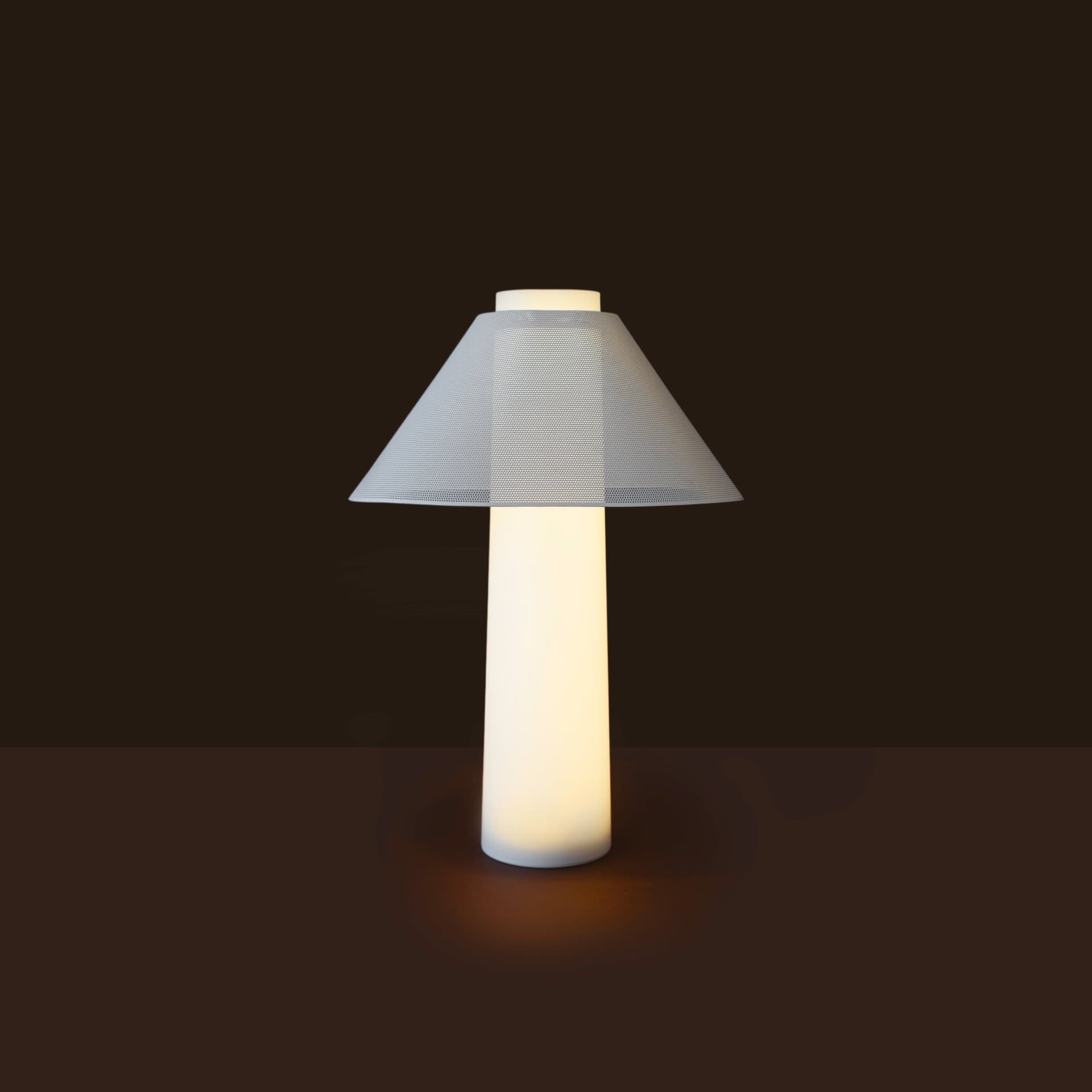
Loftie Lamp lit on a dark surface, showing the warm glow through its perforated shade
Editor score8.2/10
Check price
Shop at best price →Full review →

The Loftie Lamp is the design-first option, and for a heavy sleeper it comes with a big caveat: Loftie's page lists no speaker, Bluetooth or sound library on the lamp. Its wake-up is light only — a warm-white sunrise, with sunset dimming and bedtime reminders — and Loftie says sound comes from pairing it with the separate Loftie Clock. It needs no subscription, and it rates 4.5 stars.

The honest caveats start with price: it is the most expensive pick in this guide, so you're paying for the industrial design, not saving money. The sunrise is warmer and weaker than the Philips or Lumie — easier on the eyes, but less circadian punch — and it's a single-side device. On its own it is a light-only wake, which this guide's own logic says is not enough for a heavy sleeper. Best for the heavy sleeper who already owns a Loftie Clock or another loud alarm and wants the lamp for its design.

Pros

  • ✓Warm-white sunrise with sunset dimming and bedtime reminders, per Loftie
  • ✓No subscription required, per Loftie
  • ✓Pairs with the optional Loftie Clock for sound, per Loftie
  • ✓Best industrial design in the category

Cons

  • ✗The most expensive pick in this guide
  • ✗Warmer, weaker sunrise than the Philips or Lumie — light on lux
  • ✗No speaker of its own — a sound alarm needs the separate Loftie Clock
  • ✗Single-side device
Free, by email
Free · no card

A darker, quieter bedroom, by the evidence.

Five short emails on light, noise and travel sleep: what the research supports, what to buy and what we would skip.

Free. Five short emails over two weeks, then about one a month. Unsubscribe any time.

Buying criteria

What heavy sleepers need from a sunrise alarm

1.Peak brightness — how bright the dawn actually gets

This is the headline number for a heavy sleeper. A dim, ambient glow that eases a light sleeper awake won't touch you — you want the highest lux the category offers. The Philips HF3520 hits a clinically validated 300 lux, and the Lumie Shine 300 tops out brighter still; those two are the peak-output tier. Soft-light devices like the Hatch peak lower, and budget clocks like the JALL manage only 'adequate' brightness. If light is doing any of the waking, get the brightest device you can.

2.Ramp length — a long enough runway to surface from deep sleep

Deep sleepers surface slowly, and a 20-to-30-minute ramp can still feel abrupt when it ends. A longer runway — more total light exposure, more gradually — lifts a heavy sleeper more effectively. The Lumie is the standout: its 15-to-90-minute adjustable ramp is the longest in this guide, and the 90-minute setting exists for exactly this problem. The Philips maxes near 40 minutes, the JALL runs 10-30. Set the longest ramp your device allows and give yourself the runway.

3.A backup alarm you can't sleep through

Assume the light won't finish the job — because for the deepest sleepers it often doesn't — and buy for the sound behind it. You want a loud, escalating audible alarm: multiple natural tones plus FM (Philips, JALL), or a deep sound library and a real speaker (Hatch). Dual alarms and snooze discipline help too. The light is the gentle start; the sound is the insurance.

4.Beyond sound — and why to avoid 'gentle wake' clocks

When even a loud sound gets slept through, a physical vibration is the next escalation — it's far harder to ignore than light or noise. No clock here is confirmed to vibrate: the Dekala's listing names a Pulse Wake mode, but Dekala does not say how it works, so the sure option is a separate vibrating bed-shaker alarm alongside your sunrise clock. The flip side: steer clear of clocks engineered to be gentle. Two-phase 'anti-jolt' alarms and warm ambient glows are lovely for light sleepers and precisely wrong for you — a heavy sleeper needs the opposite of subtle.

People also ask

Frequently asked questions

What's the best sunrise alarm clock for heavy sleepers?

The Philips SmartSleep HF3520 is the best overall: a clinically validated 300-lux sunrise plus five loud wake sounds and FM radio give you the bright-light-and-loud-sound combination a deep sleeper needs. If you want more brightness and a longer runway, the higher-priced Lumie Shine 300 out-brightens it and offers a 90-minute ramp. If you sleep through light and sound alike, the lower-priced Dekala stacks four loud alarms and a Pulse Wake mode, and a separate bed-shaker adds the vibration no clock here is confirmed to have.

Can a sunrise alarm actually wake a heavy sleeper?

The light helps, but for a genuinely heavy sleeper it often isn't enough on its own — which is exactly why the combination matters. A bright, gradual dawn starts lifting you out of deep sleep and reduces grogginess, but you should buy assuming the loud audible backup (or a separate bed-shaker) is what finishes the job. Pick a device with both a high-output light and a strong sound alarm, and you cover both bases.

Which sunrise alarm is the brightest?

The Lumie Bodyclock Shine 300 tops out brighter than the Philips HF3520, and the Philips hits a clinically validated 300 lux — those two are the peak-output tier. Soft-light devices like the Hatch Restore 3 peak lower by design, and budget clocks like the JALL manage only 'adequate' brightness. For heavy sleepers where the light is doing real work, the Lumie or Philips are the ones to get.

Does the Dekala vibrate?

Not that we can confirm. Its Amazon listing names a Pulse Wake mode and four loud alarms, but Dekala's own store does not list this model or say how Pulse Wake works. If light and loud sound have both failed you before, a separate vibrating bed-shaker alarm is the sure option, because a physical vibration is far harder to sleep through than light or noise. If a normal alarm already wakes you, the sound backup on the Philips, Lumie, or JALL is enough.

What if the light alone doesn't wake me?

That's expected for heavy sleepers, and it's why nearly every pick here has a sound backup (the Loftie Lamp needs the separate Loftie Clock for one). Lean on it: choose a device with a loud, escalating audible alarm — the Philips (five sounds + FM), the JALL (dual alarms + seven sounds), or the Hatch (a deep, loud sound library) — and set it to full volume. The Dekala stacks four loud alarms, and if even sound isn't enough, add a vibrating bed-shaker.

Are cheap sunrise alarms good enough for heavy sleepers?

The low-priced JALL proves the concept and works well as a budget or guest-room pick, with 52,700 reviews behind it. But its brightness is only 'adequate,' so a heavy sleeper has to lean on its dual-alarm sound rather than the light. If you're a genuinely deep sleeper, step up to the Philips or Lumie for real brightness, or the Dekala for a stack of loud alarms — the cheap clock's weak point is exactly the lux you need most.

More buying guides

All buying guides →
Sleep trackers

Best sleep trackers without a subscription: band, watch, ring or bed pad

Mattress toppers

Best firm mattress toppers, ranked for a mattress that has gone too soft

Mattresses

Best mattress for hot sleepers — cooling beds compared by sleep editors

Cooling tech

Best cooling mattress pads for hot sleepers — active systems and passive pads compared

Humidifiers

Best humidifiers for a baby nursery — cool-mist, quiet, and easy to clean

Cooling tech

Best Eight Sleep alternatives — bed cooling without the Autopilot membership

Sleep masks

Best sleep masks for side sleepers — thin and contoured picks the pillow won't shove into your face

Sleep sacks

Best sleep sacks for winter — ranked by TOG rating and real cold-room warmth

Wedge pillows

Best wedge pillows for snoring (and the reflux that often comes with it)

Sleep earplugs

Best reusable earplugs for sleeping: washable, low-profile, and honest about what they block

Bedroom fans

Best quiet fans for sleeping: bedroom fans that cool on high and disappear on low

Sleep trackers

Best smart rings without a subscription: RingConn Gen 3, Gen 2, Gen 2 Air and Galaxy Ring

Sound machines

Best white noise machines for babies — continuous sound you can keep at a safe nursery volume

Cervical pillows

Best cervical pillow for side sleepers — 5 compared by shoulder-gap fit

Sleep headphones

Best sleep headphones for side sleepers — the flattest, no-pressure picks

Mattresses

Best flippable mattress — the two-sided beds worth buying, and the one-sided alternatives if you only need one firmness

Silk pillowcases

Best silk pillowcases for hair and skin — real mulberry, ranked by momme weight

Pillows

Best cooling pillows — ranked by construction, not by the word on the box

CPAP comfort

Best CPAP pillows for side sleepers — ranked by how well the cutouts actually clear your mask

Blue light glasses

Best blue light glasses for sleep — ranked by what the lens actually blocks

Mattresses

Best mattress for side sleepers — 2026 picks compared by sleep editors

CPAP comfort

Best CPAP comfort accessories — 7 cheap fixes matched to the 5 complaints CPAP users actually have

Pillows

Best pillow for side sleepers — compared on loft, support, and neck alignment

Sheets

Best cooling sheets — compared on breathability and moisture-wicking

Sleep earplugs

Best earplugs for light sleepers — ranked by how much noise they actually block

Weighted blankets

Best cooling weighted blankets for hot sleepers — ranked by how well they shed heat

Blackout curtains

Best blackout curtains for day sleepers and shift workers — ranked by true light blocking

Mattress toppers

Best mattress toppers for side sleepers — ranked by shoulder-and-hip pressure relief

Knee pillows

Best knee pillows for side sleepers — ranked for keeping your hips stacked

Editorial process

Edited by Logan Foley, CSSC. Picks are editorially selected against published specs, verified pricing, and category-specific criteria. Amazon prices come from Amazon's own product data service, are refreshed twice a day and show the date and time Amazon gave them; one older than 24 hours is replaced by “Check price”. Other retailers' prices are checked by hand. We never show a discount we cannot verify. Only Amazon, Layla and Promeed pay us; other brand-direct links earn us nothing.

SleepyHero is a participant in the Amazon Services LLC Associates Program. Purchases via our links help fund our reviews at no cost to you. Product prices and availability are accurate as of the date/time indicated and are subject to change. Any price and availability information displayed on Amazon.com at the time of purchase will apply to the purchase of this product.