
SafetyBlue Sleep Savior Ultra (deep red)
Best for: Maximum blocking at a mid-range price, side-light sealing, the last hour before bed
The blocking-performance pick — one of the few here publishing separate blue AND green figures with wavelength bands.
Where most brands round to "99% of blue light", SafetyBlue publishes the bands: 99.9% across 450-495nm (blue), 99.7% across 495-570nm (green), and full UV to 280-400nm. Green matters because the melanopic response that shifts your body clock peaks near 480nm and extends past 500nm — a lens stopping at 500nm leaves part of it through. It's a wraparound with a removable foam gasket around the frame that the brand says keeps sleep-disrupting light from reaching the eyes, closing the side-light gap a flat frame leaves open. It is also, by the brand's own admission, unwearable for driving.
Price & where to buy
Prices checked 2026-10-23Prices shown were last checked on 2026-10-23 and can change at any time — the price on the retailer's site at checkout is the one that applies. Product prices and availability are accurate as of the date/time indicated and are subject to change. Any price and availability information displayed on Amazon.com at the time of purchase will apply to the purchase of this product. As an Amazon Associate and affiliate we may earn a commission on purchases made through these links, at no extra cost to you.
How our prices work
We show the price at our recommended retailer as at our last check of that offer (2026-10-23) and, when Amazon reports one, its list price for comparison. Amazon prices come from Amazon's own product data service and are refreshed twice a day; each one shows the date and time Amazon gave it, and one older than 24 hours is replaced by “Check price”. Other retailers' prices are checked by hand and show the date of that check. Retail prices move constantly, so the price on the retailer's own page at checkout is the one that applies. More on Amazon prices
Should you buy it?
What we like
- Per-band figures with wavelength ranges, not a rounded headline number
- Covers green light to 570nm — wider than Swanwick or Spectra479
- Removable foam gasket around the frame, which the brand says blocks stray light
- Brand says its enclosed, padded fit blocks the most stray light of its night styles
What to know before buying
- Colour distortion the brand itself calls severe — driving is prohibited
- No spectral transmission chart, so the precise figures can't be verified
- Replacement gaskets are sold separately
- Wraparound sport styling won't suit everyone
A darker, quieter bedroom, by the evidence.
Five short emails on light, noise and travel sleep: what the research supports, what to buy and what we would skip.
Free. Five short emails over two weeks, then about one a month. Unsubscribe any time.
At a glance
How it scores
How our 8.6/10 breaks down — rated on the dimensions that matter most for blue light glasses, from published specifications and third-party test data, not the marketing.
Featured in our guides
Buying guides that rank this product
Compare with alternatives
Quick verdicts for the blue light glasses most often considered alongside the SafetyBlue Sleep Savior Ultra (deep red).
SafetyBlue Sleep Savior Ultra (deep red) vs TIJN Sleep Glasses (Red-Tint, Blue+Green Blocking)
The cheapest true red tint — the lens class with the melatonin evidence, sold without a published transmission chart.
→ Evening screen users who want the evidence-backed tint at the lowest price
TIJN Sleep Glasses (Red-Tint, Blue+Green Blocking) review →SafetyBlue Sleep Savior Ultra (deep red) vs TrueDark Twilights Classic (deep red, foam barrier)
Maximum blocking with a built-in light seal — violet, blue and green, behind a full-coverage foam barrier on the frame.
→ Night waking, maximum seal, the last 30 minutes before bed
TrueDark Twilights Classic (deep red, foam barrier) review →SafetyBlue Sleep Savior Ultra (deep red) vs BlockBlueLight Original Blue Blocking Glasses (amber)
The only cheap pair that publishes a real transmission chart — and admits 57% of green light gets through.
→ Buyers who want published optics rather than a round-number claim
BlockBlueLight Original Blue Blocking Glasses (amber) review →Not sure which one is right for you?
Our 60-second sleep score quiz asks 8 questions and recommends the right sleep gear for your goals. Free, no signup.
More blue light glasses we compared
See all →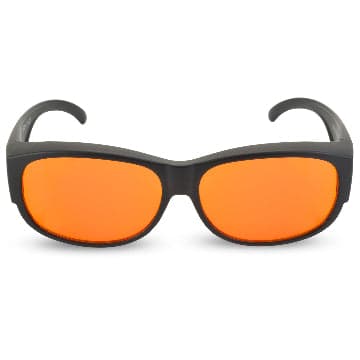
Spectra479 Fit-Over Nighttime Eyewear (amber)
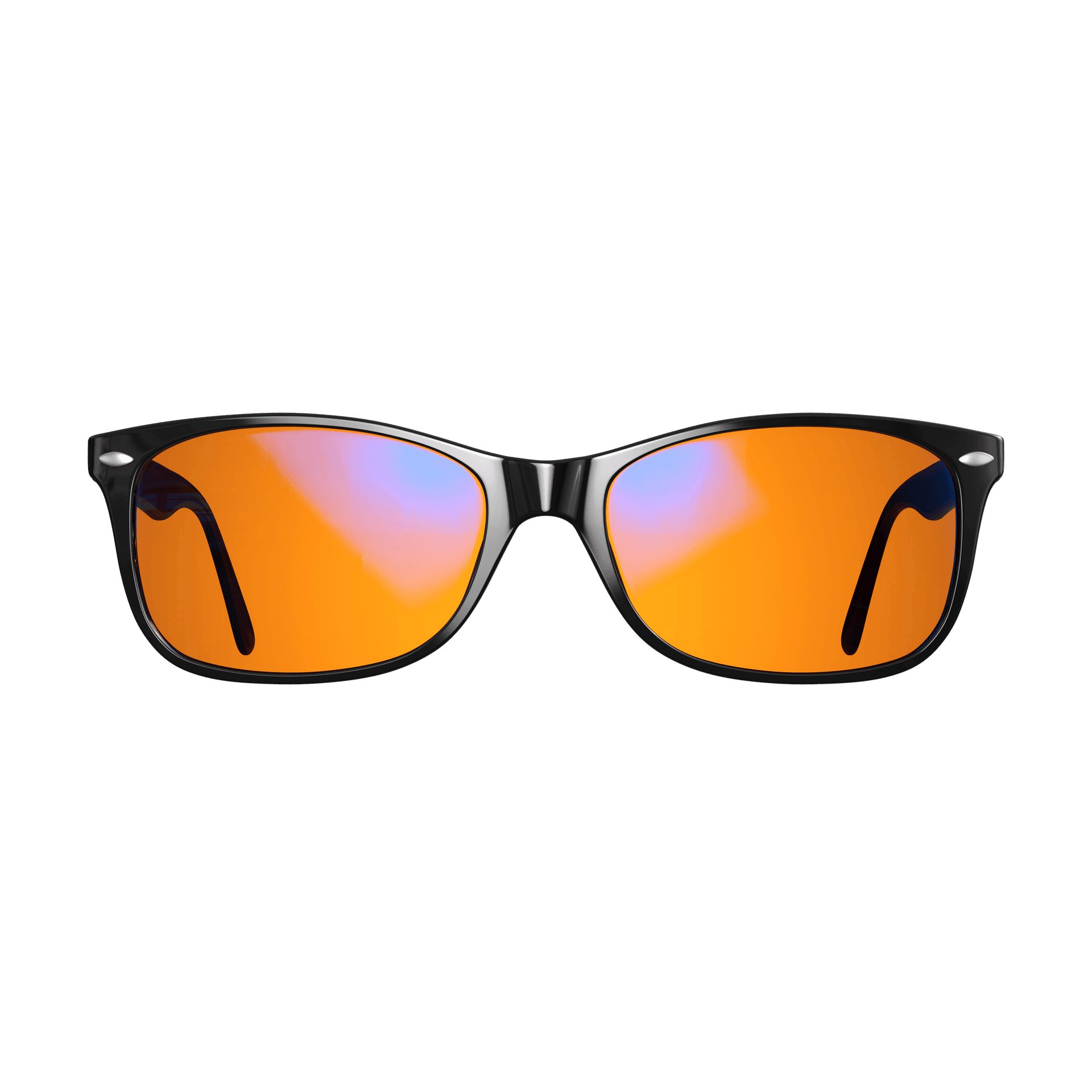
Swanwick Sleep Classic Night Swannies (amber)

GUNNAR Optiks Gaming & Computer Glasses
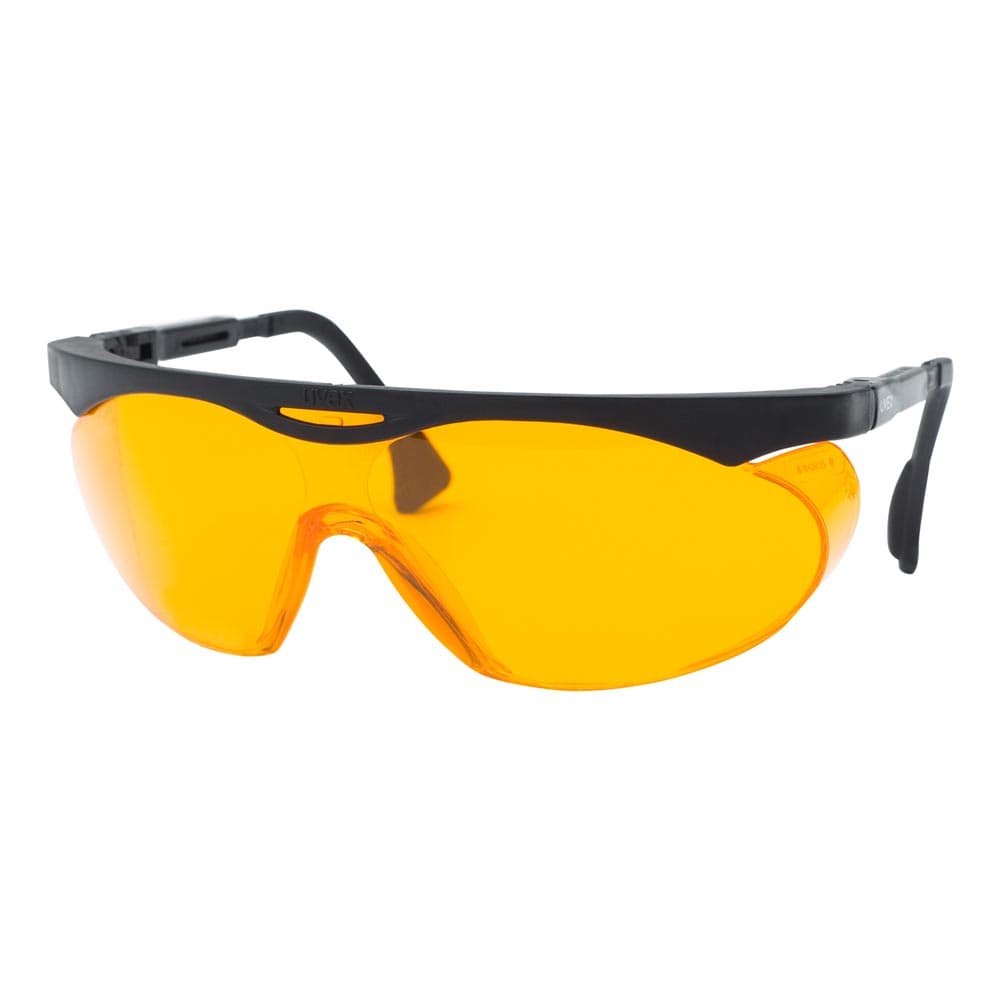
Uvex Skyper S1933X (SCT-Orange amber lens)
Frequently asked questions
Why does blocking green light matter?
The receptor that signals "daytime" to your body clock responds most strongly around 480nm and stays sensitive past 500nm. A lens that stops at 500nm — which several popular amber lenses do — leaves part of that range through. SafetyBlue's 570nm ceiling covers it; that's the concrete reason to prefer a red lens over amber.
Can I drive in them?
No, and the brand says so directly. Colour distortion is severe enough that traffic lights and brake lights are unreliable. These are for the last hours indoors before bed, not for going out.
Are the foam gaskets worth it?
SafetyBlue's FAQ says the Ultra features a removable foam gasket around the frame so that no sleep-disrupting light reaches your eyes. The brand also sells replacement gaskets separately.
Does SafetyBlue prove the melatonin claims?
No. The brand states its red lenses "enhance your body's melatonin production" but publishes no study supporting it. Treat the blocking percentages as the product's real claim and the melatonin framing as marketing.