SleepyHero · Free guide
The Bed Setup Playbook
Pillow, mattress, topper and cooling choices by sleep position and by problem, with our picks and what we would skip.
We may earn a commission when you buy through links on this page, at no extra cost to you. It never decides what we pick or tell you to skip.
8 chapters · 20 cited sources · Updated 12 October 2026
sleepyhero.com/toolkit/bed-setup-playbook · General information, not medical advice
The Bed Setup Playbook (PDF)
Rather have it in your inbox? We will email you the link, and it always serves the latest version.
One email with the links now, then four short sleep emails over two weeks and about one a month. Unsubscribe any time.
How to use this playbook
- Start with chapter 1. Your sleep position decides almost everything else: how tall the pillow should be, how much give the mattress needs, and which extra pillow helps.
- Fix things in order: pillow, then surface, then mattress. A pillow is the cheapest change and the one most often wrong. A topper changes how a mattress feels on top. A new mattress is the last step, and the only fix for sag.
- Change one thing at a time and give it one to two weeks before you judge it. Chapter 8 is a printable two-week plan with a log.
- Got a specific problem? Chapter 6 goes problem by problem: neck, back, shoulder, hip, snoring, reflux, pregnancy and night heat.
Chapter 1
Start with your sleep position
Your position decides how tall your pillow should be, how much give your mattress needs and which extra pillow helps. Get this right first and every later chapter gets simpler.
The one idea: keep your spine in a line
Almost every piece of bed advice in this playbook comes back to one idea. Lying down, your head, shoulders and hips should stay roughly in the line they make when you stand well: head not tipped up or dropped down, hips not sunk lower than your shoulders.
The pillow fills the gap between your head and the mattress. The mattress lets your heaviest parts sink just enough, and no further. Each position leaves a different gap and loads a different part of the body. That is why there is no single best pillow or mattress, only the best one for the way you sleep.
What each position asks of your bed
Use this table to set your starting point. Chapters 2 to 4 explain each column.
Side
- Pillow
- The tallest: it fills the gap from the side of your neck to the tip of your shoulder
- Mattress surface
- Enough give for the shoulder and hip to sink
- Extra pillow
- Between the knees
Back
- Pillow
- Lower, so your chin is not pushed toward your chest
- Mattress surface
- Supportive, so the hips stay level with the shoulders
- Extra pillow
- Under the knees
Stomach
- Pillow
- The thinnest you can tolerate, or none
- Mattress surface
- Firmer, so the hips do not sink and arch the lower back
- Extra pillow
- A flat pillow under the hips and lower belly
Combination
- Pillow
- Adjustable, because the gap changes as you turn
- Mattress surface
- Medium, with enough bounce to turn over easily
- Extra pillow
- A knee pillow for the hours on your side
Which position is best?
The Sleep Foundation rates side and back sleeping above stomach sleeping [1]. For lower back pain, Mayo Clinic and the Sleep Foundation suggest side sleeping with the knees slightly bent and a pillow between them [2][3], and that is the setup we start most people from. The knee pillow matters more than people expect. Without it the upper leg drops forward and twists the pelvis, which pulls the lower back out of line.
Back sleeping spreads your weight most evenly and puts no pressure on your face. It is also the worst position for snoring, and for many people with sleep apnea, because the tongue and soft palate fall back toward the airway [1][4]. If you sleep on your back, put a pillow under your knees [2][3].
Stomach sleeping is the least recommended. To breathe, your head turns to one side all night, and the middle of your body sinks so the lower back arches [1]. Telling a lifelong stomach sleeper to stop rarely works, so chapters 2 and 3 include a damage-control setup.
Some problems override the general advice. Reflux favours the left side. Snoring and late pregnancy favour either side over your back. A sore shoulder favours your back or the other side. Chapter 6 takes these one at a time.
Rule of thumb: Choose the position first, then the pillow, then the surface. Never the other way round.
Changing position, and staying there
Switching position takes one night to start and usually one to two weeks to feel normal. Two things help a side sleeper in training: a firm pillow or a body pillow behind your back, so you cannot roll over, and a knee pillow in front.
Many people drift onto their back to escape pressure on a shoulder or hip. If that is you, the surface may be the real problem, and a topper (chapter 4) often removes the reason you roll.
If you snore and keep ending up on your back, positional devices exist. In a study of a vibrating sleep position trainer in people with sleep apnea that is worse on the back, time spent on the back fell from 21% of the night to 3% after six months, and 64% of those whose data could be read used it for more than four hours a night. There was no placebo group, so treat it as promising rather than proven [5]. These devices were studied in people whose apnea had been diagnosed; they do not replace a sleep study.
Not sure how you sleep?
Most of us fall asleep in one position and wake up in another. For a few mornings, notice the position you wake in, or ask the person you share a bed with.
Our free sleeping position finder asks three short questions and gives you a position and a setup, with the source for each rule. If you tick breathing pauses, chest pain, numbness or weakness, or pain that has lasted weeks, it stops and sends you to a clinician instead, or to urgent care for chest pain. Those need a diagnosis, not a new pillow.
- Note the position you wake up in for three mornings.
- Side sleeper: put a pillow between your knees tonight. Any spare pillow works while you decide.
- Back sleeper: put a pillow under your knees.
- Stomach sleeper: try the thinnest pillow you have, or none, with a flat pillow under your hips.
- If one problem drives your choice, take the three-question position finder.
Pillows that make a position stick.
Contour Legacy
Contour Legacy Leg & Knee Foam Support PillowContour Legacy Leg & Knee Foam Support Pillow
For side sleepers: a wrap-style knee pillow with an adjustable strap, so it stays put if you move a lot. The shape most side sleepers end up buying.
sleepyhero.com/knee-pillows/contour-legacy-knee-pillow
$32.95(Amazon price as of – Details)Everlasting Comfort
Everlasting Comfort Under-Knee PillowEverlasting Comfort Under-Knee Pillow
For back sleepers: a bolster that goes under the knees, not between them.
sleepyhero.com/knee-pillows/everlasting-comfort-knee-pillow
$29.99(Amazon price as of – Details)
Coop Sleep Goods
Coop The Original Adjustable Body Pillow (20×54)Coop The Original Adjustable Body Pillow (20×54)
To stop rolling onto your back: a long pillow to wedge behind you or hug, with fill you can adjust.
sleepyhero.com/body-pillows/coop-original-body-pillow
$84.15(Amazon price as of – Details)


Affiliate disclosure: if you buy through these links we may earn a commission, at no extra cost to you. Scores are independent of revenue.
Current prices and where to buy are on each product page.
- A bolster as a side sleeper's knee pillow. Bolsters are shaped to go under the knees on your back. Between the knees on your side they do very little.
- Judging a new position after one night. It usually takes one to two weeks before a new position feels normal.
Go further on SleepyHero
- Sleeping position finder →Sleeping position findersleepyhero.com/tools/sleeping-position-finder
- The best sleeping positions, by condition →The best sleeping positions, by conditionsleepyhero.com/best-healthy-sleeping-positions-for-better-rest
- Knee pillows for side sleepers →Knee pillows for side sleeperssleepyhero.com/best/knee-pillows-for-side-sleepers
- Body pillows compared →Body pillows comparedsleepyhero.com/body-pillows
Chapter 2
Choose the right pillow
Pillow height is the most common thing people get wrong, and the cheapest to fix. This chapter covers height by position, what the fill changes, neck pain, and when a special pillow is worth it.
Height first: fill the gap
Loft is the height of a pillow as it sits under your head. The right loft keeps your head level with your spine, not tipped up toward the ceiling and not dropped toward the mattress [1].
- Side sleepers need the most. The pillow has to fill the gap from the side of your neck to the tip of your shoulder, so broad shoulders need more than narrow ones. A soft mattress lets the shoulder sink, so it needs a little less than a firm one.
- Back sleepers need less. A thick pillow pushes the chin toward the chest.
- Stomach sleepers need the least: the thinnest pillow you can tolerate, or none at all.
Inch figures are only a rough start. Our pillow guides use 4 to 6 inches as the starting range for side sleepers, but brands label height in different ways. Treat the label as a starting point and the gap as the test.
The two-minute gap test
You can check a pillow at home.
- Lie in your usual position, on your own bed, with your usual pillow. The mattress matters: the same pillow sits higher on a firm bed than on a soft one.
- Ask someone to look at you from behind if you sleep on your side, or from the side if you sleep on your back. A phone photo works too.
- Look at the line from your head down your back. On your side, your neck should look straight, not bent down toward the mattress or up toward the ceiling. On your back, your chin should not be pushed toward your chest.
- Too low: add fill, or fold a towel under the pillow for a few nights while you decide. Too high: take fill out, or try a thinner pillow.
Judge the pillow you sleep on, not the stack you lean against to read.
Rule of thumb: Buy the height for your position first. Fill, shape and cooling come second.
Adjustable fill takes the guessing out
The right height depends on your shoulders, your mattress and how you move, so a pillow you can adjust is the safest buy when you are not sure. Shredded-foam pillows with a zip let you add or remove fill a handful at a time until the gap test passes.
Adjustable fill also suits combination sleepers, who need a lower pillow on their back than on their side. If you switch between back and side, adjustability is worth paying a little more for.
Fill and heat
What a pillow is filled with changes how it keeps its height and how warm it sleeps.
- Open structures shed heat best. A grid or kapok fill lets air move through the pillow. Gel and cool-touch covers feel cool for the first minute; the fill decides the rest of the night.
- Solid memory foam holds its shape well but is the warmest build.
- None of the pillow brands we cover publishes a measured temperature difference. Treat cooling claims as a description of the build, not a number.
If a cooler pillow still feels warm, check the height first, then the pillowcase and the mattress (chapter 5).
Neck pain: what a pillow can and cannot do
For neck pain, Cleveland Clinic's advice starts with a pillow height that keeps your head neutral, and it flags stomach sleeping as a common culprit [6]. Start with the gap test. The research on pillow type is thin:
- In 106 side sleepers, a latex pillow did better than people's own pillows in most comparisons of waking neck pain, sleep quality and comfort. A contour foam pillow did no better than a regular-shaped foam one, and the authors advised against feather pillows [7].
- In a later pilot trial in side sleepers with known wear-and-tear changes in the neck (cervical spondylosis), no pillow significantly changed any outcome. The authors said a proper trial would need more than 400 people [8].
So a pillow can improve your sleeping posture, but it is not a treatment. A contour (cervical) pillow is only better than a plain one if its height suits you. At the wrong height it bends your neck more than a plain pillow would. If you try one, a dual-height design that you can flip is the safest choice. Allow one to two weeks to get used to it, but do not keep using a pillow that makes your neck worse.
Pain that is severe, spreads down an arm, comes with numbness or weakness, or lasts for weeks needs a doctor, not a new pillow.
The other pillows: knee, bolster, body, wedge, CPAP
- Knee pillow (side sleepers). Sits between the knees and keeps the top leg at hip height, so your pelvis does not twist. Broad hips need a thicker one. A strap stops it sliding out if you move a lot.
- Bolster (back sleepers). Sits under the knees. It does little as a side sleeper's knee pillow.
- Body pillow. A long pillow to hug, which also stops you rolling onto your back. In pregnancy, choose the shape first (U, C, J or straight), and buy for the size you will be in three months.
- Wedge. A firm ramp that raises your upper body, for reflux and some snoring. See chapter 6.
- CPAP pillow. Cut-outs stop the mask being pushed off your face when you lie on your side: deeper cut-outs for full-face masks, shallower for nasal ones. It cannot fix a mask that does not fit.
- Do the gap test on your own bed tonight.
- Too low: fold a towel under the pillow for a few nights before you buy anything.
- Combination sleeper, or unsure: choose adjustable fill.
- Neck pain with numbness, weakness, or pain lasting weeks: see a clinician first.
Our picks, by the problem they solve.
Coop Home Goods
Coop Home Goods Original Adjustable Pillow (Queen)Coop Home Goods Original Adjustable Pillow (Queen)
Adjustable shredded-foam fill you set to your own height. Our first choice if you are unsure what you need or you switch between back and side.
sleepyhero.com/pillows/coop-original-pillow
$75.65(Amazon price as of – Details)Layla Sleep
Layla Kapok Pillow (Queen)Layla Kapok Pillow (Queen)
Kapok and foam fill you can adjust, one of the cooler builds we cover. The pick for side sleepers who run hot.
sleepyhero.com/pillows/layla-kapok-pillow
$114.00Royal Therapy
Royal Therapy Memory Foam Cervical PillowRoyal Therapy Memory Foam Cervical Pillow
A contour pillow with two heights you can flip between, so you can try a cervical shape without betting on one height.
sleepyhero.com/cervical-pillows/royal-therapy-cervical-pillow
$59.99(Amazon price as of – Details)


Affiliate disclosure: if you buy through these links we may earn a commission, at no extra cost to you. Scores are independent of revenue.
Current prices and where to buy are on each product page.
- MyPillow Classic. The lowest score among the head pillows we cover. The adjustable Coop scores 1.2 points higher.
- Tempur-Ergo Neck Pillow. A fixed contour that scores below the dual-height Royal Therapy.
- Feather pillows if you wake with neck pain. The authors of the side-sleeper trial advised against them [7].
- A stack of pillows to raise your head. It bends your neck without lifting your chest. For reflux, incline the whole upper body (chapter 6).
Go further on SleepyHero
- Best pillow for side sleepers →Best pillow for side sleeperssleepyhero.com/best/pillow-for-side-sleepers
- Cervical pillows compared →Cervical pillows comparedsleepyhero.com/cervical-pillows
- Best cooling pillows →Best cooling pillowssleepyhero.com/best/cooling-pillows
- CPAP pillows for side sleepers →CPAP pillows for side sleeperssleepyhero.com/best/cpap-pillows-for-side-sleepers
Chapter 3
Choose the right mattress
A mattress is the biggest and slowest decision in this playbook. This chapter covers firmness by position and weight, what the back-pain research shows, when to replace a mattress, and how to use a trial.
Firmness: what the research supports
The best evidence on firmness comes from back-pain research. In a trial of 313 adults with chronic low-back pain, people given a medium-firm mattress had less pain in bed and less disability after 90 days than people given a firm one. The difference in pain on getting up was not statistically clear [9]. Two later reviews of the trials point the same way: medium-firm mattresses did best for comfort, sleep quality and spine alignment [10][11].
So the old idea that a bad back needs a hard bed is not what the evidence shows. Medium-firm is the starting point, and your position and weight move you softer or firmer from there.
Rule of thumb: Medium-firm is the evidence-based start. Go softer for side sleeping and lighter bodies, firmer for stomach sleeping and heavier bodies.
Firmness by position and weight
Firmness numbers are each brand's own 1-to-10 scale, not a standard, so read them as a rough guide alongside the brand's own description. With that caveat, our mattress guides start from these ranges.
Body weight shifts them. Our side-sleeper guide suggests a softer feel, around 3 to 5, under about 130 lb, and a firmer one, around 6 to 7, over about 230 lb, where a soft bed lets the hips sink too far. Side sleepers over about 130 lb also need a thick enough soft top layer, at least 3 inches, so the shoulder does not hit the firm layer underneath.
Side
- Start from
- About 5 to 6
- Why
- The shoulder and hip need to sink. Too firm pushes them up and bends the spine
Back
- Start from
- About 6 to 7
- Why
- The hips stay level with the shoulders
Stomach
- Start from
- About 7 to 8
- Why
- Stops the hips sinking and the lower back arching
Combination
- Start from
- About 6, often a hybrid
- Why
- Some contour, and enough bounce to turn over easily
Foam, hybrid or innerspring
- Memory foam hugs the body and relieves pressure, which suits side sleepers. It also soaks up a partner's movement best. It is the warmest type.
- Hybrids put foam over coils. They balance contour and bounce and are the safe choice for most people.
- Innerspring beds breathe well and suit people who dislike a stuck-in-the-foam feeling.
If you sleep hot, our hot-sleeper guide ranks the types from coolest to warmest: active cooling systems, then open grid tops, then coil and hybrid beds, then latex, then gel foam under a real cooling cover, then standard memory foam. A cool-touch cover over plain foam does not stop the foam holding heat.
When to replace a mattress
A topper can soften a mattress that is too firm. Nothing fixes sag: foam follows the dip underneath it, so a topper on a hammocking bed just makes a softer hammock.
Sag matters most if you sleep on your side or your front. In a sleep-lab study, a deliberately sagging bed lowered sleep quality for people who sleep in those positions [12]. The plainest sign is a dip where you lie that you can see or feel, or rolling toward the middle in the night.
In another study, 59 adults whose own beds averaged 9.5 years old slept better and had less back discomfort over 28 nights on new medium-firm beds. There was no comparison group, so part of that may be the novelty of a new bed, but an old, worn mattress is worth checking [13].
Use the trial: it is part of the product
New mattresses take time. Our guides allow about 30 nights to break one in and three to four weeks to adjust to a change in firmness. That is why a long trial matters: 100 nights or more is common among the brands we cover, and some offer a full year.
Two cautions before you buy:
- Check where the trial applies. Some long trials apply only when you buy direct. One mattress we cover comes with the brand's 365-night trial direct, but with Amazon's own return window when bought on Amazon.
- Check for a minimum. Many brands, including several we cover, ask you to sleep on the mattress for at least 30 nights before you can start a return.
Write the trial end date in your calendar the day the mattress arrives.
Sharing a bed
If a partner's movement wakes you, memory foam absorbs it best and coil beds pass more of it along. If you disagree about temperature, active cooling with two zones lets each side set its own (chapter 5). If you disagree about firmness, a flippable mattress lets you try two feels, though both of you sleep on whichever side is up.
- Strip the bed and look across the mattress at eye level for a dip where you lie.
- Too firm but not sagging: try a topper first (chapter 4).
- Sagging: skip the topper and plan a replacement.
- Before you buy: note the trial length, where it applies, and any minimum nights.
Our picks, and who each one suits.
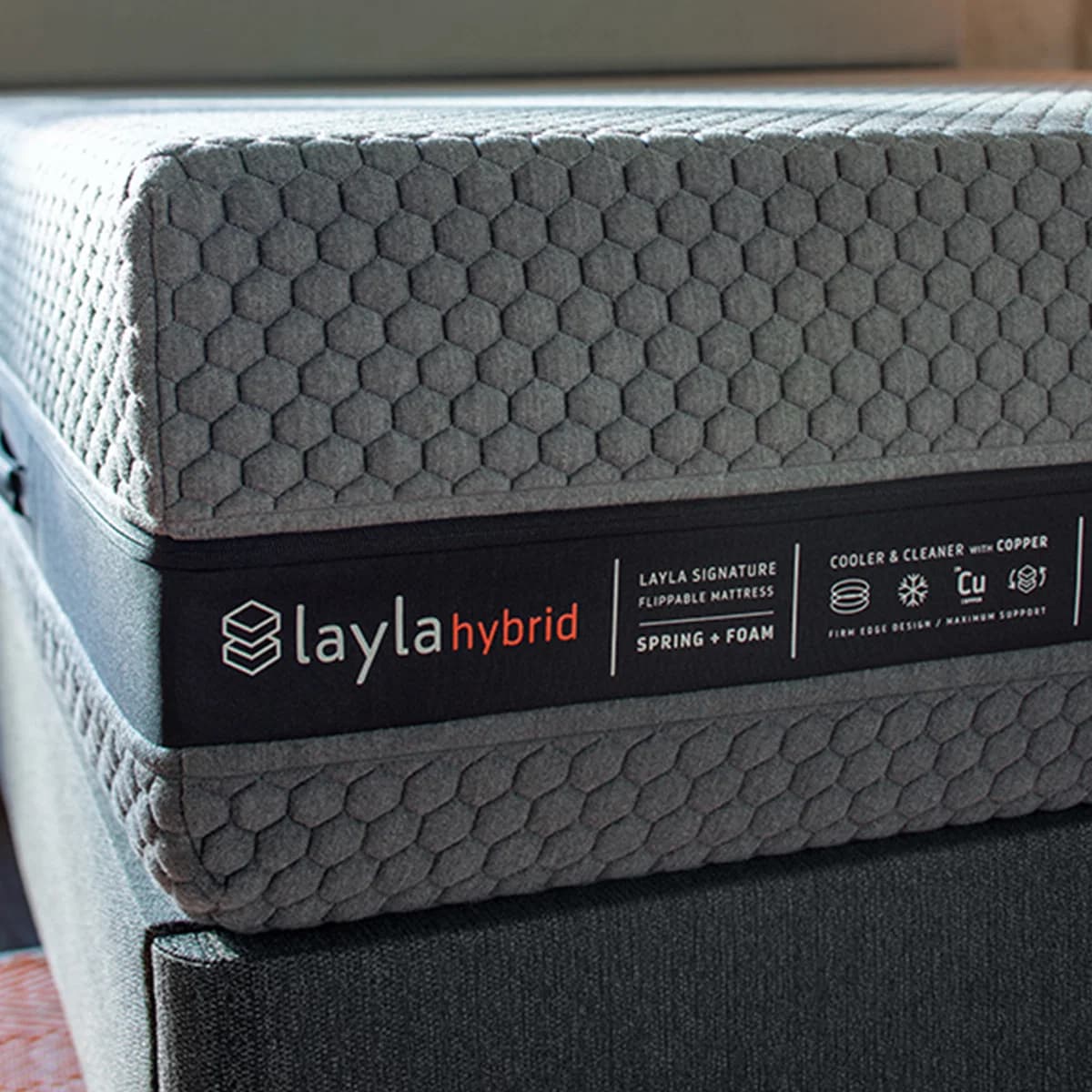
Layla Sleep
Layla Hybrid Mattress - QueenLayla Hybrid Mattress - Queen
Flippable: a softer side and a firmer side over coils, so you can turn it over if you guessed wrong on firmness. 120-night trial and a 10-year warranty.
sleepyhero.com/mattresses/layla-hybrid
$1,549.00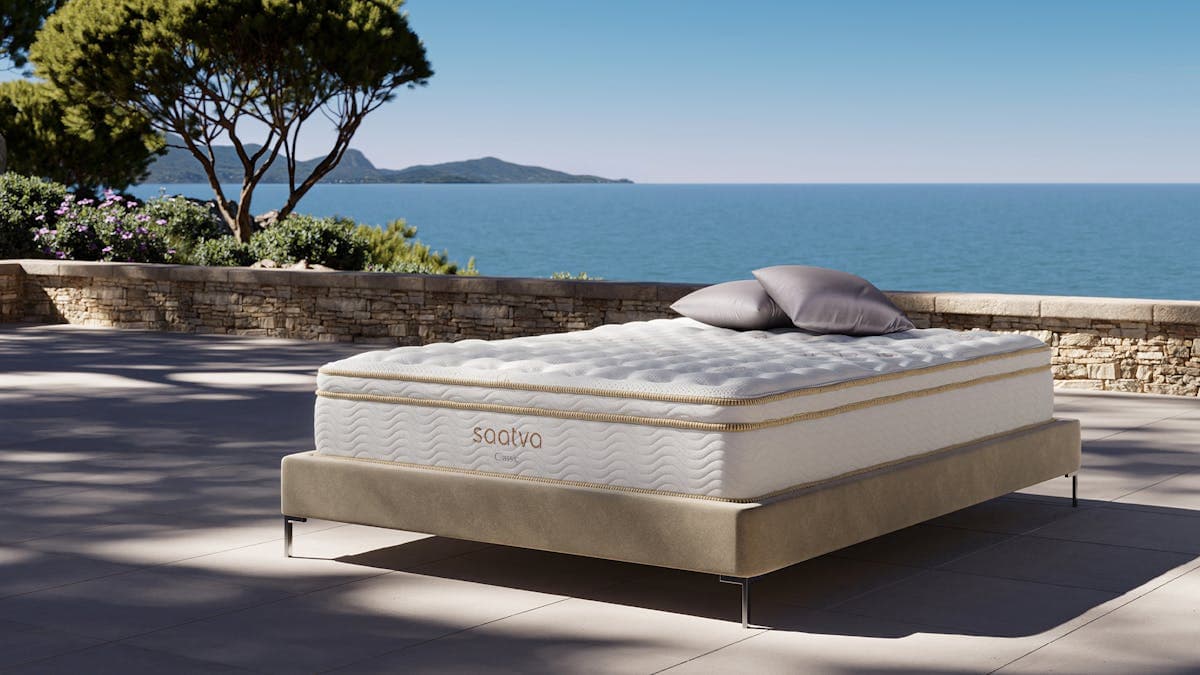
Saatva
Saatva Classic Queen Mattress (Luxury Firm)Saatva Classic Queen Mattress (Luxury Firm)
The highest-scoring mattress in our catalogue: a coil bed in three firmness levels, with a 365-night trial. The middle level suits most people.
sleepyhero.com/mattresses/saatva-classic
$1,904.00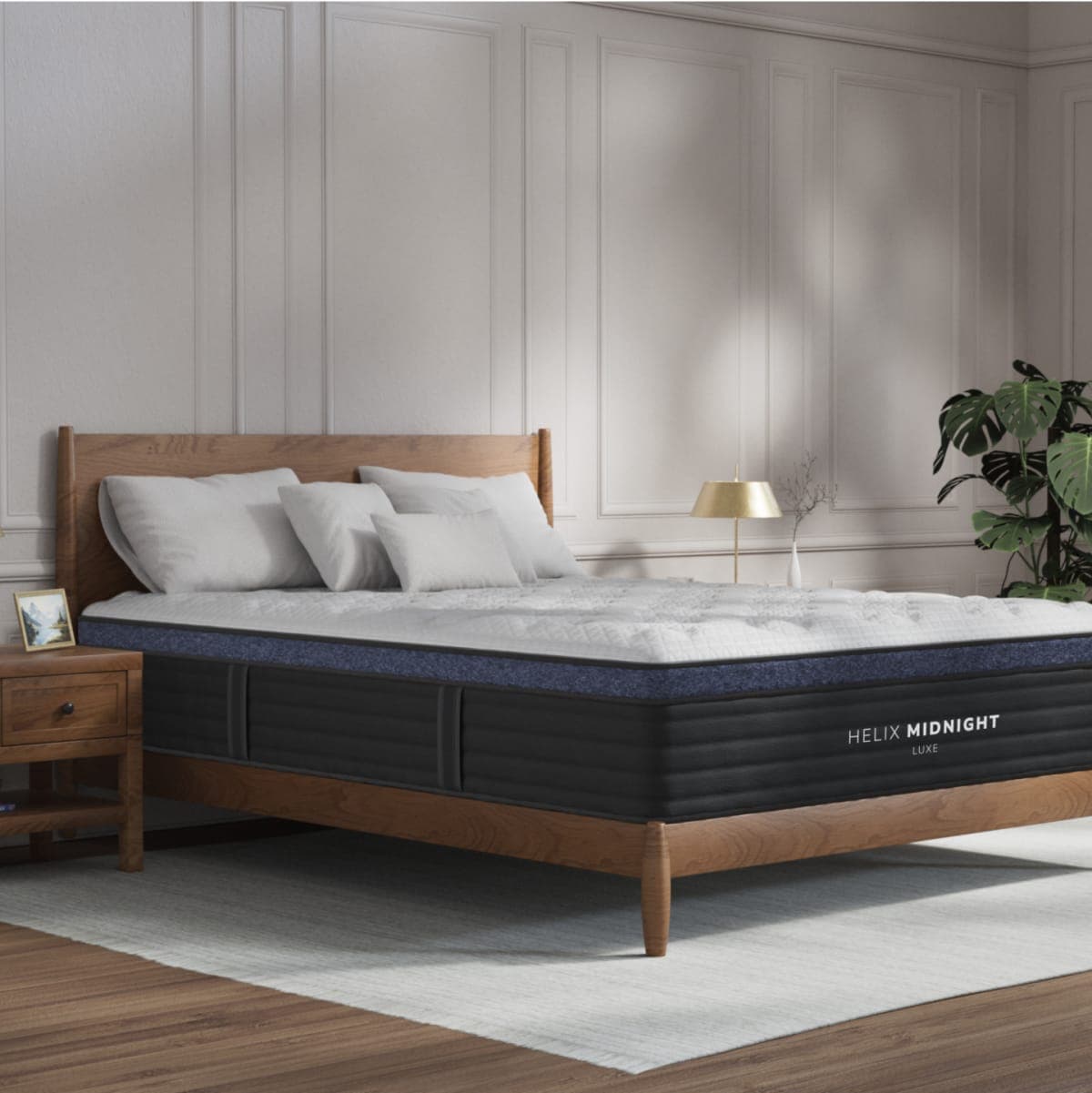
Helix
Helix Midnight Luxe Queen MattressHelix Midnight Luxe Queen Mattress
A zoned hybrid made for side sleepers, with a pillow-top over coils. Skip it if you sleep very hot, and if you buy on Amazon, check whether Helix's 120-night trial applies.
sleepyhero.com/mattresses/helix-midnight
$1,999.00Nectar
Nectar Premier 13″ Queen MattressNectar Premier 13″ Queen Mattress
The all-foam value pick, strong on motion isolation, and warmer than the coil beds here. Bought on Amazon, Amazon's return window applies instead of Nectar's 365-night trial, so buy direct if the trial matters to you.
sleepyhero.com/mattresses/nectar-premier
$948.74(Amazon price as of – Details)

Affiliate disclosure: if you buy through these links we may earn a commission, at no extra cost to you. Scores are independent of revenue.
Current prices and where to buy are on each product page.
- Purple Restore. The largest price-to-score gap in our catalogue: it costs far more than the Saatva and scores 0.4 lower.
- A firm mattress bought for back pain. The trials point to medium-firm, not firm [9].
- A standard memory-foam mattress if you sleep hot. It is the warmest type, and a cool-touch cover does not change that.
- Layla Essential if flipping is the point. It is the one-sided Layla.
Go further on SleepyHero
- Best mattress for side sleepers →Best mattress for side sleeperssleepyhero.com/best/mattress-for-side-sleepers
- Best mattress for hot sleepers →Best mattress for hot sleeperssleepyhero.com/best/mattress-for-hot-sleepers
- Flippable mattresses compared →Flippable mattresses comparedsleepyhero.com/best/flippable-mattress
- All mattresses compared →All mattresses comparedsleepyhero.com/mattresses
Chapter 4
Fix the surface with a topper
A topper changes how the top of your mattress feels. It is the right fix for a mattress that is too firm and the wrong fix for one that sags.
What a topper can fix
A topper fixes one problem: a mattress that is too firm. It softens the surface and gives your shoulder and hip room to sink, which is why side sleepers on firm beds notice it most.
It cannot fix sag. Foam follows the dip underneath it, so put that money toward a new mattress instead (chapter 3).
It is a comfort change, not a treatment. If pressure or pain carries on, see a doctor.
Rule of thumb: Firm but flat: buy a topper. Sagging: buy a mattress.
How thick?
Thickness is the first thing to get right, because a side sleeper's weight presses down on two narrow points, the shoulder and the hip, and a thin topper squashes flat under them.
In the table below, the 160 lb figure comes from budget toppers' own listings, and other brands draw the line higher, so treat it as a rough guide. If you are close to it, go thicker.
2 inches
- Suits
- Softening the surface for back sleepers and lighter bodies, and for sofa beds and guest beds
- Watch for
- Side sleepers over about 160 lb press straight through it
3 inches
- Suits
- Most side sleepers: room for the shoulder and hip to sink
- Watch for
- Budget foam softens noticeably within two to four years
4 inches
- Suits
- Heavier sleepers who bottom out on 3 inches
- Watch for
- Needs deep-pocket sheets, about 15 inches or more, and adds height to the bed
Material: foam contours, fibre only lofts
- Memory foam, including gel- and graphite-infused foam, moulds around the shoulder and hip. That contour is the pressure relief a side sleeper wants.
- Fibre (down-alternative) toppers add a soft, breathable layer but no contouring. Fine for a hot back sleeper, wrong for a side sleeper with a sore shoulder.
- Dual-layer toppers put a soft layer over a firmer base, so the shoulder sinks while the hips stay level. A very soft single layer can let heavier hips sink too far and bow the spine.
- Density decides lifespan. Denser foam keeps its feel for years. Budget foam softens within two to four years, and its warranty usually tells you its honest lifespan.
Toppers and heat
No foam topper truly cools you. Gel absorbs heat and then fills up; vents and open-cell foam shed some; dense premium foam is the warmest. Fibre pillow-tops breathe best.
Copper has no published effect on how a topper sleeps, and graphite's cooling is the brand's own claim, so do not pay extra expecting a measured difference. If you already sleep hot, pair a foam topper with breathable sheets (chapter 5), or choose a fibre top if you sleep on your back.
Fit and sheets
A topper adds height. Measure your mattress depth plus the topper before you buy fitted sheets or a protector, or the corners will keep pinging off. A 4-inch topper usually needs deep-pocket sheets.
- Check for sag before you buy a topper (chapter 3).
- Side sleeper: 3 inches. Heavier, or pressing through 3: 4 inches.
- Sleep hot: favour a fibre top or pair foam with breathable sheets.
- Measure mattress plus topper depth before buying sheets or a protector.
Our picks, from premium to value.
Tempur-Pedic
TEMPUR-Adapt 3-Inch Topper (Supreme)TEMPUR-Adapt 3-Inch Topper (Supreme)
Dense TEMPUR foam with the highest topper score in our catalogue and a 10-year warranty. It is also the warmest of our picks, so skip it if you run hot.
sleepyhero.com/mattress-toppers/tempur-adapt-topper
$409.00(Amazon price as of – Details)LUCID
Lucid 3-Inch Gel Memory Foam TopperLucid 3-Inch Gel Memory Foam Topper
The value 3-inch pick: real pressure relief for side sleepers at a lower price. Budget foam, so expect it to soften within a few years, and not our choice if you run hot.
sleepyhero.com/mattress-toppers/lucid-3-gel-topper
$99.99(Amazon price as of – Details)Saatva
Saatva Graphite Memory Foam TopperSaatva Graphite Memory Foam Topper
Dense 3-inch foam with the second-highest topper score in our catalogue. Saatva says the graphite draws heat away; treat that as the brand's claim, not a measured result.
sleepyhero.com/mattress-toppers/saatva-graphite-topper
$305.00(Amazon price as of – Details)Zinus
Zinus 4-Inch Green Tea Memory Foam TopperZinus 4-Inch Green Tea Memory Foam Topper
4 inches for heavier side sleepers who press through 3. It is one soft layer with no firmer base, so check your hips are not sinking below your shoulders. The green tea is for odour, not cooling.
sleepyhero.com/mattress-toppers/zinus-green-tea-topper
$81.99(Amazon price as of – Details)


Affiliate disclosure: if you buy through these links we may earn a commission, at no extra cost to you. Scores are independent of revenue.
Current prices and where to buy are on each product page.
- DreamCloud gel topper. It scores below the Lucid 3-inch, which costs less.
- Subrtex copper topper. Our lowest-scoring topper, and copper has no published effect on how a topper sleeps.
- A 2-inch topper for a side sleeper over about 160 lb. You will press through it to the firm mattress below.
- A fibre topper for a sore shoulder. Fibre adds loft but no contour, so the shoulder is still propped up.
- Any topper on a sagging mattress. Foam follows the dip underneath it.
Go further on SleepyHero
- Best toppers for side sleepers →Best toppers for side sleeperssleepyhero.com/best/mattress-toppers-for-side-sleepers
- All mattress toppers compared →All mattress toppers comparedsleepyhero.com/mattress-toppers
- How to make a sofa bed more comfortable →How to make a sofa bed more comfortablesleepyhero.com/adult-sleep/sofa-bed-comfort
Chapter 5
Sleep cooler
Heat wakes people up. This chapter covers the room, the layer under you, sheets, pillows and blankets, fans and active cooling, and what to skip.
Why heat matters more than an exact number
In real bedrooms, with bedding and night clothes, heat is what disturbs sleep. It increases waking and cuts deep sleep and REM sleep, and humid heat is worse. With covers on, cold did not change sleep stages, but it did change heart activity during sleep, and the review's authors think cold may matter more than heat in real life [14]. So aim for a room that is cool, not cold.
You will see a precise ideal bedroom temperature quoted in many places. The research does not support one exact number. It supports a room cool enough, but not cold, that you are comfortable under your usual bedding, with the humidity kept down. If you wake up warm, cool the room or lighten the bedding before you buy anything.
Rule of thumb: Fix the room first, then the layer under you, then the sheets. A cooling label is not a cooling number.
Cool the layer under you first
Heat builds up underneath you, where your body presses into the mattress. A blanket only deals with heat rising off the top. So the order of fixes is the surface, then the sheets, then the top layer.
- A foam mattress holds heat, and sheets cannot fix that. A breathable topper or a cooling pad can help.
- A passive cooling pad needs no electricity and feels cooler, but it can fill up with heat on the hottest nights.
- Active cooling keeps working at 3 a.m. because it moves heat away. Air systems blow cool or warm air under the sheet and act fast. Water systems run cool water through a pad and are colder, but the unit hums. Some need a subscription, and some offer two zones for couples. Active cooling is overkill if your room is not genuinely hot.
Sheets: fabric beats thread count
- Weave. Percale is crisp and breathes. Sateen is silkier and slightly warmer. Hot sleepers should choose percale.
- Fibre. Our cooling-sheet guide ranks eucalyptus lyocell (often sold as Tencel) coolest, then bamboo viscose, then long-staple cotton percale. Microfiber traps heat.
- Thread count. Real quality sits around 300 to 500. A 1,000 thread count claim is a red flag, and above about 400 a higher count makes a denser, warmer fabric.
- Heavy night sweats. Skip pure cotton and use a performance fabric or eucalyptus.
No sheet can promise to cool you by a set number of degrees, whatever the label says.
Pillows, pillowcases and blankets
- Pillow. Open fills such as a grid or kapok shed heat; a cool-touch cover only helps for the first minute (chapter 2).
- Silk pillowcase. Smoother than cotton, so there is less friction on hair and skin, and slightly cooler. It will not treat acne, wrinkles or hair loss. Hot sleepers should pick 22 momme over the heavier 25, and avoid polyester satin, which can sleep hotter.
- Weighted blanket. Weight traps heat by definition. If you run hot and still want one, choose an open knit or a bamboo or lyocell cover, never minky or fleece, at about 10% of your body weight. Do not size up. Weighted blankets are not for babies, and they do not help sleep apnea.
Fans
A fan is the simplest active cooling, and some people like its sound as white noise.
- Judge the noise figure at the speed you will sleep on, usually the lowest. These figures are the makers' own.
- DC motors are quieter and use less power.
- A pedestal fan can be aimed down at you in bed. A tower fan blows at the height of the bed frame.
- Tonight: lighten the top layer and get air moving across the bed.
- Hot every night on a foam mattress: look at the surface (topper or pad) before buying new sheets.
- Buying sheets: percale or lyocell, around 300 to 500 thread count.
- Weighted blanket and waking hot: try a week without it.
Our picks, from the bed up.
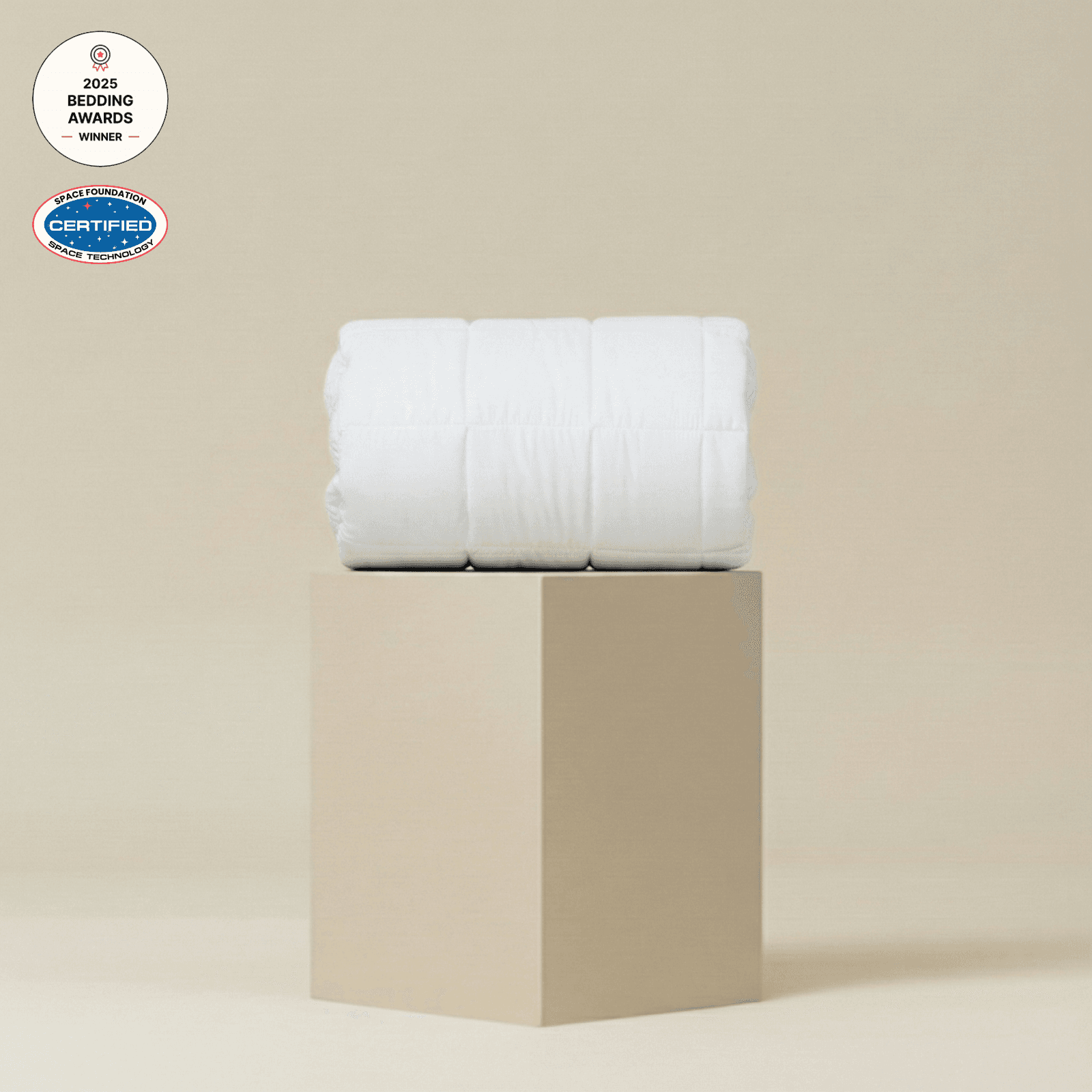
Slumber Cloud
Slumber Cloud Nacreous Cooling Mattress Pad (Queen)Slumber Cloud Nacreous Cooling Mattress Pad (Queen)
A passive cooling pad, no electricity needed: the step to try before active cooling.
sleepyhero.com/cooling-tech/slumber-cloud-cooling-pad
Check priceBuffy
Buffy Eucalyptus Sheet Set (Queen)Buffy Eucalyptus Sheet Set (Queen)
Eucalyptus lyocell, the coolest sheet fabric in our guide. Worth buying on sale, because cooling is the only thing the premium buys.
sleepyhero.com/sheets/buffy-eucalyptus-sheets
$199.00(Amazon price as of – Details)Casper
Casper Cool Percale Sheet Set (Queen)Casper Cool Percale Sheet Set (Queen)
Cotton percale for hot sleepers who want a crisp, classic sheet.
sleepyhero.com/sheets/casper-cool-percale
$98.10(Amazon price as of – Details)
DREO
DREO Tower Fan 518DREO Tower Fan 518
The quietest published low-speed figure among the fans we cover.
sleepyhero.com/bedroom-fans/dreo-tower-fan-518
$99.99(Amazon price as of – Details)ZIMASILK
ZIMASILK 22 Momme Mulberry Silk PillowcaseZIMASILK 22 Momme Mulberry Silk Pillowcase
If you want silk for your hair: the top pick in our silk guide, true 22-momme mulberry silk on both sides, the weight we suggest for hot sleepers. A comfort choice, not a cooling fix.
sleepyhero.com/silk-pillowcases/zimasilk-pillowcase
$37.99(Amazon price as of – Details)


Affiliate disclosure: if you buy through these links we may earn a commission, at no extra cost to you. Scores are independent of revenue.
Current prices and where to buy are on each product page.
- Microfiber sheets if you run hot. Microfiber traps heat.
- A cool-touch cover over solid foam. It feels cool for a minute; the foam underneath still holds heat.
- Active cooling for a room that is not genuinely hot. Start with the room, the bedding and a fan.
- Minky or fleece weighted blankets. They add heat to a product that already traps it.
- Sheex performance sheets, unless night sweats are the problem. They score half a point below a budget cotton set; for heavy sweats, our sheet guide rates them the pick.
Go further on SleepyHero
- Best cooling sheets →Best cooling sheetssleepyhero.com/best/cooling-sheets
- Best cooling mattress pads →Best cooling mattress padssleepyhero.com/best/cooling-mattress-pads
- Best mattress for hot sleepers →Best mattress for hot sleeperssleepyhero.com/best/mattress-for-hot-sleepers
- Bedroom fans compared →Bedroom fans comparedsleepyhero.com/bedroom-fans
- The sleep-friendly bedroom →The sleep-friendly bedroomsleepyhero.com/adult-sleep/sleep-environment
Chapter 6
Fixes by problem
Start here if one problem is driving your search. Each fix gives the position, the pillow and the surface, and says when the bed is not the answer.
At a glance
Find your problem, set up the bed this way for two weeks, and keep notes with the log in chapter 8.
Neck pain
- Position
- Back with a low pillow, or side with a pillow that fills the shoulder gap
- Pillows
- Height-matched; adjustable or dual-height
- Surface
- Medium-firm
- See a clinician if
- It spreads, comes with numbness or weakness, or lasts weeks
Lower back pain
- Position
- Side with knees slightly bent, or back
- Pillows
- Between the knees on your side; under the knees on your back
- Surface
- Medium-firm, and check for sag
- See a clinician if
- It comes with numbness or weakness, or lasts weeks
Shoulder pain
- Position
- Back, or on the other side
- Pillows
- Keep the sore arm out from under your head
- Surface
- Enough give for the lower shoulder
- See a clinician if
- It lasts weeks or keeps waking you
Hip pain
- Position
- Side, on the hip that does not hurt
- Pillows
- Between the knees
- Surface
- Enough give for the lower hip
- See a clinician if
- It lasts weeks or keeps waking you
Snoring
- Position
- Either side, not your back
- Pillows
- A firm pillow behind your back; a wedge for some
- Surface
- No mattress treats sleep apnea
- See a clinician if
- There are breathing pauses, gasping or choking
Reflux at night
- Position
- Left side, upper body raised
- Pillows
- A firm wedge or a raised head of the bed
- Surface
- Any
- See a clinician if
- It is frequent, getting worse, or swallowing is hard. Chest pain: urgent care now
Pregnancy, from about 28 weeks
- Position
- Either side, knees bent, not your back
- Pillows
- Between the knees; a body pillow
- Surface
- Any
- See a clinician if
- Always talk to your midwife or obstetrician about your setup
Sleeping hot
- Position
- Any
- Pillows
- An open-fill pillow
- Surface
- Cool the layer under you (chapter 5)
- See a clinician if
- -
Lower back pain
Sleep on your side with your knees slightly bent and a pillow between them, or on your back with a pillow under your knees [2][3]. Choose a medium-firm mattress over a firm one: in the trial described in chapter 3, it meant less pain in bed and less disability [9]. Then check the mattress for sag (chapter 3), because no pillow makes up for a bed that dips.
Neck pain
Start with pillow height, using the gap test in chapter 2. The pillow trials are small and mixed, so a pillow is a posture fix rather than a treatment [7][8]. If you sleep on your back, keep the pillow low and add one under your knees. If you sleep on your side, match the pillow to the gap between your neck and shoulder.
Shoulder pain
Sleep on your back or on the other side, and keep the sore arm in a relaxed, supported position rather than under your head or pillow [6]. If you sleep on your side, the surface needs enough give for the lower shoulder, and on a firm bed a 3-inch topper is the usual fix.
The research linking position to shoulder pain is weak. In a study of 761 workers, the position expected to be worst was linked to less shoulder pain, perhaps because people with sore shoulders had already learned to avoid it [15]. Let comfort guide you.
Hip pain
Lie on the side that does not hurt. A pillow between your knees stops the upper leg pulling forward and twisting your pelvis [6]. The lower hip then comes down to the surface: it needs enough softness to sink. Side sleepers on firm beds usually feel a 3-inch topper here first.
Snoring
On your back, the tongue and soft palate fall back toward the airway, and side sleeping keeps it more open [1]. In sleep-lab records from two clinics, sleep apnea that was clearly worse on the back was found in about half of people with mild apnea, a fifth with moderate apnea and 6.5% with severe apnea [4]. So position matters most when the problem is milder.
Things that help you stay off your back: a firm pillow behind you, a body pillow, or, if a sleep study has shown apnea that is worse on your back, a positional trainer (chapter 1). A wedge that raises your head helps some snorers. If you snore just as loudly on your side and propped up, raising the head alone will not fix it.
Snoring with breathing pauses, gasping or choking can be sleep apnea. That needs a sleep study, not new bedding.
Reflux at night
Sleep on your left side. In two small studies that measured acid in the esophagus overnight (10 and 57 patients), the right side was worst, and in the larger one the left side meant less acid exposure than the right side or the back [16][17]. On the left, the stomach sits below its junction with the esophagus, so acid has to travel uphill.
Raise your upper body. The US National Institute of Diabetes and Digestive and Kidney Diseases suggests inclining your body with a foam wedge, or pillows under your head and upper back, so your head is 6 to 8 inches higher [18]. The point is to incline the whole upper body. Pillows under your head alone bend your neck without lifting your chest. Our wedge guide treats 7 to 8 inches as the usual starting height; taller wedges are mainly for people told to keep their upper body raised after surgery. Lying on your stomach on a wedge suits almost no one.
Reflux that is frequent, getting worse, or makes swallowing hard needs a doctor, not taller foam.
Pregnancy
From about 28 weeks, settle to sleep on your side, not your back. In pooled data from five studies, going to sleep on the back was linked to a higher risk of late stillbirth than going to sleep on the left side. The right side was no different from the left, so either side is fine [19][20].
If you wake on your back, turn onto your side; the studies looked at the position you go to sleep in. A pillow between the knees makes side sleeping comfortable, and a body pillow helps you stay there. Talk to your midwife or obstetrician about your own setup.
- Pick the one problem that bothers you most.
- Set up the position and pillows from the table tonight.
- Leave the mattress decision until you have two weeks of notes.
- Any item in the last column: book the appointment first.
For reflux and snoring, the wedge is the piece people usually lack.
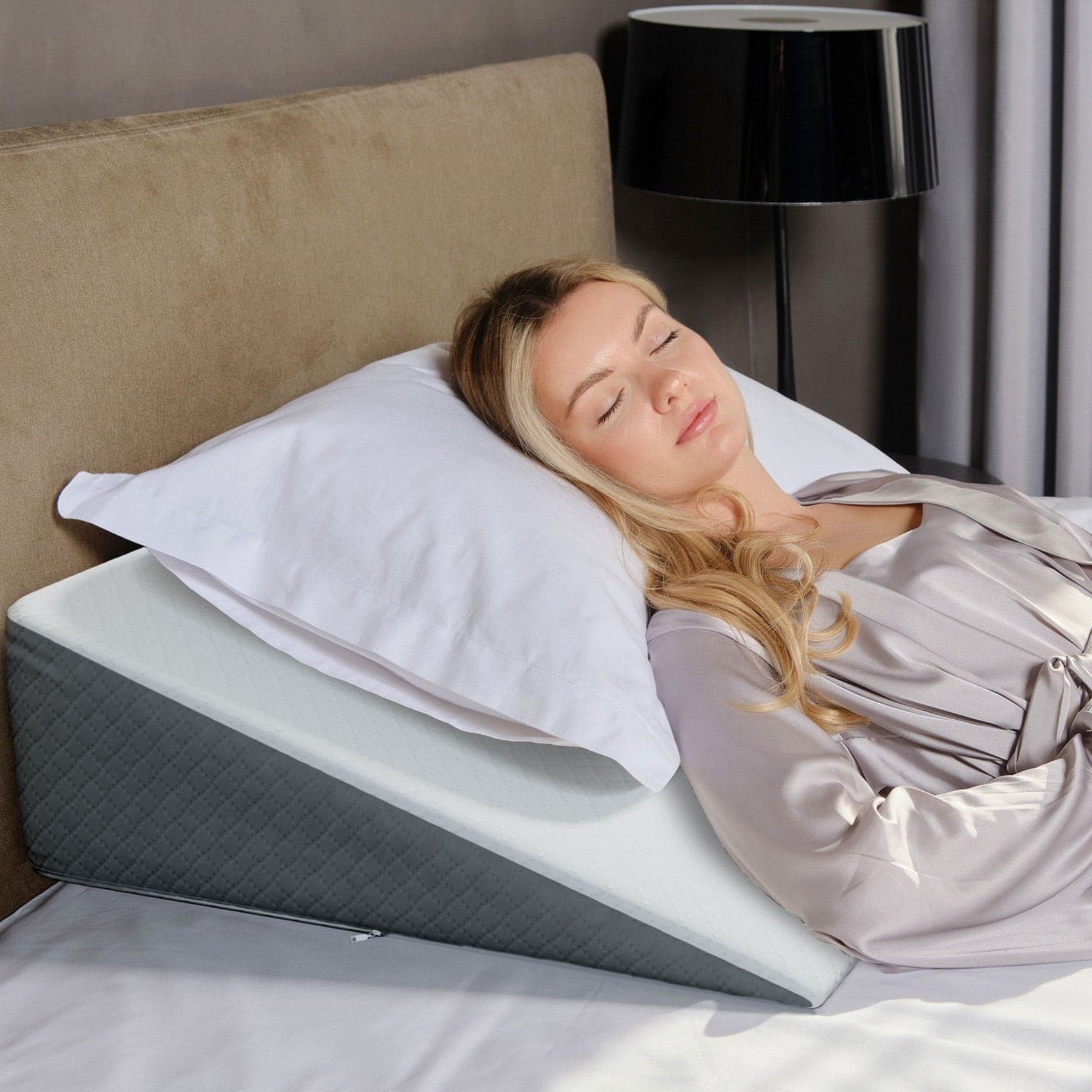
Kolbs
Kolbs Bed Wedge Pillow, Standard 7.5"Kolbs Bed Wedge Pillow, Standard 7.5"
A 7.5-inch wedge, the gentle starting height our wedge guide suggests for reflux and congestion.
sleepyhero.com/wedge-pillows/kolbs-bed-wedge
$35.99(Amazon price as of – Details)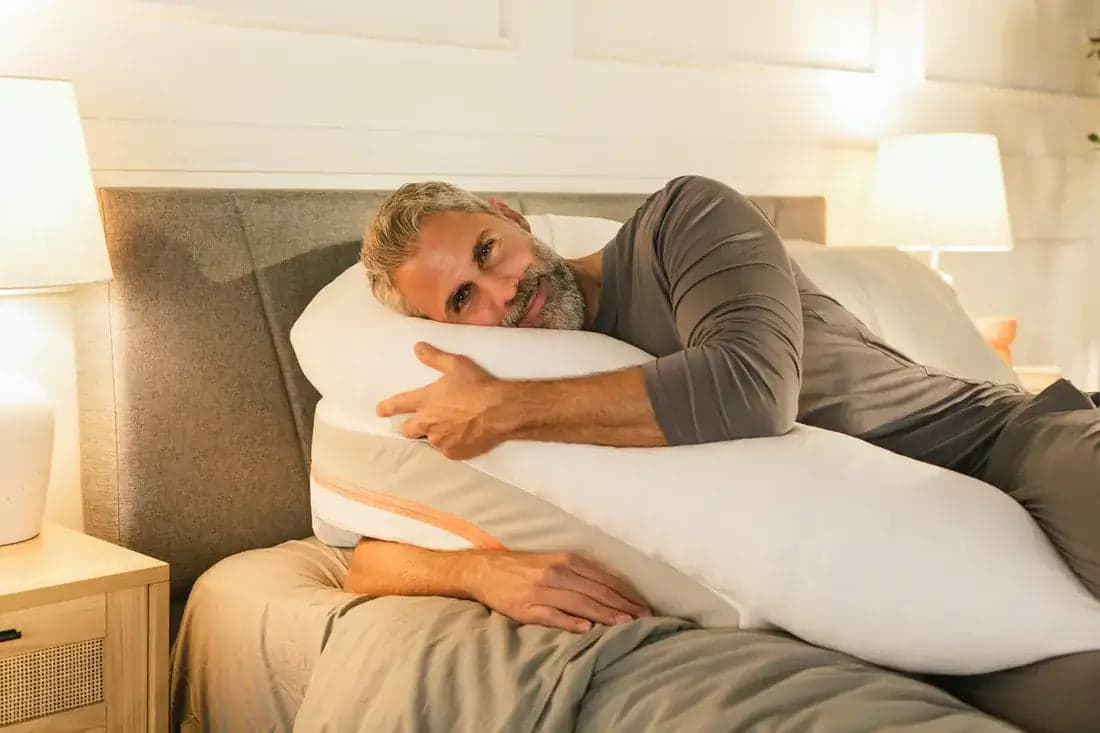
MedCline
MedCline Reflux Relief SystemMedCline Reflux Relief System
A full positioning system for diagnosed nightly reflux. Worth it on sale, and only once a doctor has confirmed reflux.
sleepyhero.com/wedge-pillows/medcline-reflux-relief
$269.98(Amazon price as of – Details)
Affiliate disclosure: if you buy through these links we may earn a commission, at no extra cost to you. Scores are independent of revenue.
Current prices and where to buy are on each product page.
- A smart anti-snore pillow as the first step. Try a firm pillow behind your back, a wedge or a nasal dilator first.
- Pillows under your head alone for reflux. They bend the neck instead of inclining the upper body.
- New bedding for snoring with gasping or pauses. That pattern needs a sleep study.
Go further on SleepyHero
- Sleeping position finder →Sleeping position findersleepyhero.com/tools/sleeping-position-finder
- Wedge pillows compared →Wedge pillows comparedsleepyhero.com/wedge-pillows
- Snoring solutions →Snoring solutionssleepyhero.com/snoring-solutions
- Cervical pillows compared →Cervical pillows comparedsleepyhero.com/cervical-pillows
Chapter 7
Protect it and look after it
A protector keeps sweat and spills out of the mattress, and the six-sided kind keeps bed bugs and dust mites out. Here is how to choose one without making the bed hot or noisy, and how to look after what you bought.
Fitted protector or encasement?
- A fitted protector covers the top and sides like a fitted sheet. It handles spills, sweat and accidents.
- An encasement zips around all six sides. It is the only style that stops bed bugs and dust mites. For bed bugs, its zip and seams have to hold for the 12 to 18 months a bed bug can survive sealed inside.
- Hypoallergenic is not the same as allergen-proof. If dust mites are the problem, you need an encasement.
Heat and noise
Waterproofing works by blocking moisture, and that traps some heat. Crinkle is the most common regret, and it comes from cheap waterproof layers. If you run hot, look for a breathable bamboo or cool-touch surface. Encasements feel firmer and breathe less than fitted protectors, and a thin pad on top restores some comfort.
Fit
Measure your mattress depth plus any topper before you buy. Protectors list the depth they fit, and the ones we cover range from about 14 to 18 inches. Do the same for fitted sheets.
Looking after the bed
- Rotate, do not flip. Turn a one-sided mattress head to foot from time to time. Only two-sided (flippable) mattresses are made to be turned over, and a queen hybrid can weigh more than 100 lb, so flip it with two people.
- Pillows and protectors. Wash them as the label says.
- Silk. Cold water, a mesh bag and air drying.
- Spills, sweat or a new mattress: a fitted waterproof protector.
- Dust mite allergy or bed bugs: a six-sided encasement.
- Measure mattress plus topper depth before buying.
Our picks.
SafeRest
SafeRest Premium Waterproof Mattress ProtectorSafeRest Premium Waterproof Mattress Protector
A waterproof fitted protector that costs a small fraction of the mattress it protects.
sleepyhero.com/mattress-protectors/saferest-premium-protector
$23.99(Amazon price as of – Details)SureGuard
SureGuard Mattress Encasement (Bed-Bug Proof)SureGuard Mattress Encasement (Bed-Bug Proof)
A six-sided zip encasement for bed bugs and dust mites.
sleepyhero.com/mattress-protectors/sureguard-encasement
$64.97(Amazon price as of – Details)PlushDeluxe
PlushDeluxe Bamboo Mattress ProtectorPlushDeluxe Bamboo Mattress Protector
A bamboo-surface protector for hot sleepers.
sleepyhero.com/mattress-protectors/plushdeluxe-bamboo-protector
$33.99(Amazon price as of – Details)


Affiliate disclosure: if you buy through these links we may earn a commission, at no extra cost to you. Scores are independent of revenue.
Current prices and where to buy are on each product page.
- Boll & Branch protector. It scores below the much cheaper SafeRest.
- A 'hypoallergenic' fitted protector for a dust mite allergy. Only an encasement keeps mites out.
Chapter 8
Your two-week bed reset
A plan to change your bed one step at a time and know whether each change worked. Print this chapter and keep it by the bed.
How it works
- Nights 1 to 3: baseline. Change nothing. Each morning, score how you slept from 1 to 5 and note anything sore.
- Night 4: one change. Start with the cheapest likely fix, usually pillow height (chapter 2) or a knee pillow (chapter 1).
- Nights 4 to 14: give it time. Keep scoring. A new pillow or position can take one to two weeks to feel normal, so do not judge it on night two. A topper or a new mattress is a firmness change: give it three to four weeks (chapter 3).
- Day 15: decide. Better: keep it, and if something still bothers you, pick the next change. No better: undo it and try the next item.
Keep everything else the same while you test, including the room temperature and the bedding, so you know which change did the work.
Your order of fixes
- Position and pillow height (chapters 1 and 2).
- The extra pillow your position needs: between the knees, under the knees, or a wedge (chapters 1, 2 and 6).
- The surface: a topper if the mattress is too firm but flat (chapter 4).
- Heat: the room, the layer under you, then the sheets (chapter 5).
- The mattress: if it sags, or nothing above helped (chapter 3).
Your log
Score sleep from 1 (bad) to 5 (great). Under sore, write where, or nothing.
| Night | Change in place | Sleep (1-5) | Sore | Notes |
|---|---|---|---|---|
| 1 | None (baseline) | |||
| 2 | None (baseline) | |||
| 3 | None (baseline) | |||
| 4 | ||||
| 5 | ||||
| 6 | ||||
| 7 | ||||
| 8 | ||||
| 9 | ||||
| 10 | ||||
| 11 | ||||
| 12 | ||||
| 13 | ||||
| 14 |
When the bed is not the answer
Chest pain needs urgent medical care now, not an appointment. See a clinician if you have breathing pauses, gasping or choking in your sleep; pain with numbness or weakness; or pain that lasts weeks or keeps waking you. These need a diagnosis, not new bedding.
We did not test any of the products in this playbook ourselves. Every recommendation is a synthesis of published research, clinical guidance, manufacturer specifications and owner reviews, and every study is listed at the end with a link. This is general information, not medical advice. If you buy through a link on our pages we may earn a commission, at no extra cost to you; it never decides what we recommend or what we tell you to skip.
- [1]Sleep Foundation. What is the best sleeping position?
- [2]Mayo Clinic. Sleeping positions that reduce back pain.
- [3]Sleep Foundation. How to sleep with lower back pain.
- [4]Mador MJ, Kufel TJ, Magalang UJ, Rajesh SK, Watwe V, Grant BJB. Prevalence of positional sleep apnea in patients undergoing polysomnography. Chest, 2005.
- [5]van Maanen JP, de Vries N. Long-term effectiveness and compliance of positional therapy with the sleep position trainer in the treatment of positional obstructive sleep apnea syndrome. Sleep, 2014.
- [6]Cleveland Clinic. Best sleeping positions for pain.
- [7]Gordon SJ, Grimmer-Somers K, Trott P. Pillow use: the behaviour of cervical pain, sleep quality and pillow comfort in side sleepers. Manual Therapy, 2009.
- [8]Gordon SJ, Grimmer KA, Buttner P. Pillow preferences of people with neck pain and known spinal degeneration: a pilot randomized controlled trial. European Journal of Physical and Rehabilitation Medicine, 2019.
- [9]Kovacs FM et al. Effect of firmness of mattress on chronic non-specific low-back pain: randomised, double-blind, controlled, multicentre trial. The Lancet, 2003.
- [10]Radwan A et al. Effect of different mattress designs on promoting sleep quality, pain reduction, and spinal alignment in adults with or without back pain; systematic review of controlled trials. Sleep Health, 2015.
- [11]Caggiari G, Talesa GR, Toro G, Jannelli E, Monteleone G, Puddu L. What type of mattress should be chosen to avoid back pain and improve sleep quality? Review of the literature. Journal of Orthopaedics and Traumatology, 2021.
- [12]Verhaert V et al. Ergonomics in bed design: the effect of spinal alignment on sleep parameters. Ergonomics, 2011.
- [13]Jacobson BH, Boolani A, Smith DB. Changes in back pain, sleep quality, and perceived stress after introduction of new bedding systems. Journal of Chiropractic Medicine, 2009.
- [14]Okamoto-Mizuno K, Mizuno K. Effects of thermal environment on sleep and circadian rhythm. Journal of Physiological Anthropology, 2012.
- [15]Holdaway LA, Hegmann KT, Thiese MS, Kapellusch J. Is sleep position associated with glenohumeral shoulder pain and rotator cuff tendinopathy: a cross-sectional study. BMC Musculoskeletal Disorders, 2018.
- [16]Khoury RM, Camacho-Lobato L, Katz PO, Mohiuddin MA, Castell DO. Influence of spontaneous sleep positions on nighttime recumbent reflux in patients with gastroesophageal reflux disease. American Journal of Gastroenterology, 1999.
- [17]Schuitenmaker JM, van Dijk M, Oude Nijhuis RAB, Smout AJPM, Bredenoord AJ. Associations between sleep position and nocturnal gastroesophageal reflux. American Journal of Gastroenterology, 2022.
- [18]NIDDK. Treatment for GER and GERD in adults.
- [19]Cronin RS et al. An individual participant data meta-analysis of maternal going-to-sleep position, interactions with fetal vulnerability, and the risk of late stillbirth. EClinicalMedicine, 2019.
- [20]Sleep Foundation. Pregnancy sleeping positions.
Want it offline? Download the PDF, or browse all our free printables.